Ellanse Longevity in Seoul: How Long Does Ellanse Really Last?

Ellanse is a collagen-stimulating filler designed to maintain facial volume and anti-aging effects for longer than typical hyaluronic acid fillers. In many patients, shorter-duration types can show noticeable improvement for around 12–18 months, while longer-duration types may maintain volume for around 2–3 years in suitable areas. However, these are average ranges, not guarantees. How long Ellanse lasts depends on the product type, treatment area, your skin and lifestyle, and the injector’s technique and treatment plan.
If you have heard that Ellanse can last for “years” but also seen people say it faded faster than they expected, you are probably wondering what is realistic for your own face and situation. This article explains how Ellanse typically behaves over months and years, why some people notice quicker fading than others, and what usually shortens or extends its visible effect. It also outlines how an anti-aging clinic in Cheongdam, Gangnam plans Ellanse for overseas patients who may only visit Korea once or infrequently, including how to think about re-treatment timing.
What Ellanse is and how it works
Ellanse is a collagen-stimulating filler used to restore facial volume, improve contours, and support anti-aging from within the skin. Instead of being only a gel that fills space, it contains tiny polycaprolactone microspheres suspended in a gel carrier.

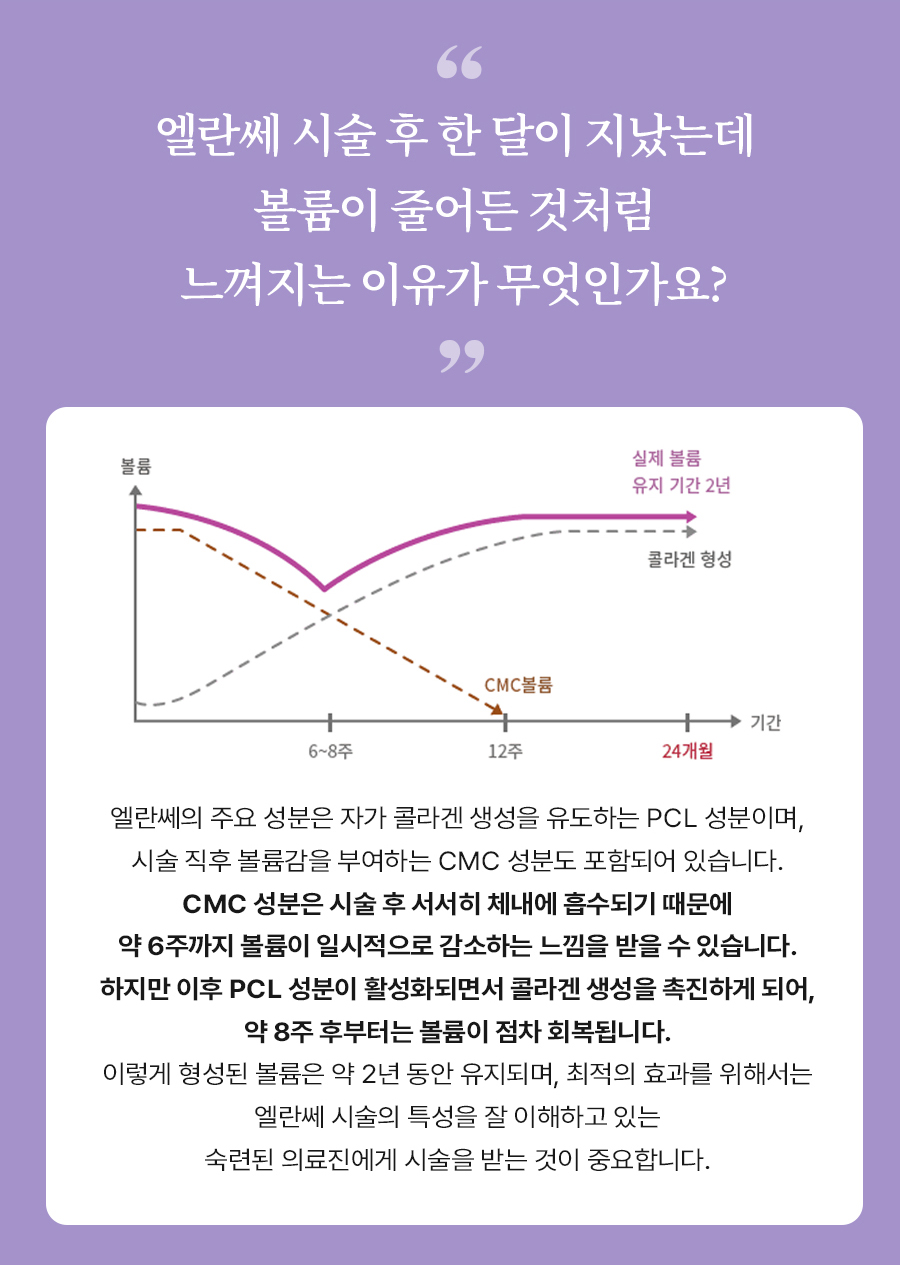
After injection, the gel gives an immediate filling effect, so you can see some change right away. Over time, the gel is gradually absorbed by the body. The microspheres remain for longer and stimulate your own collagen production around them. This new collagen helps maintain volume and can improve skin firmness and texture.
Because of this two-step mechanism, Ellanse is often chosen by people who want a more regenerative, long-lasting approach rather than a quick but short-lived filler.
How Ellanse feels over time
Right after treatment, most people notice the volume from the gel itself. This is the phase when the area looks immediately fuller and more defined.
As weeks go by, the gel gradually breaks down and your own collagen starts to take over. This collagen phase is what supports the mid‑ to long‑term effect, so the way the result changes is usually more gradual than a simple “on/off” filler effect.
When people ask, “How long does Ellanse last?”, they usually mean, “How long will my face look fuller and lifted in a way I am satisfied with?” rather than how long the material is physically present in the skin.
There are two main phases of effect.
Early phase: gel volume
In the first weeks to a few months, the visible result comes mainly from the carrier gel. You see immediate volume and contouring right after treatment, although there can be some swelling in the first days. As the gel is slowly resorbed, the initial fullness may soften slightly.

Mid-to-long term phase: collagen phase
As your body forms new collagen around the microspheres, this collagen begins to take over the role of maintaining volume. This phase is what makes Ellanse different from regular fillers. The collagen network can keep the area supported for a longer time, even after much of the original material has been broken down.
The transition between these phases is gradual. Many patients feel that the result looks more natural and integrated with their own facial structure over time.
How long Ellanse really lasts in everyday use
Ellanse comes in several types with different expected durations. In the clinic, the choice is usually made by matching the type to the area and the patient’s plan.
For example, in mobile areas of the face that move a lot with expression, doctors may lean toward a type with a more moderate duration and softer feel. In deeper structural areas where the goal is to support volume and contour for a longer time, a longer‑lasting type is often considered.
Your doctor will typically look at which areas you want to treat, how quickly your weight or facial volume tends to change, and whether you prefer a reversible option in some zones. Based on that, they decide which Ellanse type fits each area rather than using the same one everywhere.
Ellanse is designed with different expected durations, so it does not behave like a single, fixed product. Some types are formulated to stay on the shorter side, closer to the feel of conventional fillers, while others are chosen when a longer‑term effect is the goal. In practice, your doctor will match the type to your treatment area, skin condition, and how comfortable you are with a longer duration, rather than simply labeling it as “short” or “long”.
Shorter-duration types
Shorter-duration Ellanse types are generally designed for around 1 year of effect. In real life, many patients experience noticeable improvement for about 12–18 months. Some may feel the effect softens earlier, while others still see subtle benefits beyond this range.
Longer-duration types
Longer-duration types are designed for multi-year effects. In suitable cases and areas, patients often maintain good volume and support for around 2–3 years. This does not mean the face looks exactly the same for the entire period, but that the overall improvement compared to before treatment remains visible.

Differences by treatment area
Ellanse duration is not the same everywhere on the face.
In more mobile areas such as nasolabial folds and around the mouth, facial movement and strong muscle activity can shorten the visible duration. In these regions, even with a longer-duration product, some patients notice that the effect softens earlier than expected.
In more stable areas such as the cheekbones, temples, chin, and jawline, the effect can last closer to the designed longevity. These areas are often chosen for structural support and contouring with Ellanse.
Individual variation
Some patients feel that Ellanse does not last as long as the labeled duration, especially if they have very active facial expressions, thin skin, or advanced volume loss. Others may feel that even after the main volume has declined, the skin quality and overall contour are still better than before treatment due to the collagen stimulation.
What really affects Ellanse longevity
The first thing that makes a difference is you: age, skin quality, facial structure, and how active your expressions and lifestyle are can all change how long the result seems to last.
Next comes the treatment plan itself. The area treated, how much product is used, and the injection technique will influence both the initial look and how it fades.
Finally, it is important to consider which clinic you choose. A team that is familiar with Ellanse, takes time for thorough consultation and planning, and follows your progress over time to adjust if needed can influence how satisfied you feel with the duration.
- Before your visit, it can help to note down:
- - which facial areas bother you the most,
- - how long you would ideally like the result to last in each area,
- - whether you prefer something that can be dissolved or are comfortable with a longer‑term option.
Bringing these points to your consultation makes it easier to match the Ellanse plan to your actual daily life and expectations.

Patient-related factors
Age and baseline skin quality
Older patients or those with thinner, more sun-damaged skin may notice that volume support declines faster. Their tissues may need more sessions or combination treatments to maintain the same level of lifting.
Degree of volume loss and sagging
If there is severe volume loss or sagging at the start, Ellanse may still help, but the visible improvement may not last as long as in someone with mild-to-moderate aging. In advanced cases, combining Ellanse with lifting devices or other treatments is often recommended.
Metabolism and lifestyle
A faster metabolic rate, smoking, frequent sun exposure, large weight changes, and extreme dieting can all reduce the duration of results. Protecting your skin from UV, avoiding smoking, and maintaining stable, healthy body weight can help support longer-lasting effects.
Skincare habits and overall health
Good skincare, sun protection, adequate sleep, and balanced nutrition support collagen health. Chronic stress, poor sleep, and uncontrolled medical conditions can negatively affect tissue quality and may shorten the perceived duration.
Treatment-related factors
Correct indication and area selection
Ellanse is better suited for certain areas and indications than others. It is often used for midface volume, cheekbones, temples, chin, and jawline support. For very superficial lines, lips, or areas where reversibility is critical, hyaluronic acid fillers may be more appropriate.

Injection depth and technique
The depth and plane of injection, as well as the technique used (for example, fan technique, linear threading, or use of cannulas), should be tailored to the anatomy of each area. Proper placement helps ensure smoother contours, better integration with tissues, and more stable long-term results.
Volume per area
Using an adequate but not excessive amount of product is important. Under-correction may lead to shorter perceived duration, while overfilling can look unnatural and may increase the risk of complications, especially given the long-lasting nature of Ellanse.
Combination with other treatments
For example, treatments that tighten deeper layers or improve skin texture can complement the structural support provided by Ellanse.
Clinic-related factors
Experience with Ellanse itself, not only with fillers in general, is important. A clinic that understands how tissues change over several years can design a multi-year plan instead of a one-time procedure.
An aesthetic anti-aging clinic in Cheongdam, Gangnam, offers this type of planning. The medical team routinely performs Ellanse and lifting procedures and plans injection depth, volume, and follow-up with a longer-term perspective on how the result may change over time.

Comparison with hyaluronic acid fillers and other options
One of the most common questions during consultation is when to choose Ellanse and when to stay with a hyaluronic acid filler.
For areas where taste changes often or shape adjustments are frequent—such as lips or very fine contour tweaks—doctors usually explain that hyaluronic acid fillers can be a practical choice because they can be dissolved and adjusted more easily.
Ellanse, as a collagen stimulator, is more often discussed for patients who want a longer‑term improvement in volume and contour, especially in mid‑face, temples, or jawline, and who do not expect to change the shape frequently. Because it cannot be dissolved with hyaluronidase, the plan is usually more conservative: smaller initial volumes, staged sessions, and careful design of where the product is placed.
In many cases, both options are combined—Ellanse for structural support in key areas, and hyaluronic acid for finer detail or zones where flexibility is important.
Choosing between Ellanse and hyaluronic acid fillers
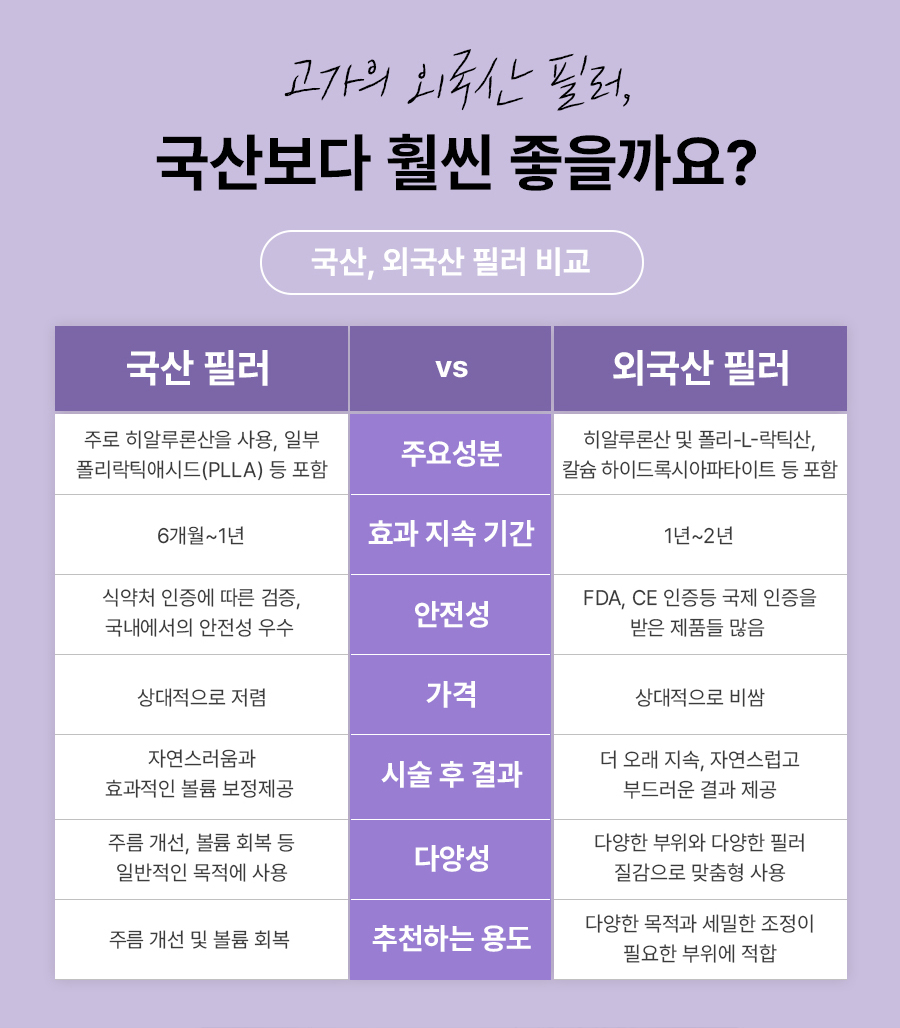
Hyaluronic acid fillers are mainly space-occupying gels. They provide immediate volume and are usually reversible with an enzyme called hyaluronidase. In many facial areas, their visible effect lasts around 6–12 months, although this varies.
Ellanse, in contrast, is a collagen stimulator. It is designed for longer duration, often 12–18 months or more for shorter types and around 2–3 years for longer types. It cannot be dissolved with hyaluronidase, so careful planning and conservative technique are essential.
Other volume and regenerative options
The clinic in Cheongdam also uses other volume products such as Restylane and Juvederm lines, as well as other collagen-stimulating options. The choice depends on the treatment area, desired duration, and whether reversibility is important for the patient.
For patients who prefer a gradual, regenerative approach, Ellanse can be combined with cell-focused anti-aging programs rather than used alone. These may involve treatments that aim to support skin regeneration over time.
Clinic approach and expertise in Cheongdam, Gangnam
The clinic is an aesthetic dermatology and anti-aging clinic located in Cheongdam, Gangnam, Seoul, near Apgujeong Rodeo Station on the Suin–Bundang Line. From exit 4, it is a short walk straight toward Galleria Department Store.
It also holds a wide portfolio of lifting and energy-based devices. This allows the team to design tailored combination plans with Ellanse for both volume restoration and tissue tightening.
How this clinic thinks about Ellanse duration
In this clinic, the conversation about Ellanse usually starts with a few concrete questions: which part of your face you want to change first, how noticeable you want that change to be, and how long you feel comfortable keeping it.
During consultation, the doctor often maps the face into zones—for example, mid‑face, temples, jawline—and discusses how long Ellanse is likely to behave in each area for someone with your age and lifestyle. Together, you decide where a longer‑lasting effect makes sense and where a more adjustable option might be safer.
By going through the face step by step like this, the clinic aims to match the Ellanse type and amount to your daily routine, not just to a generic “one‑size‑fits‑all” duration.
At this clinic, Ellanse is not treated as a one‑time “fill and forget” procedure. Before anything is decided, the team focuses on understanding how long you actually want the effect to last, which areas bother you most, and how much change feels comfortable for you.
After treatment, the clinic does not only look at “how long it lasts” but also follows how the shape and feel change over time. If needed, they adjust the combination with other procedures or the timing of your next visit so that Ellanse’s duration feels natural rather than burdensome.
Pre-treatment assessment
Before recommending Ellanse, the clinic performs a holistic facial analysis. This may include 3D imaging systems such as Visia and Vectra to evaluate volume loss, asymmetry, and skin quality.
During consultation, the doctor discusses your desired duration, how comfortable you are with a non-reversible product, and your long-term anti-aging goals. For overseas patients, this discussion often begins with online photo review and video consultation to make your in-person visit more efficient.
Treatment planning
Based on your facial structure and goals, the doctor selects the Ellanse type and volume for each area. For example, a longer-duration type may be chosen for cheekbones and jawline, while a shorter-duration or different product might be recommended for areas that change more with fashion or personal preference.

The doctor also decides whether to combine Ellanse with lifting devices such as Thermage FLX, Ulthera Prime, or Emface, or with cell-based injections like Mysome or stem cell treatments. These combinations aim to support tissue quality and help maintain results over the planned period.
Follow-up and maintenance
Because Ellanse is long-lasting, follow-up is usually spaced out over months and years rather than weeks. The clinic recommends periodic check-ups to monitor how your result is evolving.
When volume begins to decline, options may include a small touch-up with Ellanse, fine-tuning with hyaluronic acid fillers in specific lines, or reinforcing with lifting devices and regenerative treatments. The goal is to maintain a natural, age-appropriate appearance rather than chase a fixed, unchanging look.
hether staged additional treatment is appropriate.
Common temporary side effects
After treatment, you may experience swelling, redness, mild bruising, and tenderness at the injection sites. These usually improve over several days to a couple of weeks. Following the clinic’s aftercare instructions helps reduce discomfort and support healing.
Rare but serious risks
As with any injectable filler, rare but serious complications can occur. These include vascular compromise (when filler enters or compresses a blood vessel), nodules, or significant asymmetry.
Experienced injectors aim to reduce these risks by using cannulas in higher-risk areas when appropriate, understanding detailed facial vascular anatomy, and choosing safe injection planes. They also often prefer staged treatments with conservative doses rather than trying to achieve a dramatic change in a single session.
The clinic’s experience with Ellanse and thread lifts, together with access to multiple devices and regenerative therapies, allows it to design balanced long-term plans. This reduces the need to rely heavily on a single product.
Who may consider Ellanse and who should be cautious
Good candidates
Ellanse may be suitable if you have midface volume loss, hollow cheeks or temples, or need structural support along the jawline or chin and would like a longer-lasting, collagen-stimulating solution.
It is also appropriate for people who understand that Ellanse is not easily reversible and are comfortable with a multi-year commitment. Patients who prefer a natural, gradual improvement rather than frequent filler sessions often appreciate this approach.

Who should be cautious
Very young patients or those who frequently change their aesthetic preferences may be better served by shorter-duration, reversible fillers.
Patients with unrealistic expectations, such as expecting a permanent lift or completely unchanging results for many years, should discuss their goals carefully with the doctor. In some cases, a combination of treatments with more flexibility may be recommended.
Individuals with certain medical conditions, autoimmune issues, or a history of problematic reactions to fillers need careful evaluation. A detailed medical history and consultation with the doctor are essential before deciding on Ellanse.
Online consultation and pre-visit preparation for overseas patients
If you are traveling from overseas, proper preparation can make your visit smoother and help you get the most from your time in Korea.
Online consultation
The clinic offers real-time messaging consultation through KakaoTalk, as well as additional information via its blog and video channels. Before you travel, you can usually send photos, describe your concerns, and share your medical history.

This allows the doctor to give a preliminary opinion on whether Ellanse is suitable for you, suggest possible treatment combinations, and outline an approximate visit plan.
What to prepare before your visit
Before your consultation, it is helpful to prepare the following:
- A list of your main concerns and goals, such as “midface volume,” “jawline definition,” or “overall anti-aging.”
- Information about any previous fillers, thread lifts, laser or energy-based procedures, and the approximate dates.
- A list of medications, supplements, and known allergies.

- Questions you want to ask about duration, safety, combination treatments, and aftercare.
Many patients find it useful to note down what matters most to them: reversibility, natural look, longevity, or minimal downtime. Sharing these priorities helps the doctor choose the right products and plan.
Expected Korea visit timeline for Ellanse treatment
The exact schedule can vary, but the following is a common pattern for overseas patients.
Day 1: Consultation and imaging
You visit the clinic for in-person consultation, facial analysis, and imaging (such as Visia and Vectra). The doctor reviews your online information, examines your face, and confirms the plan. In many cases, treatment can be done on the same day if you are ready and medically suitable.
Day 1 or Day 2: Treatment day
On the treatment day, you arrive without heavy makeup. After cleansing and marking, the doctor performs the injections. The procedure time depends on the number of areas treated but is often under one hour.

You can usually leave the clinic the same day. Some swelling and minor bruising are normal. Many patients can resume light sightseeing or activities, but it is wise to avoid intense exercise and alcohol immediately after treatment.
Day 2–5: Early recovery
Swelling and tenderness are usually most noticeable in the first few days. If you are staying in Korea for a short period, the clinic may schedule a brief check-up visit during this time to ensure everything is progressing normally.
Day 7–14: Settling phase
By one to two weeks, most swelling has subsided, and the shape looks more natural. If you have already returned home, you can keep in touch with the clinic by sending photos and feedback.
Mid-term and long-term follow-up
Over the next months, the collagen-stimulating effect gradually develops. The clinic may recommend follow-up at 3–6 months and then yearly, which can be done in person if you revisit Korea or via online consultation with photos.
Aftercare and lifestyle tips to support duration
To help your Ellanse results last as long as possible, the clinic usually recommends the following general guidelines.

- Avoid strong pressure or massage on the treated areas for a certain period after treatment, unless specifically instructed by your doctor.
- Use sun protection daily. UV exposure accelerates collagen breakdown and can shorten the duration of any anti-aging procedure.
- Avoid smoking and limit alcohol intake, especially in the early recovery period.
- Maintain stable weight and a balanced diet rich in nutrients that support skin health.
- Follow any recommended skincare and in-clinic maintenance treatments, such as gentle laser, energy-based tightening, or cell-based therapies, according to your personalized plan.

Another point that often comes up around Ellanse duration is what happens after the visible filler effect starts to soften.
Many patients ask whether Ellanse continues to work even after the visible filler effect seems to soften. In practice, after the main volume and lifting effect have faded, some people still notice that their skin texture or firmness feels better than before treatment.
This is because Ellanse works by stimulating collagen in the treated areas. Even when the obvious volumizing effect is no longer as strong, the collagen that formed during the active period can leave a more subtle improvement in the skin’s support. During consultation, your doctor can explain which areas are more likely to show this kind of long‑term benefit and set a realistic time frame for when a new session might be considered.
Many people also wonder whether choosing a longer‑lasting filler like Ellanse means they will automatically need touch‑ups every year. In reality, the need and timing for additional treatment varies by person, treated area, and how much change you want to maintain over time.
Many people worry that choosing a longer‑lasting filler automatically means yearly mandatory touch‑ups. In reality, the schedule is more flexible. Some patients are satisfied with a single course and only return if they notice clear volume loss, while others prefer smaller, more regular adjustments to keep the result very stable. The right interval is decided individually, based on how your face changes over time and how you feel about the mirror, rather than a fixed “one year” rule.
Frequently asked questions about Ellanse duration
How long does Ellanse really last in the face?
In many patients, shorter-duration Ellanse types provide noticeable improvement for around 12–18 months, while longer-duration types can maintain volume for about 2–3 years in suitable areas. However, this varies with age, skin quality, lifestyle, treatment area, and injection technique. It is more accurate to think in terms of a range and gradual change rather than a fixed expiry date.
Is Ellanse better than hyaluronic acid fillers because it lasts longer?
Ellanse is not automatically better; it is different. It offers longer duration and collagen stimulation, which can be attractive if you want multi-year support and fewer repeat sessions. Hyaluronic acid fillers are reversible and may be more appropriate for areas like lips, very fine lines, or for patients who prefer more flexibility. The best choice depends on your goals, risk tolerance, and facial anatomy.
Can Ellanse be removed if I do not like the result?
Ellanse cannot be dissolved with hyaluronidase, unlike hyaluronic acid fillers. This is why careful planning, conservative dosing, and choosing an experienced injector are so important. In rare cases of complications, management focuses on medical treatment and sometimes procedures to address specific issues, but there is no simple “eraser” injection.
Will I need touch-ups every year if I choose Ellanse?
Not everyone needs yearly touch-ups. Some patients are satisfied with their result for several years without additional Ellanse. Others may choose small touch-ups or complementary treatments as the effect gradually softens. The clinic usually suggests a personalized follow-up schedule based on your aging pattern, lifestyle, and the type of Ellanse used.
If you are considering Ellanse and want a realistic idea of how long it might last for your face, a consultation will usually focus on concrete points such as: which areas you want treated first, how quickly your face has changed in recent years, and whether you prefer options that can be reversed.
These details, combined with your age, skin condition, and lifestyle, are what allow the doctor to estimate a likely duration range for each area and design a plan that matches your expectations as closely as possible.
If you are considering Ellanse and want a realistic idea of how long it might last for your face, the most reliable step is a personalized consultation.

The clinic in Cheongdam, Gangnam, near Apgujeong Rodeo Station, offers both in-person and online consultations for overseas patients. Through messaging and photo review, the medical team can assess whether Ellanse suits your facial structure and goals, recommend an appropriate type and expected duration, and design a long-term anti-aging roadmap that may combine Ellanse with lifting devices and cell-based treatments.
If you are planning a trip to Seoul, you can contact the clinic in advance to coordinate your schedule, minimize downtime during your stay, and make the most of your visit.

댓글
댓글 쓰기