Dark circle filler in Gangnam: under‑eye tear trough treatment guide
- 공유 링크 만들기
- X
- 이메일
- 기타 앱
Direct answer summary
Dark circle filler is a non‑surgical injectable treatment that adds volume under the eyes to reduce hollows, soften the tear trough line, and lessen shadowing that makes you look tired. It is most effective when dark circles are caused mainly by volume loss and a deep groove, rather than by strong pigmentation or large under‑eye fat bags. In Cheongdam, Gangnam, near Apgujeong Rodeo Station, our anti‑aging eye clinic uses hyaluronic acid fillers and other volumizing injectables in a careful, anatomy‑based way, with detailed diagnosis, conservative dosing, and close attention to safety and natural‑looking results.
What is dark circle filler
Dark circles under the eyes are rarely just one problem. In many people they are a combination of three main factors. First, volume loss and hollowing in the tear trough area create a sunken look. Second, a deep groove between the lower eyelid and the upper cheek casts a shadow, especially under overhead lighting. Third, thin or translucent skin, and sometimes pigmentation, can make vessels and underlying structures show through.

Dark circle filler focuses mainly on the first two factors: hollowing and shadowing. During this treatment, a small amount of filler is injected into the under‑eye area to gently lift the hollow, smooth the transition between eyelid and cheek, and reduce the depth of the shadow. When the groove is softened, light reflects more evenly, so the area appears brighter and less tired.
Most under‑eye filler treatments use hyaluronic acid fillers. Hyaluronic acid is a gel‑like substance that attracts water and exists naturally in the body. In the tear trough, soft and smooth fillers with appropriate flexibility are chosen to avoid lumpiness and to blend with the delicate tissue. In selected cases, collagen‑stimulating fillers may be considered around the midface or cheek to support the under‑eye indirectly, but under‑eye safety and the ability to dissolve the product with hyaluronidase are key priorities.
Who may consider dark circle filler
Dark circle filler is not for everyone with dark under‑eye skin. It works best when the main issue is structural rather than purely pigment.
You may be a good candidate if you notice one or more of the following. You have a visible hollow or groove running from the inner corner of the eye down and outwards. There is a clear step between your lower eyelid and your cheek, especially when you look in side lighting or take photos. Your eyes look tired, sunken, or older than you feel, even when you sleep well. When you gently stretch the lower eyelid skin downward, the dark shadow improves because the hollow is less visible.

You may be less suitable or require extra caution if your dark circles are mainly brown or bluish discoloration that does not change much when you stretch the skin. This suggests pigment or visible vessels rather than hollowing. Very thin, crepey lower eyelid skin can also be challenging, because filler may show through or cause prolonged swelling. If you have significant under‑eye fat bags that bulge even at rest, simply adding filler may make the area look puffy instead of smooth. In such cases, different procedures or combination plans are usually needed.
People with severe allergies, frequent under‑eye swelling, or a history of complications from previous under‑eye filler need careful evaluation. A detailed in‑person assessment is essential to distinguish three main types. Hollow‑dominant dark circles, which respond best to filler. Fat‑bag dominant dark circles, where filler must be used very cautiously or avoided. Pigment‑dominant dark circles, which may benefit more from laser, light‑based treatments, or skin care approaches.
How our clinic diagnoses and plans treatment
Our eye clinic in Cheongdam, Gangnam, close to Apgujeong Rodeo Station on the Suin–Bundang Line, is focused on anti‑aging and cellular‑level care. Dark circle filler is planned not as a quick cosmetic fix, but as part of a broader facial aging strategy.
This supports a careful, anatomy‑based approach to the under‑eye area, which is one of the most delicate and high‑risk regions of the face.

During diagnosis, several factors are evaluated. The shape and depth of the tear trough, and how it connects to the midface. The condition and position of the under‑eye fat pads. The thickness and elasticity of the lower eyelid skin. The degree of midface and cheek volume loss that may be contributing to under‑eye hollowing.
Rather than relying on a single filler brand or a fixed recipe, the clinic uses a range of injectables, including premium volumizing fillers with different rheology profiles. For the tear trough itself, softer, more flexible gels are often preferred. For deeper midface support, slightly firmer products may be used in small amounts. The goal is to restore a smooth, natural contour without heaviness or obvious filler.
Importantly, the plan does not focus only on the line under the eye. The overall support of the cheek and midface is considered. In many patients, a small amount of volume placed strategically in the upper cheek can improve the appearance of the under‑eye area more safely and naturally than overfilling the tear trough itself.
Step by step: how dark circle filler is done
1. Consultation and examination
Your visit begins with a detailed consultation. The doctor will ask about your medical history, including allergies, blood‑thinning medications, previous fillers or eye surgeries, and your tendency to bruise or swell. Photos may be taken in different lighting and head positions to analyze shadowing.

The type of dark circles is then assessed. The doctor will look at how the area changes when you smile, when you look up or down, and when the skin is gently stretched. This helps separate hollow‑type, fat‑bag type, and pigment‑dominant type dark circles. You will discuss what filler can realistically improve. In most cases, filler can reduce hollows and shadows, but it may not fully erase brown or bluish discoloration.
2. Treatment design
Once it is clear that filler is appropriate, a detailed plan is made. The doctor decides whether to treat only the tear trough or also support the mid‑cheek to lift the under‑eye from below. The amount of filler is kept conservative, especially in first‑time patients.
The specific filler type and injection depth are chosen based on your anatomy. Under the eye, filler is usually placed deep, close to the bone, or in specific planes that allow smooth blending. This reduces the risk of visible lumps and the bluish Tyndall effect that can occur if filler is too superficial.
3. Preparation
Before the procedure, the under‑eye and cheek area are cleansed and disinfected thoroughly. A topical anesthetic cream is applied and left on for a short time to numb the skin. In some cases, a small amount of local anesthetic may be used at the cannula entry point to improve comfort.

You will be positioned comfortably, usually lying down, and asked to relax your facial muscles. The doctor may mark key anatomical landmarks and planned injection points.
4. Injection technique
Practitioners may use a blunt cannula in some under‑eye filler procedures to reduce the number of punctures and potentially lower the risk of bruising; alternatively, some clinicians use fine needles. A small entry point is often created before advancing instruments into the tear trough, but specific technique varies by practitioner and case—discuss technique options and comfort measures with your treating doctor.
The filler is placed slowly and precisely in small amounts, often in a fanning or linear pattern along the groove. The doctor continually checks symmetry, contour, and skin texture, adjusting the depth and direction as needed. Because the under‑eye area has important blood vessels, detailed knowledge of vascular anatomy and gentle technique are critical.

5. Immediate check
After the injections, the doctor may gently mold or smooth the area with light pressure to ensure even distribution. The under‑eye is checked for any signs of overfilling, irregularities, or early Tyndall effect. If necessary, very small adjustments can be made on the spot.
You will receive aftercare instructions, and in many cases, a follow‑up visit is scheduled to review the result once initial swelling has settled.
Expected results, duration, and downtime
Most patients notice an improvement in hollows and shadows immediately after treatment. The groove looks softer, and the under‑eye transition into the cheek appears smoother. However, mild swelling can temporarily make the area look slightly fuller than the final result.
Over the next few days, swelling gradually subsides and the filler integrates with the surrounding tissue. The final settled appearance is usually visible within one to two weeks. Makeup and concealer can be used soon after treatment, as advised by the doctor, to camouflage any bruising.

How long under‑eye hyaluronic acid filler lasts varies widely depending on the product, injection volume, your metabolism, and lifestyle factors. Speak with the clinic about product‑specific expectations and maintenance plans; some patients opt for smaller touch‑ups rather than repeating a full treatment.
Downtime is usually mild. You may experience slight swelling, tenderness, or a feeling of fullness for a few days. Small bruises can appear at the cannula entry point or along the path of injection and usually fade within several days to about one to two weeks. Most visitors can return to daily activities and sightseeing in Seoul immediately, taking care to avoid heavy exercise or sauna for a short period.
Safety, risks, and how we manage them
Any injectable treatment carries potential side effects, and the under‑eye area is particularly delicate. Common mild reactions include temporary swelling, redness, tenderness, and minor asymmetry while swelling settles. Small bruises are also common and generally resolve on their own.
Possible complications, although less frequent, must be clearly understood. Overfilling can create a puffy or unnatural look. Lumps or irregularities may occur if filler is placed unevenly or in the wrong layer. The Tyndall effect, a bluish discoloration, can appear if filler sits too close to the surface in very thin skin.

Some individuals may experience prolonged swelling, especially if they have thin skin, lymphatic drainage issues, or a history of under‑eye puffiness. In rare cases, vascular complications can occur if filler enters or compresses a blood vessel. This may lead to skin injury or, in very rare and severe situations, visual problems.
To reduce these risks, our clinic follows several principles. We often use blunt cannulas in the under‑eye region to lower the chance of directly piercing a vessel. The team applies detailed knowledge of under‑eye vascular anatomy and uses slow, low‑pressure injections. Dosing is conservative, with a preference for gradual build‑up over multiple sessions rather than aggressive filling in one visit.
Hyaluronic acid fillers are reversible in principle; discuss reversal options and contingency plans, including the role of hyaluronidase, with your treating doctor before treatment. Additionally, the clinic has experience with multiple energy‑based devices and skin treatments. If evaluation suggests that filler is not the best option for your dark circles, alternative approaches can be recommended instead of forcing a filler solution.
Combination and alternative treatments
Dark circle filler is one tool within a wider anti‑aging program. In many patients, the best result comes from combining subtle volume restoration with treatments that improve skin quality or pigmentation.
For thin, crepey under‑eye skin, skin‑quality injections such as skin repair or PDRN‑type treatments may be suggested alongside or before filler. These aim to improve texture and fine lines so that the filler sits more smoothly.
If midface volume loss is significant, cheek or upper‑cheek volumizing fillers can be used to support the under‑eye from below. This can reduce the amount of filler needed directly in the tear trough and often creates a more natural, youthful contour.
When dark circles are dominated by pigmentation or visible vessels, laser or light‑based treatments may be more appropriate. Our clinic is equipped with a wide range of premium devices, including Thermage FLX, Ulthera Prime, Exion, Emface, and various fractional and pigment lasers. These can be combined in tailored plans to address skin laxity, fine lines, and color irregularities around the eyes.
In cases of prominent under‑eye fat bags that bulge even at rest, filler is usually not the first choice. Adding volume around a large fat bag may worsen puffiness. In such situations, the doctor may recommend other non‑surgical options or, when necessary, refer you for a surgical opinion.

Clinic concept and location
Our anti‑aging eye clinic is located in Cheongdam, Gangnam, within easy reach of Apgujeong Rodeo Station and a major department store, making it convenient for both Seoul residents and overseas visitors.
m. Outcomes and any regenerative effects vary between individuals and cannot be guaranteed.
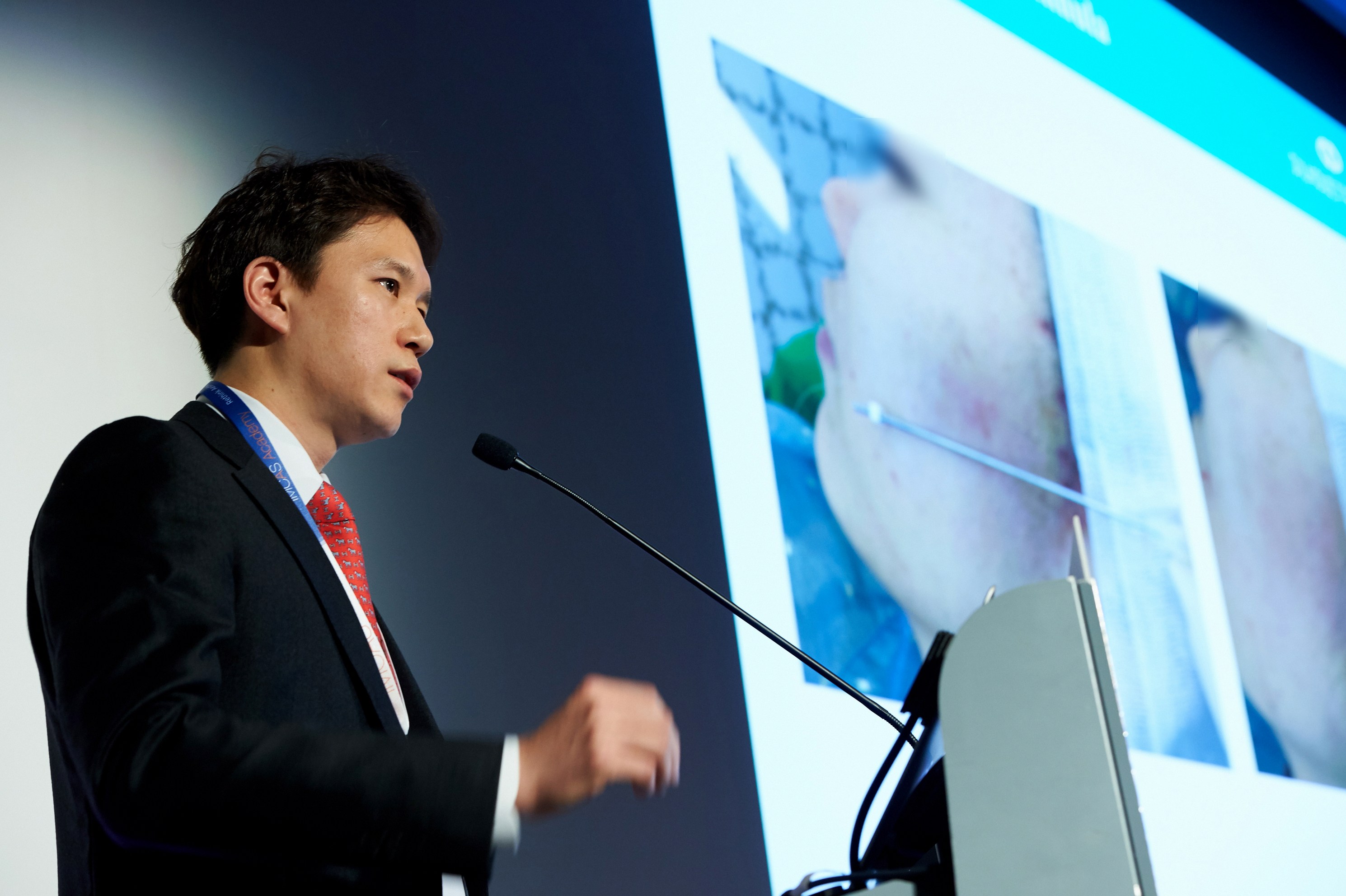
The medical team includes clinicians with MD and PhD backgrounds, internationally trained doctors, and practitioners who have presented at overseas conferences on cosmetic procedures. Their combined experience with facial anatomy, aging patterns, and advanced devices supports a systematic approach to under‑eye rejuvenation; patients should confirm individual clinician credentials during consultation.
Online consultation and pre‑visit preparation
If you are planning to travel to Korea for dark circle filler, an online consultation is highly recommended before you book flights. This helps confirm whether filler is likely to help your specific type of dark circles and allows better planning of your schedule.

To prepare for an online consultation, it is helpful to gather the following information. Clear photos of your face from the front and both sides, in natural daylight, with and without smiling. Close‑up photos of the under‑eye area while looking straight ahead, looking up, and gently stretching the lower eyelid skin downward. A brief medical history, including any eye conditions, previous eye or eyelid surgeries, and any past filler or energy‑based treatments in the under‑eye or cheek area.
You should also list medications and supplements you are taking, especially blood thinners, aspirin, or high‑dose vitamin E, as these can affect bruising. Note any history of allergies, unusual swelling, or autoimmune conditions. Finally, think about your main concerns and goals. For example, do you mainly want to look less tired, reduce hollows, or improve discoloration.
During the online consultation, you can ask specific questions about the likely treatment plan, expected number of sessions, approximate downtime, and how long you should stay in Korea after the procedure. This information will help you arrange flights, accommodation, and other activities.

Expected Korea visit timeline for dark circle filler
For most overseas patients, a short stay is sufficient for dark circle filler, but adding a few extra days gives more flexibility.
A common schedule is as follows. On day one, you arrive in Seoul and rest or have your initial in‑person consultation and examination. If both you and the doctor agree that filler is appropriate, treatment may be done on the same day.
On day two or three, you can usually continue with light sightseeing or business activities. Mild swelling or small bruises may be present but can often be covered with concealer. It is wise to avoid intense exercise, saunas, or heavy alcohol intake during these first days.
If possible, a short follow‑up visit within five to seven days is helpful to check the result, especially for first‑time patients. If your stay is shorter, an online follow‑up using photos can be arranged. In general, staying in Korea for about three to five days after treatment provides a comfortable buffer for any early adjustments or unexpected swelling.

Aftercare and lifestyle tips
Immediately after dark circle filler, you should avoid rubbing, pressing, or massaging the under‑eye area unless your doctor specifically instructs you to do so. Try to sleep with your head slightly elevated on the first night to help reduce swelling. For a few days, avoid heavy exercise, hot baths, saunas, and alcohol, as these can increase swelling or bruising.
If you notice mild discomfort, a cool compress wrapped in a soft cloth can be applied gently, but never place ice directly on the skin. Follow any medication or topical product instructions provided by the clinic.
In the longer term, protecting the delicate under‑eye skin is important. Use sunscreen around the eyes, taking care not to get it into the eye itself, and wear sunglasses outdoors. Gentle cleansing and moisturizing help maintain skin quality. Avoid harsh rubbing when removing makeup.
Remember that filler does not stop the natural aging process. Bone, fat, and skin will continue to change over time. Periodic check‑ups and, when needed, small touch‑ups or complementary treatments can help maintain a balanced, natural look.

Frequently asked questions
Does dark circle filler really brighten dark circles, or only reduce hollows
Dark circle filler mainly improves the structural part of dark circles: the hollow and the shadow created by a deep groove. By lifting the hollow and smoothing the transition between eyelid and cheek, light reflects more evenly and the area appears brighter and less tired. However, filler does not directly remove brown pigmentation or all bluish discoloration. For pigment‑dominant dark circles, additional treatments such as laser, light‑based therapy, or skin‑care programs may be needed.
How is under‑eye filler different from cheek filler
Under‑eye filler is performed in a much more delicate area with thinner skin and important blood vessels. The filler products used are usually softer and more flexible, and the injection depth and technique are carefully controlled to avoid lumps and bluish discoloration. Cheek filler often uses slightly firmer products and larger volumes to restore overall facial contour and lift. In many cases, a combination of subtle cheek support and conservative under‑eye filler provides the most natural result.
How long does dark circle filler last, and how often are touch‑ups needed
Under‑eye hyaluronic acid filler typically lasts longer than filler in more mobile areas. Many patients see results for around 9 to 18 months, depending on the product used, the amount injected, individual metabolism, and lifestyle. Some people prefer small touch‑ups before the filler is fully gone to maintain a stable appearance, while others wait until the effect has significantly faded. Your doctor can recommend a follow‑up schedule based on how your tissue responds.
Is the procedure painful, and what does it feel like
Most patients describe under‑eye filler as mildly uncomfortable rather than very painful. Topical anesthetic cream and, in some cases, a small amount of local anesthetic at the cannula entry point help reduce discomfort. You may feel pressure, a slight pushing sensation, or occasional stinging as the filler is placed, but this usually lasts only a few minutes. After the procedure, the area may feel a bit tight or tender for a short time.

Can under‑eye filler be removed if I do not like the result
If a hyaluronic acid filler is used, it can usually be adjusted or dissolved with an enzyme called hyaluronidase. This allows the doctor to reduce overfilling, smooth irregularities, or, if necessary, remove most of the filler. However, dissolving filler is also a medical procedure with its own considerations, so careful planning and conservative dosing from the start are still very important.
What is the difference between treating dark circles with filler, laser, or surgery
Filler targets volume loss and shadowing by adding support under the skin. Laser and light‑based treatments focus more on pigmentation, fine lines, and skin texture. Surgery, such as lower eyelid fat repositioning or removal, addresses structural fat bags and significant skin laxity. Many patients benefit from a combination of approaches over time. The best choice depends on whether your dark circles are mainly due to hollows, pigment, fat bags, or a mix of these.
Are there age limits or skin types that are not suitable for dark circle filler
There is no strict age limit, but under‑eye filler is usually considered for adults who have clear hollowing or tear trough deformity. Very young patients with minimal structural change may be better served by lifestyle and skin‑care guidance. People with extremely thin, fragile lower eyelid skin, uncontrolled medical conditions, or certain eye diseases may not be good candidates. A thorough consultation at an eye clinic with experience in under‑eye treatments is essential to decide safely.

Soft call to action
If you are considering dark circle filler in Korea and want to know whether your dark circles are suitable for this treatment, you can start with an online consultation. By sharing photos and your medical history in advance, the team in Cheongdam, Gangnam can provide personalized guidance on likely benefits, alternatives, and an appropriate visit schedule, helping you plan your trip with confidence.
- 공유 링크 만들기
- X
- 이메일
- 기타 앱

댓글
댓글 쓰기