non-surgical cost factors in Gangnam clinics
- 공유 링크 만들기
- X
- 이메일
- 기타 앱
Understanding hair loss treatment cost in Korea
In Korea, non-surgical care commonly covers the initial consultation and scalp assessment, any diagnostic tests that are needed, prescription medications, in-clinic procedures such as autologous exosome programs, and follow-up visits. For example, a plan may combine topical or oral treatments with periodic clinic procedures and scheduled monitoring. Quick summary:
- What is usually billed: consultation, tests, medications, procedures, and follow-ups
- Ask the clinic which items are bundled, how many sessions are planned, and whether costs may change over time
There is no single flat fee for hair loss treatment, because cost changes with the cause and type of hair loss, how advanced it is, and whether you choose mainly home medications or combine them with in clinic procedures. Hair loss is often a chronic condition, so it is more realistic to think in terms of monthly or program based cost rather than a one time payment.
This guide explains how overseas patients can estimate their budget for non surgical hair loss care in Seoul, with a focus on autologous exosome programs and medical scalp therapies offered near Apgujeong Rodeo Station in Cheongdam, Gangnam.
Overview of non surgical hair loss treatment
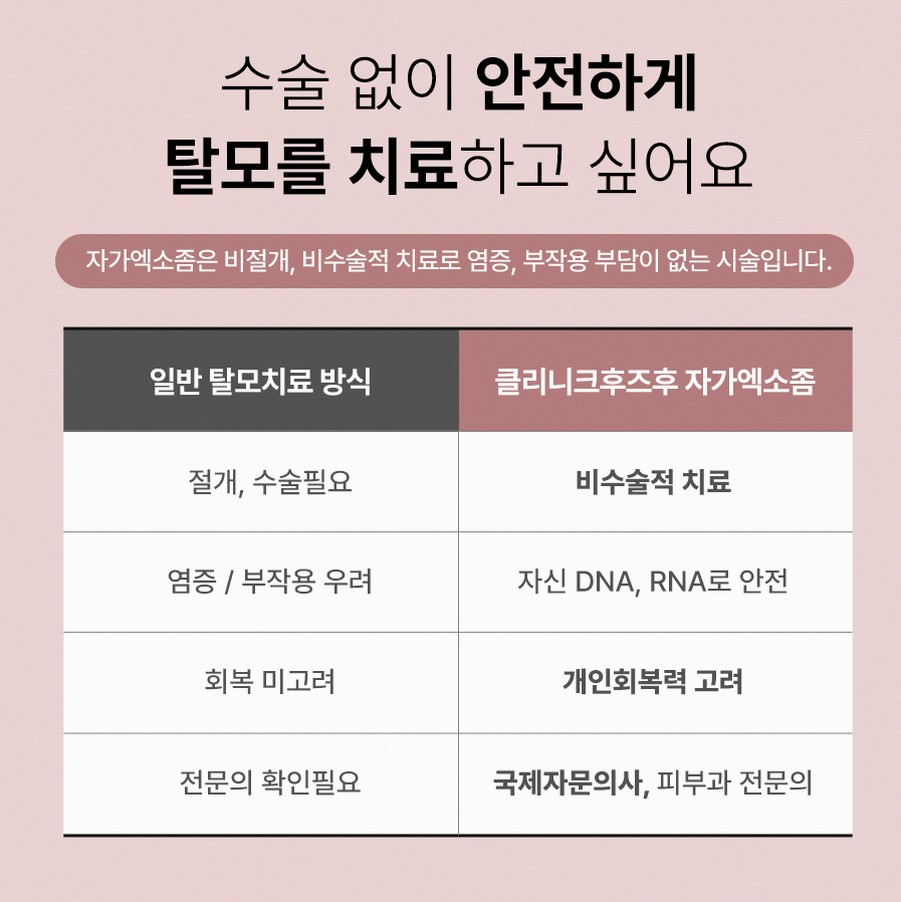
Non surgical hair loss treatment focuses on improving the scalp environment, slowing further shedding, and supporting thicker, healthier hair where follicles are still active. Instead of transplanting hair, the aim is to stabilize the condition and encourage better growth from existing follicles.
Typical components include prescription medications, topical solutions, scalp injections, and energy based treatments that support circulation and scalp health. At clinics that emphasize regenerative medicine, such as Clinique hus,hu, autologous exosome programs and cell based scalp injections are often central to the treatment plan.
These approaches do not promise complete regrowth in every case, but they can help slow progression, improve density in areas that are thinning, and maintain hair quality when started early and continued consistently.
What is included in hair loss treatment cost?
When you ask about hair loss treatment cost, it helps to break it down into several parts. Not every patient needs all of these, but understanding each component makes it easier to plan a realistic budget.
Initial consultation and scalp assessment
Your first visit usually includes a detailed consultation and scalp check. The doctor reviews your medical history, family history of hair loss, current medications, stress levels, and lifestyle factors such as diet and sleep.
The scalp itself is examined for density, miniaturized hairs, inflammation, and scaling. Many clinics use magnified photography or imaging devices to document baseline density and follicle condition. In a clinic that integrates hair loss care with broader anti aging programs, these assessments may be combined with skin and facial imaging, so the doctor can consider your scalp as part of your overall tissue health.
This first step may be charged as a standard medical consultation, and there can be an additional fee if advanced imaging or digital analysis is used.
Diagnostic tests
Not all patients require laboratory tests, but they can be important when the cause of hair loss is unclear or when sudden shedding occurs.
Common tests include blood work to check hormones, thyroid function, iron and other nutritional markers, and signs of inflammation or autoimmune activity. In some cases, further tests are recommended if the doctor suspects an underlying systemic condition.
These tests add to the initial cost, but they help avoid spending money on treatments that are not suitable for your actual diagnosis.
Medical treatments
Most long term hair loss plans include some form of medication. These are usually ongoing monthly costs.
Oral medications can include drugs that target androgen related hair loss, as well as other prescription agents depending on your sex, age, and health status. Topical treatments can include minoxidil type solutions or customized compounded formulas tailored to your scalp condition.
Some clinics also use nutritional or anti aging injections that indirectly support scalp health, such as DNA salmon based injections, PDRN, or skin repair cocktails. These are not hair specific drugs but can be used to improve tissue quality and microcirculation around the follicles when clinically appropriate.
In clinic procedures
In clinic procedures are where costs can vary the most, because they depend on the technology used and the number of sessions.
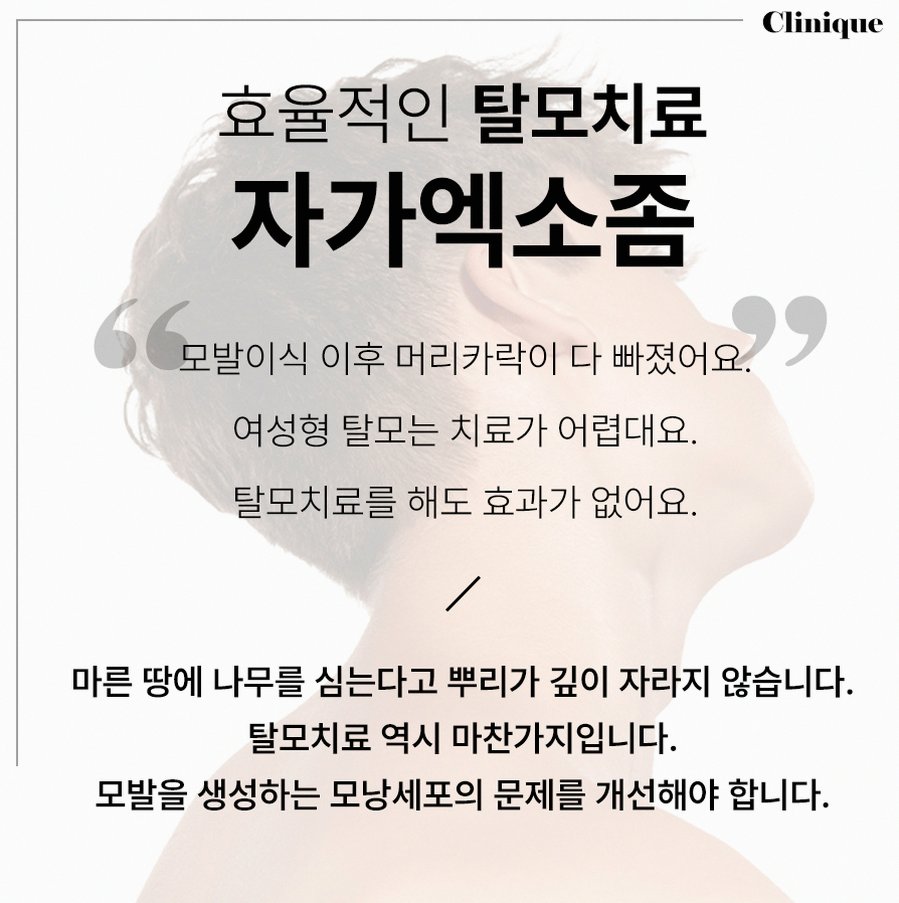
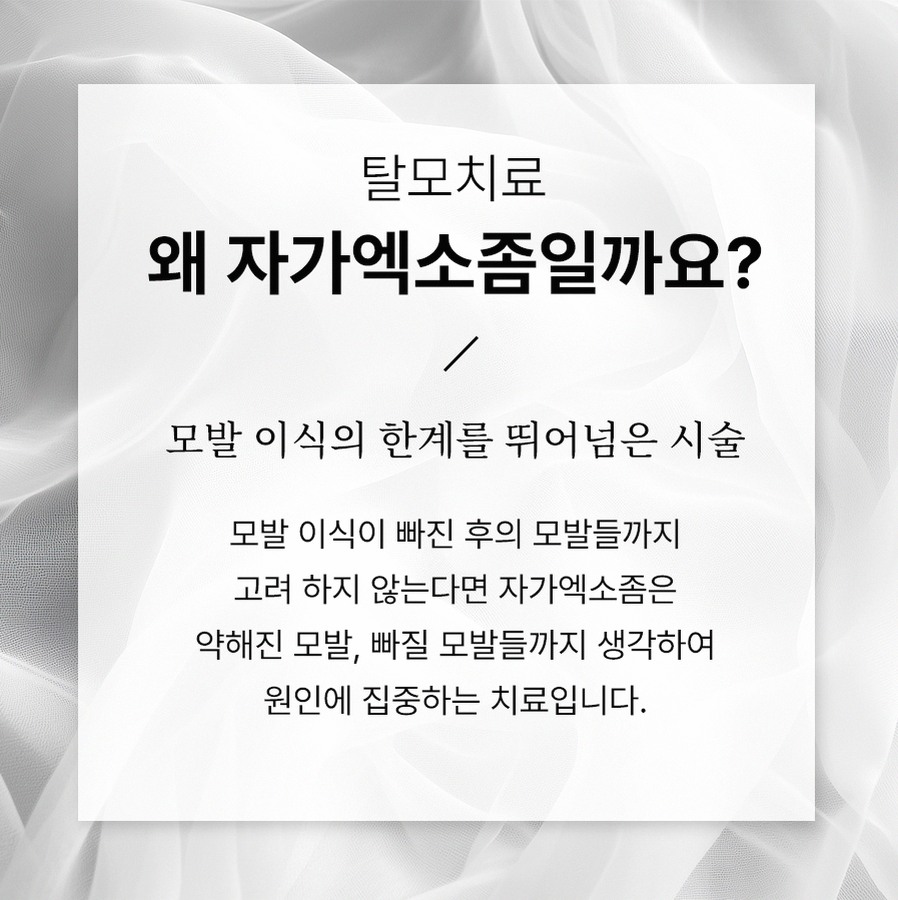
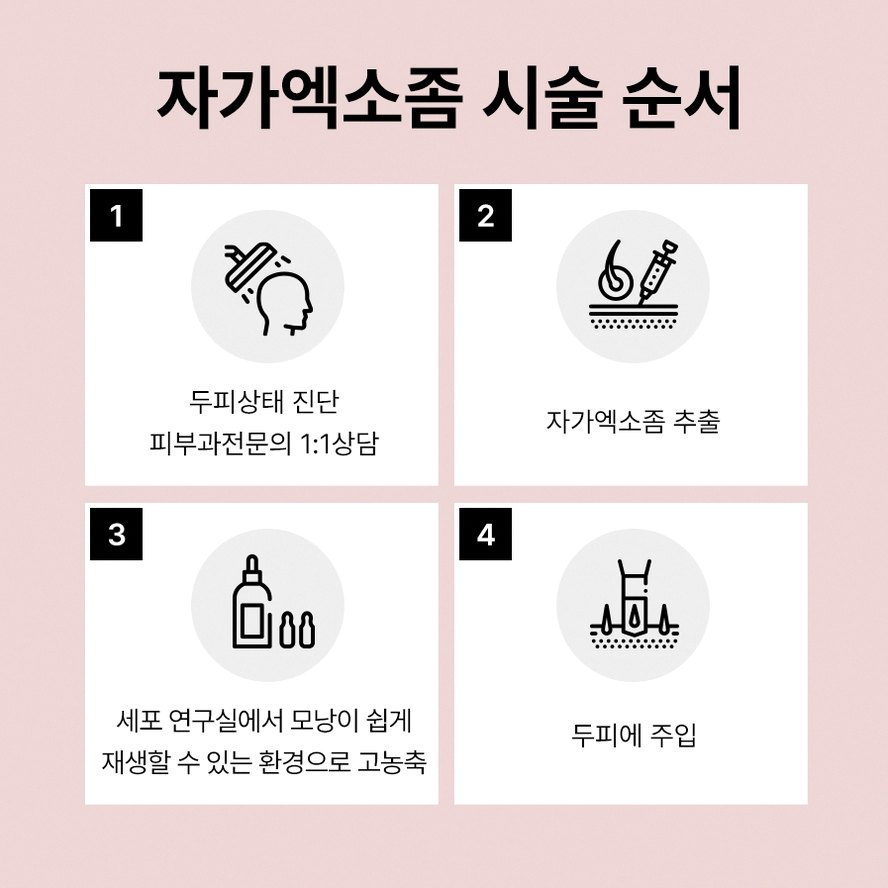
A key focus in some Gangnam clinics is autologous exosome hair loss programs. These use exosome-rich preparations derived from the patient’s own cells, following non-cultured autologous cell principles. The goal is to deliver cell-level signals that support regeneration and reduce inflammation around the follicles. Note: regulatory status, clinic protocols, and practice standards for autologous cell/exosome treatments vary by jurisdiction; confirm a clinic’s documented safety procedures, regulatory compliance, and specific treatment details before proceeding.
Scalp injections may use cell based materials prepared under the clinic’s cell therapy concepts, sometimes supported by an in house lab such as a Recovery Lab. These sessions are typically more complex than standard mesotherapy or vitamin injections and are priced accordingly.
Energy based scalp treatments may also be added. Devices using QMR resonance, radiofrequency, ultrasound, or similar technologies can be adapted for the scalp to support microcirculation, reduce inflammation, or condition the skin. Each device session has its own fee, and they are often combined with injections in a structured program.
Follow up and maintenance
Hair loss care is rarely a single visit. Follow up appointments are needed to monitor shedding, check for side effects, and adjust medication doses or procedure intervals.
In the early phase, visits may be more frequent, especially when autologous exosome injections or other intensive procedures are scheduled. Once shedding stabilizes and density improves or holds steady, the plan usually shifts to a maintenance phase with less frequent visits and fewer procedures.
These follow ups and maintenance sessions form an important part of your long term cost, but they can often be spaced out and adjusted to your budget once your condition is stable.
Factors that change hair loss treatment cost
Two groups of factors influence your total cost: patient related factors and clinic related factors.
Patient side factors
Type and cause of hair loss
Androgenetic hair loss, the most common type, usually requires long term medication and periodic in clinic treatments. Costs accumulate over time, but they can often be spread out as a monthly budget.
Sudden diffuse shedding or stress related telogen effluvium may need more intensive care for a shorter period, with a focus on identifying and correcting triggers. Autoimmune type hair loss often requires more complex medical management and sometimes coordination with other specialists, which can add diagnostic and treatment costs.
Severity and area
Early thinning at the hairline or crown generally needs fewer sessions and lower doses than advanced, wide area loss. When a large area is affected, more injections, more product, and more sessions are usually necessary, which increases the overall program cost.
Age and general health
Younger patients in good health may need fewer additional tests and may respond well to standard protocols. Patients with thyroid disorders, anemia, hormonal imbalance, or chronic illnesses might require more extensive work up and tailored medication plans, which can affect both the initial and ongoing costs.
Treatment goal and time frame
If your priority is a budget friendly plan, the doctor can focus on essential evidence based medications and a minimal number of procedures, spreading them out over longer intervals.
If you prefer a more aggressive improvement strategy, you may combine oral and topical medications with regular autologous exosome injections, supportive injections, and device based scalp treatments. This approach typically has a higher monthly cost, especially in the first 3 to 6 months.
Clinic side factors
Use of autologous exosome programs
Autologous exosome therapy is more complex than standard injection treatments. It involves preparing exosome rich material from your own cells and applying specific protocols for handling and administration. This complexity usually means a higher per session cost compared with basic scalp injections.
In house cell lab and Recovery Lab systems
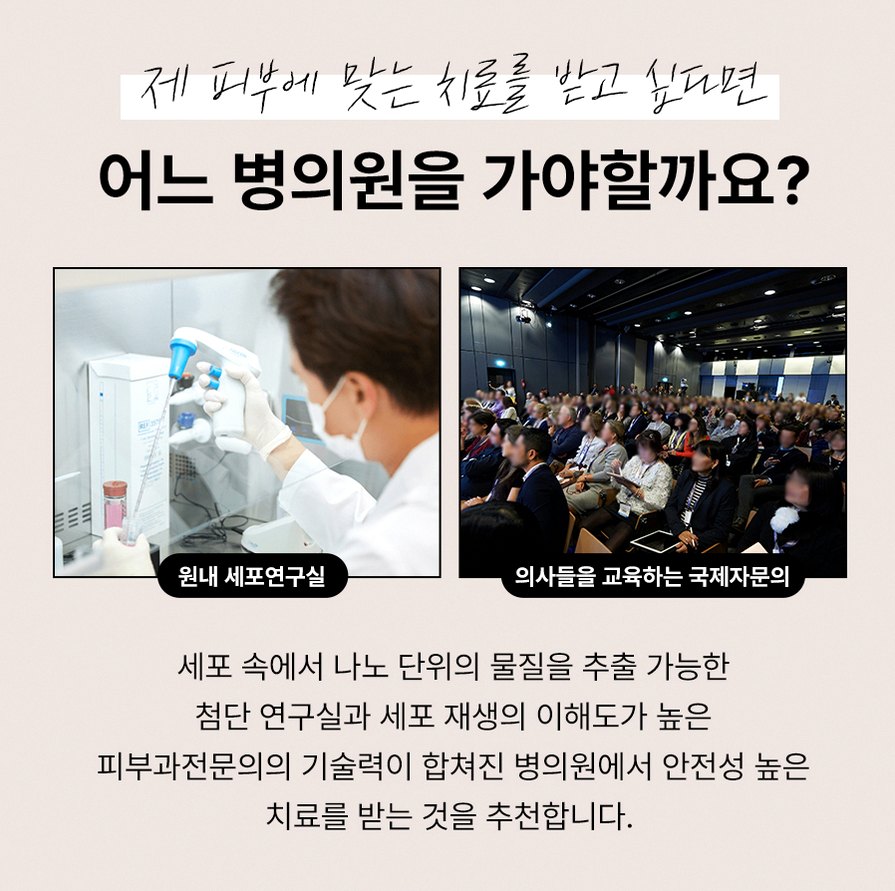
Clinics that operate an in house cell research lab, sometimes referred to as a Recovery Lab, invest in specialized equipment, quality control, and research. This infrastructure supports standardized preparation of cell based materials and ongoing protocol development, but it also influences the pricing structure of cell level treatments.
Equipment and technology
Advanced devices such as QMR resonance systems, RF based platforms, and premium imaging tools require significant investment and maintenance. Their use can raise per session fees compared to clinics that rely only on basic scalp massages or simple injections.
Expertise of medical staff
Doctors with focused training in hair and scalp conditions and memberships in hair and stem cell related academic societies often design more detailed, research based protocols. Their consultation and procedure fees may reflect this experience and academic involvement.
Location and accessibility
Clinics located in central areas like Cheongdam in Gangnam, near Apgujeong Rodeo Station, typically face higher operating costs, which can be reflected in treatment prices. At the same time, these locations are convenient for international patients staying in nearby hotels or serviced residences.
Typical cost structures and how to think about them
Instead of searching for one fixed number, it is more useful to understand the patterns of how hair loss treatment is priced.
Consultation and diagnosis
Some clinics offer promotional first consultations, while others charge standard medical consultation fees from the beginning. If blood tests, imaging, or digital scalp analysis are needed, they are usually billed separately.
Medication centered plans
Medication centered plans focus on oral and topical treatments you use at home. The cost is usually calculated per month, and it continues as long as you stay on treatment.
Because many forms of hair loss are chronic, stopping medication suddenly often leads to renewed shedding over time. When planning your budget, it is wise to think in terms of long term affordability rather than the lowest possible first month cost.
Procedure centered plans
Procedure centered plans emphasize in clinic treatments such as autologous exosome scalp injections. Each session has a set fee, and clinics commonly offer package pricing for a series of sessions over 3 to 6 months.
Packages may also include supportive injections or device based scalp treatments. While packages can reduce the per session price, they make sense only if the program matches your actual diagnosis and you can realistically attend all scheduled sessions.
Combined plans
Many patients choose a combined approach, using both medications and procedures. In this case, your total monthly cost is the sum of home care prescriptions and the average monthly cost of in clinic sessions.
For example, if you have exosome injections every 4 to 6 weeks, you can divide the package price by the number of months to estimate a monthly average, then add your medication cost. The doctor can help you adjust the balance between medications and procedures to match your budget and goals.
Maintenance phase
Once active shedding is under control and your scalp condition is stable, the frequency of in clinic procedures can often be reduced. You might continue medications and schedule injections or device treatments less often, which usually lowers your long term monthly cost compared to the initial intensive phase.
Why some clinics emphasize cell level and exosome based care
Some hair loss clinics in Seoul follow a philosophy of starting anti aging at the cell level rather than only treating the surface. For hair loss, this means focusing on the health of the follicle environment and surrounding tissue.
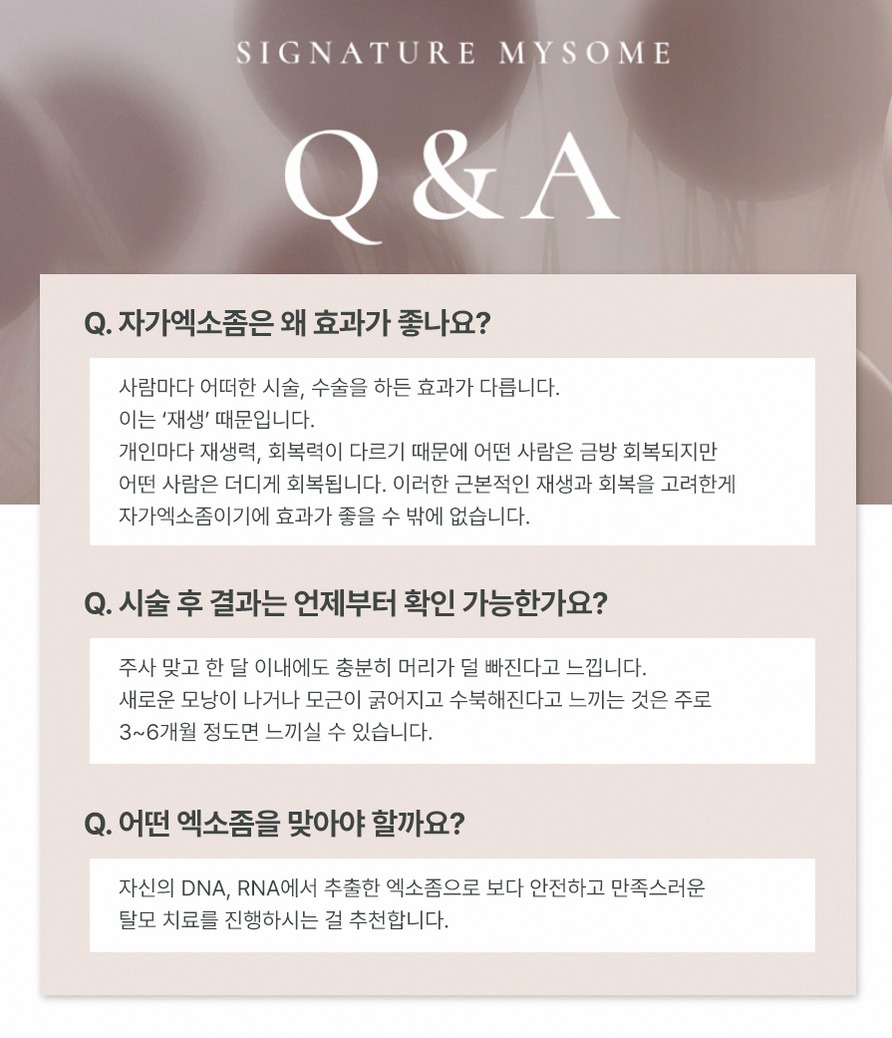
Autologous exosome programs use exosome rich preparations derived from your own cells, following non cultured autologous cell principles. The idea is to deliver cell to cell signals that can support regeneration, modulate inflammation, and create a more favorable environment for hair growth where follicles are still viable.
These programs are often combined with broader anti aging strategies, because skin quality, microcirculation, oxidative stress, and chronic inflammation all influence hair. An in house cell lab supports standardized preparation, safety checks, and research driven protocols for injections and combination therapies.

Because of the technology, expertise, and lab work involved, autologous exosome sessions usually cost more per visit than basic scalp injections. They may be suitable for patients who want a more intensive, regenerative strategy and are prepared to invest in a structured program rather than occasional single treatments.
Who may consider non surgical exosome based hair loss care
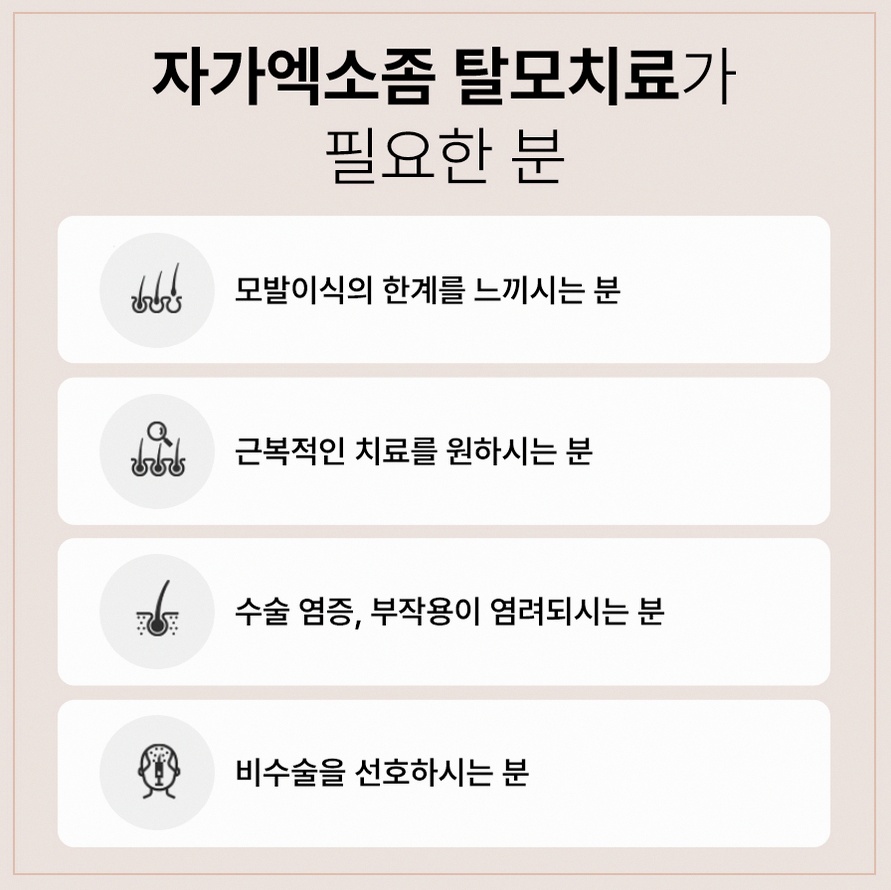
Non surgical, exosome focused hair loss treatment can be considered by:
Patients in early to moderate stages of thinning who still have visible hair in affected areas and want to slow progression and support density.
Men and women who prefer to avoid or delay surgical hair transplant and would like to try medical and regenerative options first.
Patients with diffuse thinning, postpartum shedding, or stress related loss, where stabilizing the scalp environment and correcting systemic factors is important.
Individuals interested in combining hair loss care with broader anti aging or skin quality programs for the face and scalp.
Suitability always depends on a proper diagnosis. Some advanced or scar related forms of hair loss may respond less to non surgical options, and expectations should be discussed clearly with the doctor.
Preparing for online consultation and first visit
Before travelling to Korea, many international patients start with an online or messaging based consultation.
What to prepare for online consultation
To receive a more accurate rough estimate of cost and a realistic plan, it is helpful to prepare:
Clear photos of your scalp from the front, sides, crown, and top under good lighting.
A brief history of when you first noticed hair loss and how quickly it has progressed.
Information about your family history of hair loss on both sides.
A list of current medications and supplements, including any previous hair loss treatments you have tried.
Any known medical conditions such as thyroid disease, anemia, hormonal issues, or autoimmune disorders.
With this information, the clinic can usually provide a general idea of possible treatment directions and a rough budget range, while explaining that exact costs will be confirmed after in person assessment.
Expected visit timeline in Korea
While each clinic has its own system, a typical treatment journey in Seoul may look like this.
First visit (Day 1)
You arrive at the clinic near Apgujeong Rodeo Station, exit 4, walking straight toward Galleria Department Store. The first visit usually includes registration, consultation, scalp imaging or photography, and, if needed, blood tests.
The doctor explains the suspected cause and stage of your hair loss and presents several options, such as a medication only plan, a combination of medications with periodic autologous exosome injections, or a more intensive program including device based treatments.
The team should also explain the expected duration, approximate monthly or package cost, and how many visits are recommended during your stay in Korea.
Short stay programs (1 to 2 weeks)
If you are visiting for a short period, the clinic may focus on starting medications, performing initial exosome or injection sessions, and planning follow up care you can continue at home.
You might have one or two in clinic procedures spaced a few days apart, depending on your schedule and the protocol. The staff can guide you on how to continue topical and oral treatments after you return home.
Longer stay or repeat visits
If you can stay longer or plan multiple trips to Korea, you may follow a more complete program with sessions every few weeks. Some patients schedule several visits over 3 to 6 months to complete a package of exosome injections and device treatments while maintaining medications consistently.
Aftercare and long term management
After in clinic procedures such as exosome injections or energy based treatments, you will receive specific aftercare instructions. These may include:
Avoiding harsh chemical treatments, tight hairstyles, or strong scalp irritation for a certain period.
Following guidance on when to wash your hair and which products to use.
Aftercare includes monitoring for temporary redness, sensitivity, or mild swelling at injection sites and contacting the clinic if anything unusual occurs. More broadly, patients should be aware of common and less common potential side effects from injections and energy-based scalp treatments:
- Common: transient redness, tenderness, bruising, or mild swelling
- Less common: prolonged swelling or pain, infection, pigment changes, scarring, or atypical healing
- Rare but serious: vascular compromise or persistent skin damage — ask your provider about warning signs
Discuss expected risks, how complications are managed, and any documented complication rates with the treating physician before giving consent.
In the long term, maintaining results usually involves continuing appropriate medications, protecting your scalp from excessive sun exposure, managing stress, and keeping regular follow up appointments, either in person when you visit Korea or through periodic online check ins.
Because hair cycles are slow, visible changes often take several months. It is important to approach treatment as a medium to long term commitment rather than expecting immediate transformation.
How to choose a hair loss clinic beyond just price
While cost is important, choosing a clinic for hair loss treatment should also consider quality, safety, and transparency.
Points to check include:
Whether the clinic takes a thorough medical history and performs proper scalp assessment and necessary tests before recommending advanced or expensive procedures.
Availability of both medications and in clinic procedures, including autologous exosome programs, so that treatment can be tailored to your condition and budget.
Use of certified devices and standardized protocols for injections and cell based treatments, supported by systems such as an in house cell lab or Recovery Lab.
Clarity in explaining what is included in each program, how many sessions are planned, what additional fees might occur, and how the plan can be adjusted if your response or budget changes.
Cost saving tips without compromising safety
There are ways to manage hair loss treatment cost more efficiently without turning to unsafe or unproven options.
Start early
Treating hair loss at an early stage usually requires fewer sessions and lower overall cost than waiting until the scalp is widely visible. Early intervention can help preserve existing follicles, which is often more efficient than trying to recover advanced loss.
Prioritize essentials
If your budget is limited, discuss with the doctor which medications and procedures are considered essential for your diagnosis and which are optional enhancements. It is often better to maintain a consistent basic plan than to start many add ons and stop them quickly.
Use packages wisely
Package programs can lower the per session cost, but they are only beneficial if they match your actual condition and travel schedule. Before committing, confirm how many sessions are included, the recommended interval between sessions, and what happens if you need to adjust the schedule.
Avoid unproven cheap remedies
Very low priced, non medical products or unverified treatments may seem attractive, but they can waste time and money and delay effective care. In some cases, they may irritate the scalp or interact with prescribed medications. It is safer to follow evidence based options under medical supervision.
Frequently asked questions about hair loss treatment cost
Is there a standard price for hair loss treatment in Korea?
There is no single standard price for hair loss treatment. Costs depend on your diagnosis, the severity and area of hair loss, and the treatment methods you choose. A person using only medications will have a different budget from someone combining medications with autologous exosome injections and device based treatments. A proper consultation and scalp assessment are necessary before a clinic can give you an accurate quote.
How long will I need to keep paying for treatment?
Most common types of hair loss, especially androgen related thinning, are chronic conditions. Medications are often long term, sometimes for many years, although doses and combinations may change over time. In clinic procedures such as exosome injections are usually more intensive in the first few months and then spaced out or stopped depending on your response. Your doctor can help you plan a realistic long term budget rather than focusing only on the first month.
Are autologous exosome treatments more expensive than regular injections?
In general, yes. Autologous exosome treatments involve preparing exosome rich material from your own cells and following specific handling and injection protocols, often supported by an in house cell lab. This makes them more complex than simple nutrient or vitamin injections, and the per session cost is usually higher. Some patients choose them for their regenerative focus, while others may prefer more basic injection options depending on budget and goals.
Can I know the exact cost by phone or message before visiting?
Clinics can usually provide only a rough cost range by phone or online message, based on your photos and basic information. Exact pricing requires an in person scalp examination, possible tests, and a discussion of your priorities. After your first visit, the clinic can present clear options with detailed costs, including medication plans, exosome programs, and any recommended device treatments.
Is hair transplant surgery included in this clinic’s hair loss cost?
The cost structures described here focus on non surgical medical treatments, including medications, autologous exosome programs, and other scalp therapies. Surgical hair transplant is a different category of treatment with its own pricing system and is not the main focus of this type of program.
Soft call to action for overseas patients
If you are considering non surgical, cell level hair loss treatment in Seoul and want to understand your potential costs more clearly, you can start with an online consultation. By sending scalp photos and basic medical information in advance, the team at a clinic such as Clinique hus,hu can outline possible treatment directions and a rough budget range before you travel.
When you are ready to plan your visit, you can schedule your first appointment near Apgujeong Rodeo Station in Cheongdam, Gangnam, and discuss a personalized program that balances medical effectiveness with your time in Korea and your financial comfort.
- 공유 링크 만들기
- X
- 이메일
- 기타 앱

댓글
댓글 쓰기