Types of Thread Lifting and How Silhouette Soft Works in Seoul
- 공유 링크 만들기
- X
- 이메일
- 기타 앱
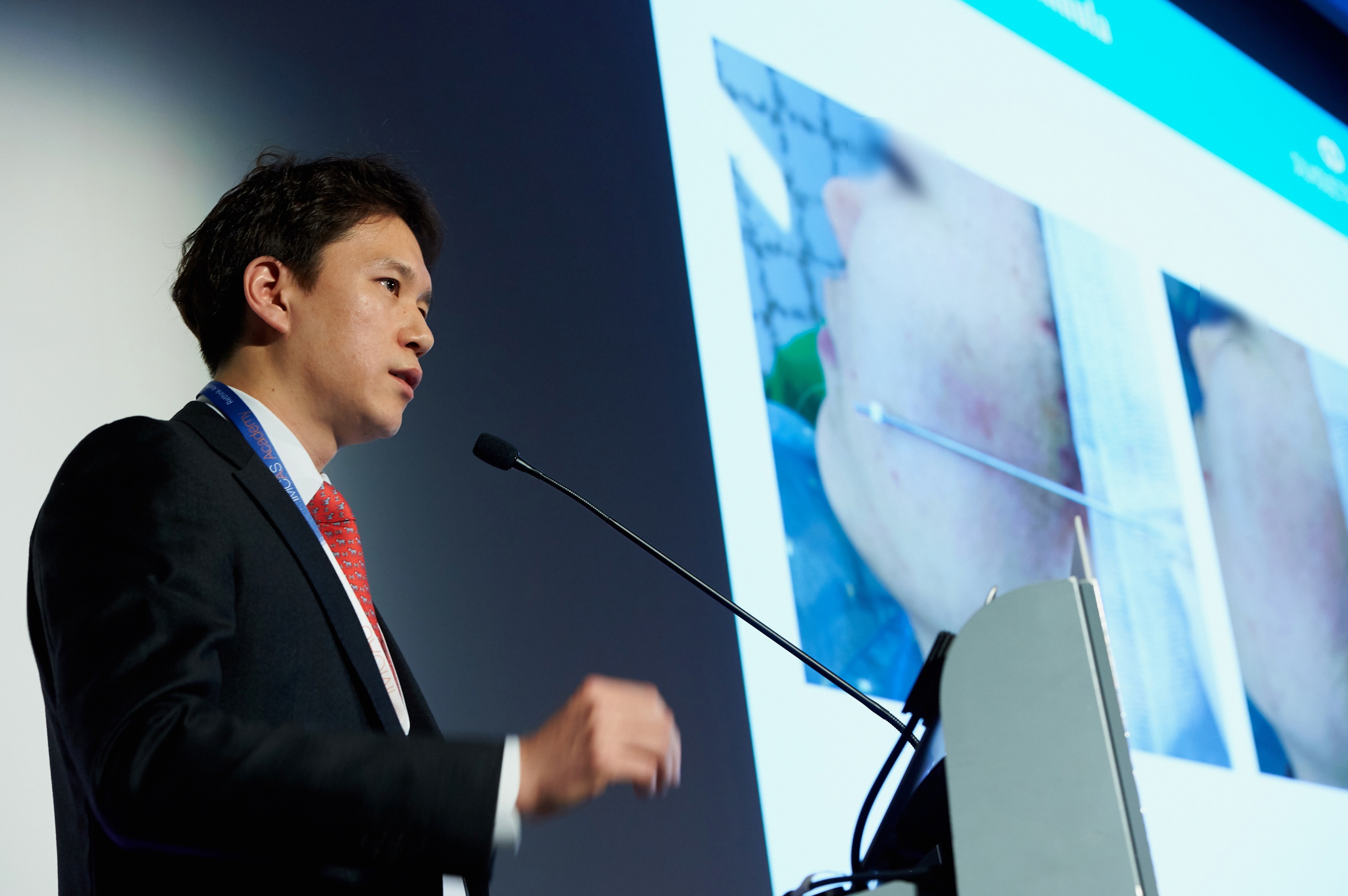
Thread lifting is a minimally invasive procedure that uses dissolvable threads to lift sagging facial tissue and stimulate collagen production. Thread types vary by material, shape, and depth of placement. Silhouette Soft is a cone-type thread lift designed for three-dimensional lifting and gradual collagen support and is commonly chosen as a premium option for the midface, jowls, and jawline.
In this guide, you will learn how the main types of thread lifting differ, what makes Silhouette Soft unique, who may be a good candidate, and how an overseas visit to a clinic in Cheongdam, Gangnam, near Apgujeong Rodeo Station can be planned from consultation to aftercare.
What is thread lifting?
Thread lifting is a non-surgical lifting technique that uses fine, absorbable threads placed under the skin to gently reposition sagging tissue. The threads create an immediate mechanical lift and also trigger a healing response that stimulates new collagen over time.
Because the threads are dissolvable, they gradually break down in the body over months. During this period, the collagen they stimulate can help maintain some of the lifting and firming effect even after the thread itself has been absorbed.
For international patients, thread lifting is often attractive because it sits between skincare and surgery: more structural change than creams or facials, but with less downtime and invasiveness than a surgical facelift.
Main types of thread lifting
By material
The most commonly used thread materials are:
PDO (polydioxanone): A long-used suture material. PDO threads are widely available and are often used for lighter lifting and skin tightening.
PLLA (poly-L-lactic acid): A collagen-stimulating material also used in injectable biostimulators. PLLA threads are often associated with stronger and longer-lasting collagen induction.
PCL (polycaprolactone): Another slowly degrading polymer, sometimes used when a longer duration of presence in the tissue is desired.
Mixed polymers: Some systems combine materials, for example PLLA with PLGA (poly lactic-co-glycolic acid) in their cones or components, to balance strength, degradation time, and collagen stimulation.
Silhouette Soft belongs to the PLLA-based category, using PLLA and PLGA components.
By structure
Cog or barbed threads: Threads with tiny barbs along their length that hook into tissue and allow lifting when the thread is tightened. These are common in PDO lifts.
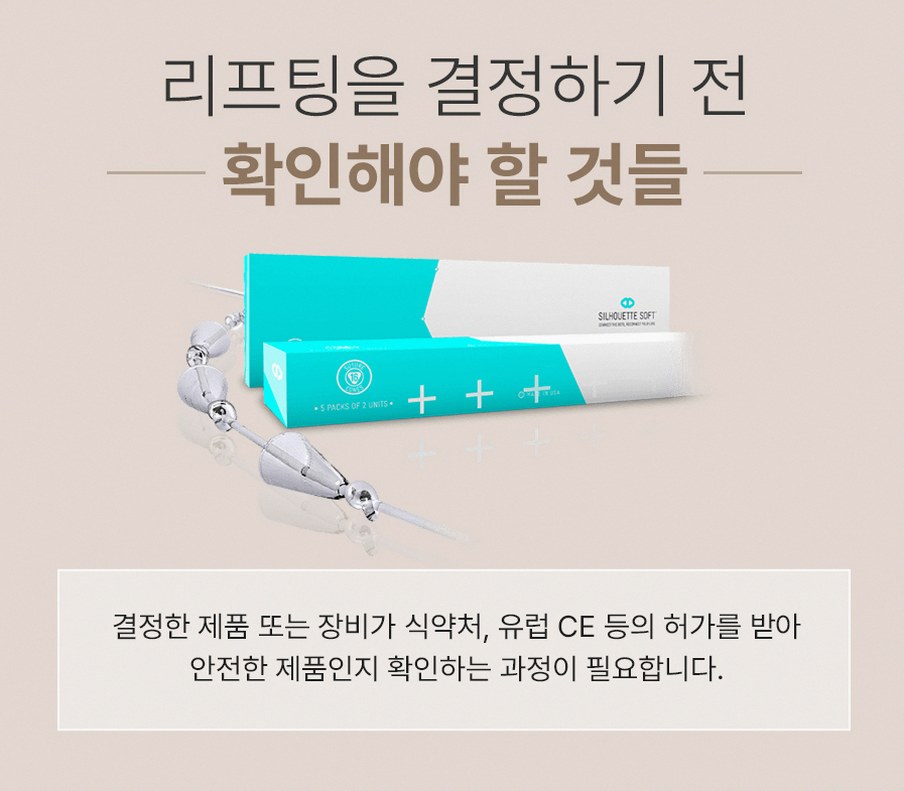
Cone threads: Threads with small, bidirectional cones that act like anchors in the tissue. Silhouette Soft is the best-known cone-type thread system, designed for stable, three-dimensional repositioning.
Smooth or mono threads: Simple, smooth threads without barbs or cones, mainly used for skin quality improvement, fine lines, and mild tightening rather than strong lifting.
Screw or tornado threads: Twisted or coiled threads used to add a bit more volume and tightening than simple mono threads, but still not typically for major lifting.
Silhouette Soft is in the cone-type category, focusing on structural lifting rather than fine-line improvement alone.
By target layer and purpose
Deep SMAS-level lifting: Some threads are placed in deeper layers near the superficial muscular aponeurotic system (SMAS), aiming to reposition heavier tissue in the midface and lower face.
Superficial dermal tightening: Other threads are placed more superficially to improve skin texture, fine wrinkles, and mild laxity.
Silhouette Soft is mainly used for structural lifting of the midface and lower face, with placement designed to support deeper tissues while also stimulating collagen in the overlying skin.
What is Silhouette Soft?
Silhouette Soft is a branded, cone-based, absorbable thread lift system that uses a PLLA thread with tiny PLGA cones arranged in two directions along the thread.
The mechanism can be understood in two phases.
Immediate mechanical lift
Once the threads are inserted under the skin, the cones act as anchors. By gently tightening the thread and adjusting its position, the practitioner can reposition sagging areas such as the cheeks, jowls, jawline, nasolabial folds, and marionette lines. Some practitioners report limited use in select areas beyond the midface; suitability should be confirmed during consultation.
Because the cones are bidirectional, they hold tissue securely in place along the planned lifting vectors, allowing a three-dimensional adjustment of facial contours.
Gradual collagen stimulation
Over the following months, the PLLA and PLGA components stimulate fibroblasts in the surrounding tissue. This process, called neocollagenesis, leads to new collagen formation around the threads and cones.
As the initial mechanical lift gradually softens with time and thread degradation, the newly formed collagen can help maintain improved support and firmness, contributing to the overall longevity of the result.
Typical indication areas
Midface and cheek descent, where the cheeks have dropped and deepened the nasolabial folds.
Jowls and jawline blurring, when the once-straight jawline has become less defined.
Mild to moderate lower face sagging, especially in patients who are not ready for surgery.
Early neck laxity in carefully selected cases, often combined with other tightening treatments.

Duration of effect
However, this is not guaranteed and varies widely depending on age, skin quality, facial structure, lifestyle, and the number and placement of threads. Some patients may notice benefits for a shorter or longer period.
How Silhouette Soft differs from other thread types
Compared with basic PDO cog threads
Material: PDO threads use polydioxanone, which typically dissolves more quickly. Silhouette Soft uses PLLA and PLGA, materials known for stronger collagen stimulation and longer persistence in tissue.
Structure: PDO cogs rely on small barbs cut into the thread. Silhouette Soft uses molded cones arranged in two directions, which can provide more stable anchoring and allow more controlled three-dimensional repositioning.
Longevity: In many practices, Silhouette Soft is positioned as a longer-lasting option than basic PDO cog lifts, but individual outcomes vary and no duration can be promised.
Indications: PDO cogs are often used for lighter lifting, early sagging, or as an entry-level thread option. Silhouette Soft is usually chosen when more defined contouring and midface support are desired, especially in patients with suitable tissue thickness.
Compared with mono or smooth threads
Mono threads are primarily used for skin quality improvement, fine wrinkles, and mild tightening. They are not designed to create a strong mechanical lift or significantly reposition facial structures.
Silhouette Soft, by contrast, is specifically designed to lift and contour. The cones engage deeper tissues to visibly lift cheeks and jowls, while also improving skin firmness over time.
Compared with other premium thread systems and devices
Aptos threads: Another advanced thread system with various designs and indications. Some Aptos threads use barbs, others have different anchoring structures. The choice between Silhouette Soft and Aptos often depends on the exact area to be treated, tissue characteristics, and the practitioner’s experience with each system.
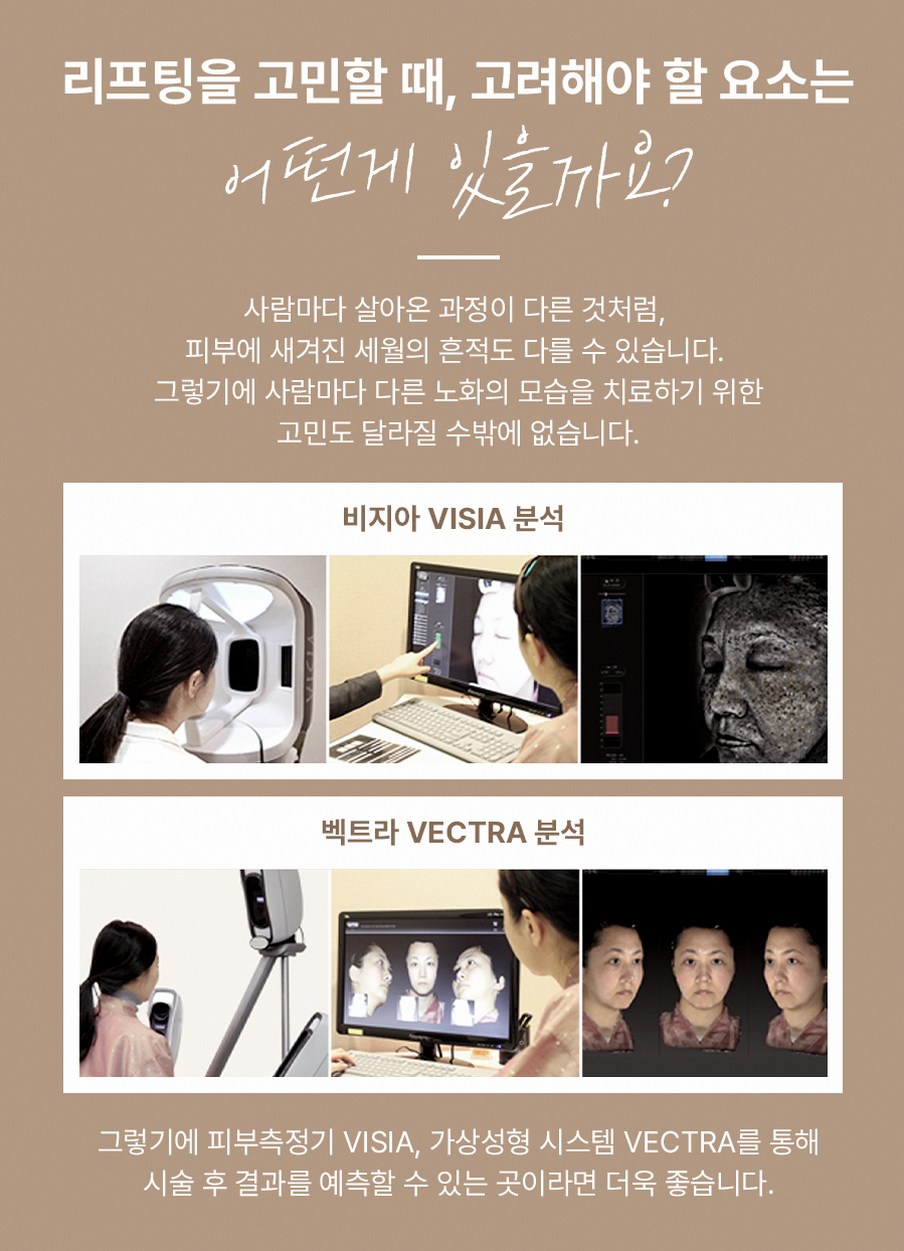
Ultrasound and radiofrequency lifting devices: These device-based treatments do not leave foreign material in the tissue. They use focused energy to tighten and stimulate collagen in deeper layers, including the SMAS. The effect is more diffuse rather than vector-based. Silhouette Soft, on the other hand, allows immediate, direction-specific lifting by physically repositioning tissue.
No single method is automatically the best. The most suitable option depends on your facial anatomy, degree of sagging, skin thickness, and whether your priority is structural lift, skin quality, or both.
Who may consider Silhouette Soft
Silhouette Soft is generally considered for patients with:
Mild to moderate sagging rather than very advanced laxity.
A desire for noticeable yet natural lifting of cheeks, jowls, and jawline without surgery.
Interest in collagen stimulation for longer-term support, not just a short-term tightening.
Favorable skin and facial characteristics
Adequate tissue thickness so the cones can anchor securely without being visible or easily felt.
Reasonable skin elasticity, so the tissue can be repositioned and held in a new position.
Who may not be ideal
Very thin, atrophic skin where cones might become visible or palpable.
Very heavy or advanced sagging, where a surgical facelift or more extensive combined approaches may be more appropriate.
Patients expecting permanent or surgical-level results from threads alone. Thread lifting is a bridge between skincare and surgery, not a replacement for a full facelift.
If you are unsure which group you fall into, a detailed facial assessment with an experienced practitioner is essential.
Treatment overview: what to expect
Pre-treatment assessment
Before considering Silhouette Soft, a thorough consultation is needed. In an anti-aging focused clinic in Cheongdam, Gangnam, near Apgujeong Rodeo Station, this usually includes:
Detailed facial analysis: The doctor evaluates the degree and pattern of sagging, asymmetry, skin thickness, and areas of volume loss. Photos or imaging may be used for planning.
Medical history review: Medications (especially blood thinners), medical conditions, allergies, and previous procedures are reviewed to assess safety and timing.
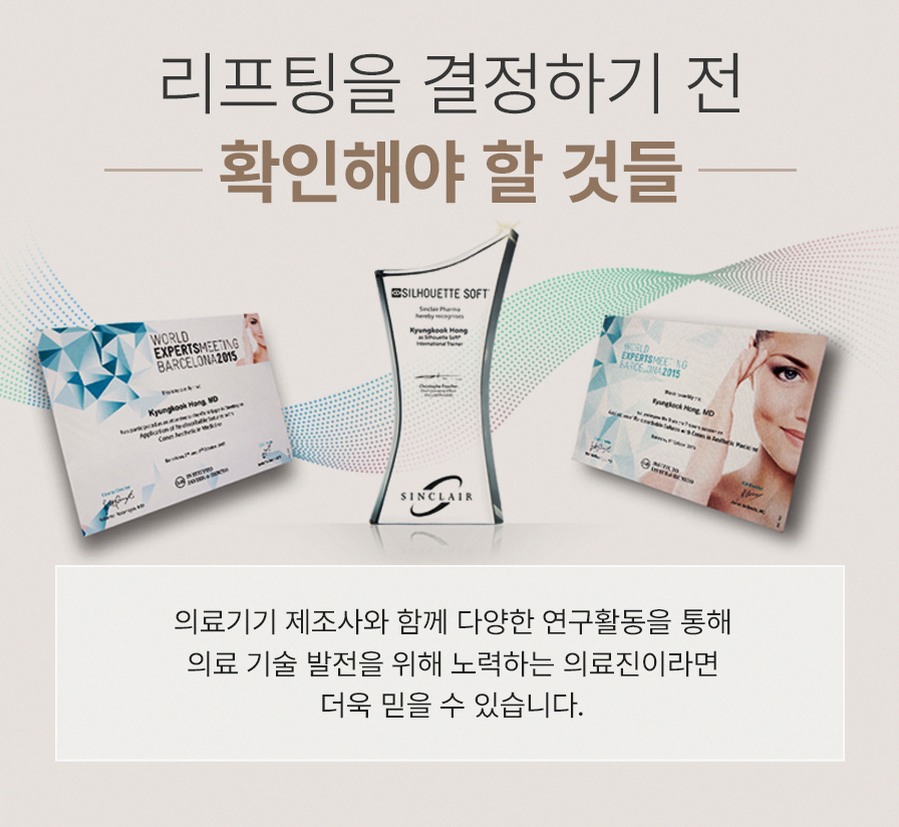
Goal setting and expectations: The practitioner explains what thread lifting can and cannot achieve, discusses possible need for combination treatments (such as volume restoration, skin tightening devices, or regenerative injections like exosome or stem cell based therapies), and helps you understand realistic outcomes.
Procedure steps
On the treatment day, the process typically follows these steps:
Marking: The doctor marks lifting vectors and entry or exit points on your face while you are sitting, to reflect how gravity affects your tissues.
Local anesthesia: Numbing injections are given along the planned thread paths to keep you comfortable.
Thread insertion: Using a fine needle or blunt-tipped cannula, the threads are inserted into the appropriate tissue layer. The cones are positioned along the planned vectors.
Adjustment and molding: Once the threads are in place, the doctor gently adjusts and molds the skin from the outside to set the lift, refine symmetry, and smooth the surface.
Immediate sensations and appearance
After the procedure, it is common to feel tightness or pulling, especially when moving facial muscles. Mild discomfort, swelling, and occasional dimpling or irregularity can occur. These usually soften over several days to a few weeks as the tissue adapts and swelling subsides.
Safety, side effects, and downtime
Common temporary effects
Swelling and bruising along the thread paths.
Tenderness or mild pain when touching or moving the treated areas.
Feeling of tightness, especially when opening the mouth widely or making big facial expressions.
Early asymmetry or dimpling, which often improves as swelling decreases and tissues settle.
Less common but important risks
Infection at entry points or along the thread path.
Thread exposure, where a small part of the thread becomes visible at the skin surface.
Prolonged dimpling, irregularity, or visible threads under thin skin.
Need for thread adjustment or, rarely, removal.
Most of these risks can be reduced by careful patient selection, correct layer placement, precise vector planning, and strict aseptic technique.
Downtime and activity guidance
Many patients can return to light daily activities within a short time, sometimes the next day. However, you will usually be advised to:
Avoid heavy exercise, saunas, and intense heat for a period recommended by your doctor.
Limit exaggerated facial movements, such as very wide yawning or strong chewing, in the early days.
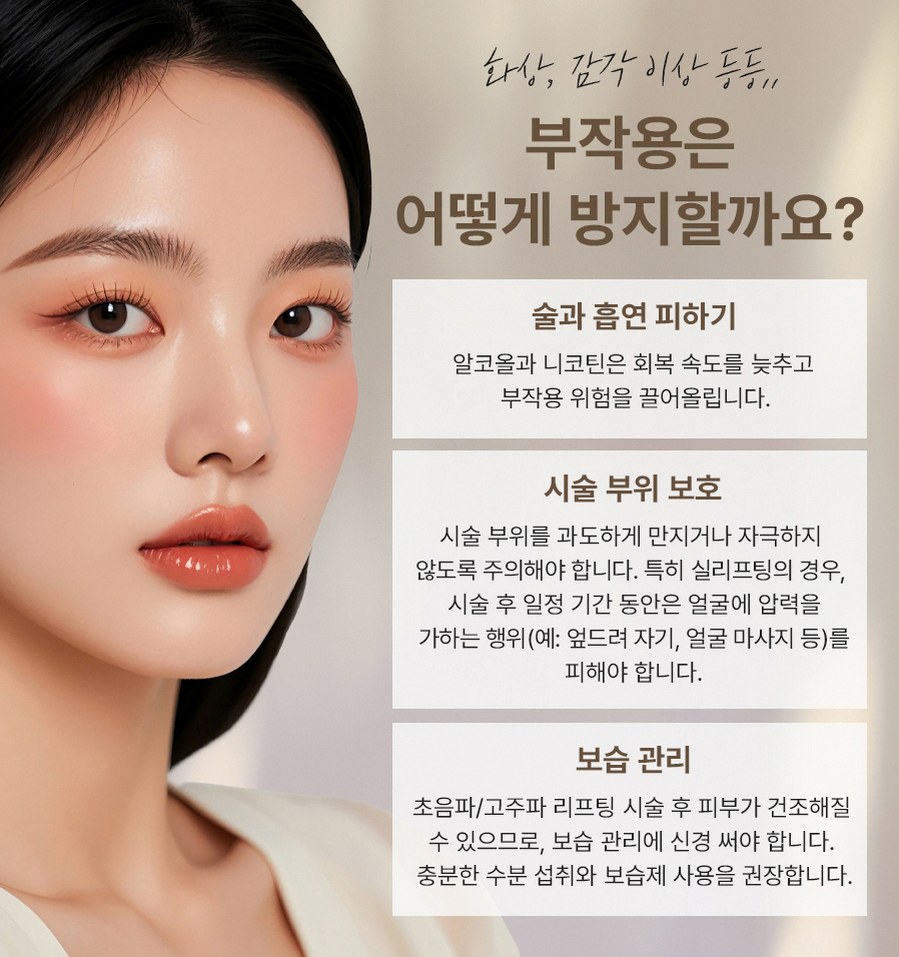
Avoid pressing or massaging the treated areas.
Sleep on your back with your head slightly elevated, avoiding side sleeping that puts pressure on the lifted areas for several days.
Why practitioner and clinic choice matters
Silhouette Soft is technique-sensitive. The quality of the result depends heavily on:
Accurate assessment of whether you are a suitable candidate for this specific thread type.
Customized vector design based on your unique facial anatomy and aging pattern.
Precise depth of placement and tension control to balance lift with natural expression.
Value of a clinic with multiple lifting tools
A clinic in Cheongdam, Gangnam, near Apgujeong Rodeo Station that focuses on anti-aging and holds multiple lifting devices and thread options can:
Compare Silhouette Soft with other threads such as Aptos, PDO cogs, or mono threads.
Combine thread lifting with ultrasound or radiofrequency devices for deeper tightening when appropriate.
ed options with your provider.
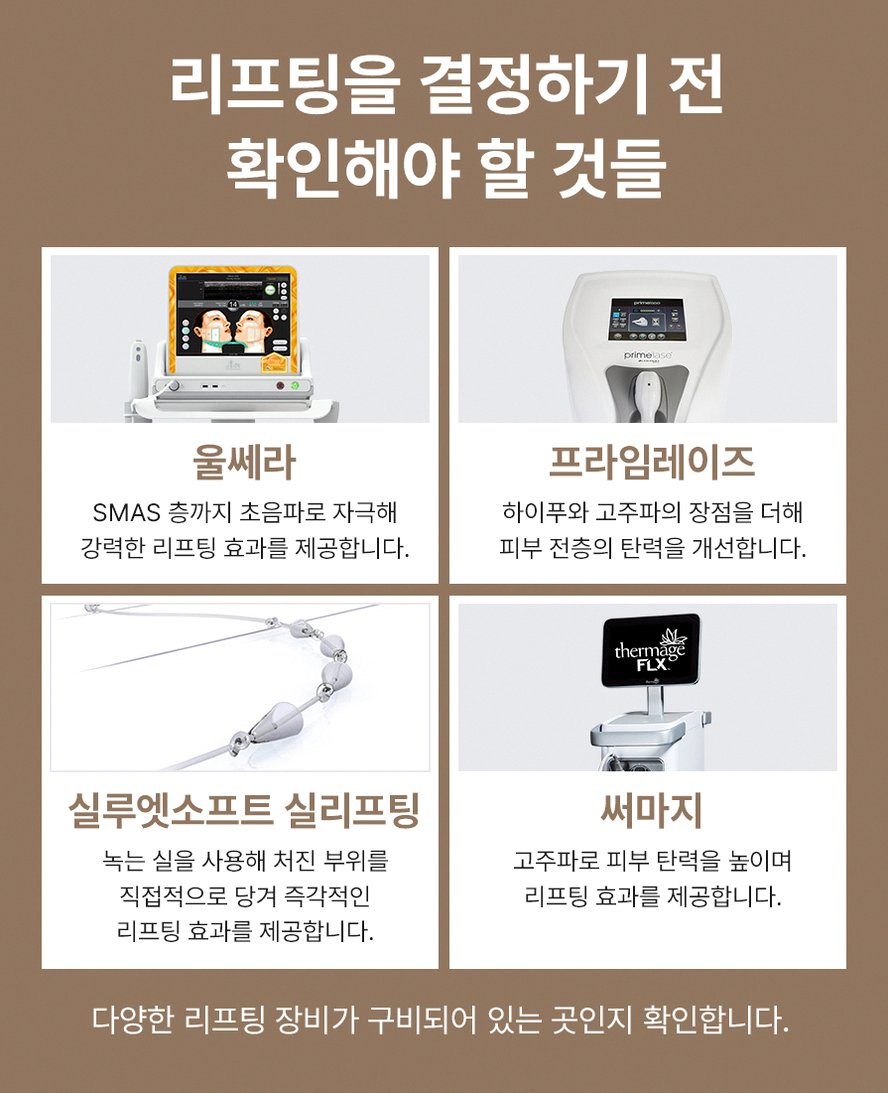
Physicians with international lecture and publication experience in fillers and lifting threads are often more familiar with subtle technique differences and how to combine treatments safely.
Combination strategies with Silhouette Soft
Thread lifting often works best as part of a comprehensive anti-aging plan rather than as a single, isolated procedure.
Volume restoration
In areas where the face has lost volume, such as the cheeks or temples, threads alone cannot fully correct hollowness. Collagen-stimulating fillers or other volumizing treatments may be recommended before or after Silhouette Soft to restore structure.
Energy-based tightening
Ultrasound or radiofrequency devices can be used to tighten deeper layers, including the SMAS, and to enhance overall firmness. These can be scheduled before or after thread lifting, depending on the protocol and device type.
Skin quality improvement
Lasers, regenerative injections such as exosome or stem cell based therapies, and medical skincare can improve texture, pores, and pigmentation. When combined with Silhouette Soft, they address both the surface and deeper support structures.
A clinic with a strong focus on cell-level anti-aging can design a sequence that supports collagen and tissue healing around the threads.
Online consultation and pre-visit preparation
For overseas patients, an online consultation is often the first step.
Before your online consultation, it is helpful to prepare:
Clear photos of your face from the front, 45-degree angle, and side, taken in good lighting without filters.
A list of your main concerns: for example, sagging cheeks, jowls, or early neck laxity.
Medical information: current medications, especially blood thinners; history of keloid or hypertrophic scars; previous facial procedures.
Questions you want to ask about Silhouette Soft and other thread types.
During the online consultation, the doctor can explain whether Silhouette Soft, another thread type, or a combination with devices and regenerative treatments would be more suitable. They can also outline a tentative treatment plan and estimated visit schedule.
Expected Korea visit timeline
A typical visit plan for Silhouette Soft in Seoul might look like this, though it can vary:
Day 1: In-person consultation and detailed assessment at the clinic in Cheongdam, Gangnam. Final treatment plan confirmation, consent, and pre-procedure photos.
Day 2: Silhouette Soft procedure. You may rest at your accommodation afterward.

Day 3 to 4: Short follow-up visit if needed to check healing, symmetry, and early response. Some patients combine this with device-based treatments or skincare if appropriate.
Day 5 to 7: Most overseas patients can travel back home within a few days, as long as there are no complications and the doctor agrees. Mild swelling or tightness may still be present but usually manageable.
If you plan to combine Silhouette Soft with more extensive regenerative or device-based programs, your stay may need to be slightly longer. This should be discussed during your online consultation.
Aftercare and follow-up from abroad
After you return home, maintaining contact with the clinic is important.
You may be asked to send follow-up photos at specific intervals so the doctor can monitor your progress.
Follow the clinic’s instructions on skincare, sun protection, and activity restrictions.
If you notice unusual pain, redness, or asymmetry, contact the clinic promptly. They can advise whether you should see a local doctor or consider a return visit.
FAQ
How is Silhouette Soft different from regular PDO thread lifting?
Silhouette Soft uses PLLA and PLGA cone-based threads, while regular PDO thread lifts usually use barbed PDO threads. The cones in Silhouette Soft provide anchoring points that allow more controlled three-dimensional lifting, and the PLLA material is associated with stronger collagen stimulation and longer persistence. PDO threads may be more suitable for lighter lifting or as an introduction to thread treatments, while Silhouette Soft is often chosen when more defined contouring and midface support are needed.
How long do Silhouette Soft results usually last, and what affects longevity?
Silhouette Soft results are often discussed as lasting around 18 to 24 months, but this is an approximate range rather than a guarantee. Longevity depends on age, skin quality, facial structure, lifestyle factors such as smoking and sun exposure, and how many threads are used and where they are placed. Combination treatments that support collagen, such as energy-based tightening or regenerative injections, may also influence how long the overall improvement is perceived.
Is Silhouette Soft suitable for the jawline and jowls?
Yes, Silhouette Soft is commonly used to address jowls and a blurred jawline. By placing threads along carefully planned vectors from the jawline toward more stable anchoring points, the cones can lift and redefine the lower face contour. However, suitability depends on how heavy the jowls are, the thickness of your skin, and your overall facial structure. In some cases, additional treatments such as fat reduction or volume restoration may be recommended.
Can Silhouette Soft be combined with ultrasound or RF lifting?
Silhouette Soft can be combined with ultrasound or radiofrequency lifting as part of a comprehensive plan. These devices can tighten deeper layers and enhance collagen production, while Silhouette Soft provides immediate, vector-based lifting. The exact timing and sequence need to be planned by your doctor to avoid interfering with thread integrity and to optimize safety.

What age range typically benefits most from Silhouette Soft?
Many patients who benefit from Silhouette Soft are in their late 30s to 50s, when sagging is noticeable but not extremely advanced. However, age alone is not the deciding factor. Skin thickness, elasticity, facial volume, and lifestyle are more important. Some younger patients with early sagging and some older patients with good tissue quality may also be suitable.
What should I avoid before and after a Silhouette Soft procedure?
Before the procedure, your doctor may advise you to avoid blood-thinning medications and supplements when medically safe to do so, as well as alcohol in the days leading up to treatment. After the procedure, you should avoid heavy exercise, saunas, and strong facial massages for a period recommended by your practitioner. Sleeping on your back and avoiding pressure on the treated areas helps protect the lift.
Can Silhouette Soft be repeated, and if so, after how long?
Silhouette Soft can usually be repeated once the previous threads have largely dissolved and the tissue has stabilized. This often means waiting at least 18 to 24 months, but the exact timing depends on your individual response and the doctor’s assessment. In some cases, additional threads or other lifting methods may be added earlier in different vectors or layers rather than repeating the same pattern.
Soft call to action
Silhouette Soft is one of several thread lifting types available today, distinguished by its cone-based design and collagen-stimulating material. Instead of choosing a thread brand by name alone, it is safer to consult a practitioner who can compare different thread systems, device-based lifting options, and regenerative treatments based on your unique facial structure and aging pattern.
If you are considering thread lifting during a visit to Seoul and would like to know whether Silhouette Soft is suitable for you, an online consultation with a clinic in Cheongdam, Gangnam, near Apgujeong Rodeo Station can help you plan a personalized, combination-based anti-aging strategy before you travel.
- 공유 링크 만들기
- X
- 이메일
- 기타 앱

댓글
댓글 쓰기