Aptos thread lift duration and what really affects how long it lasts
- 공유 링크 만들기
- X
- 이메일
- 기타 앱
Direct answer: how long does an Aptos thread lift last?
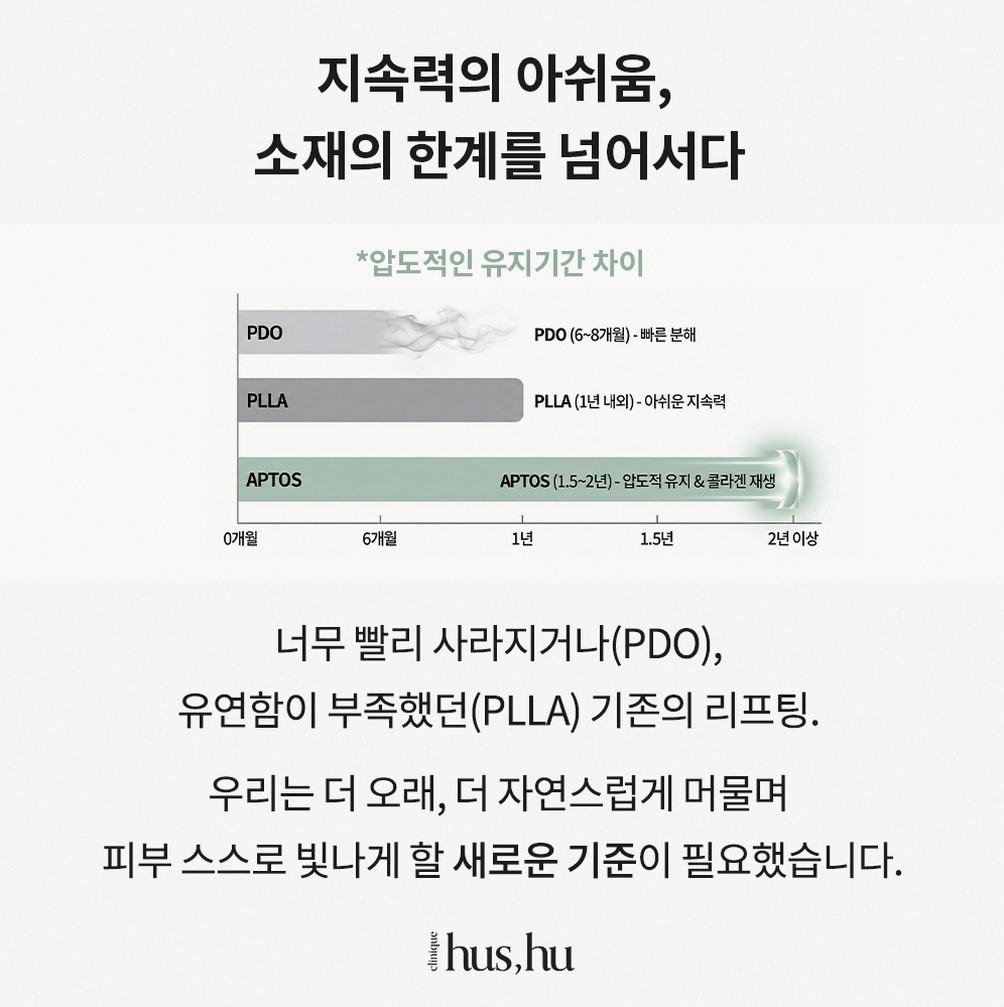
Duration varies by patient and technique. Many people notice a visible lifting and tightening effect for up to about one to two years, but individual results differ. The mechanical lift from the threads is strongest in the first months after treatment and then gradually softens as the threads are absorbed. Collagen stimulation triggered by the procedure can contribute to longer‑lasting improvements in skin quality for some patients.
The exact duration depends on the thread model (for example Namika 19, LL25, LL50), the treated area, your skin condition, and whether you combine threads with other lifting or regenerative treatments. Marketing claims of 3 to 5 years usually refer to partial residual effect, not the full initial lifting strength.
This guide explains what you can realistically expect from an Aptos thread lift, how long it tends to last, and how a specialized anti‑aging clinic in Cheongdam, Gangnam can plan and maintain your results when you travel to Seoul.
What is an Aptos thread lift?
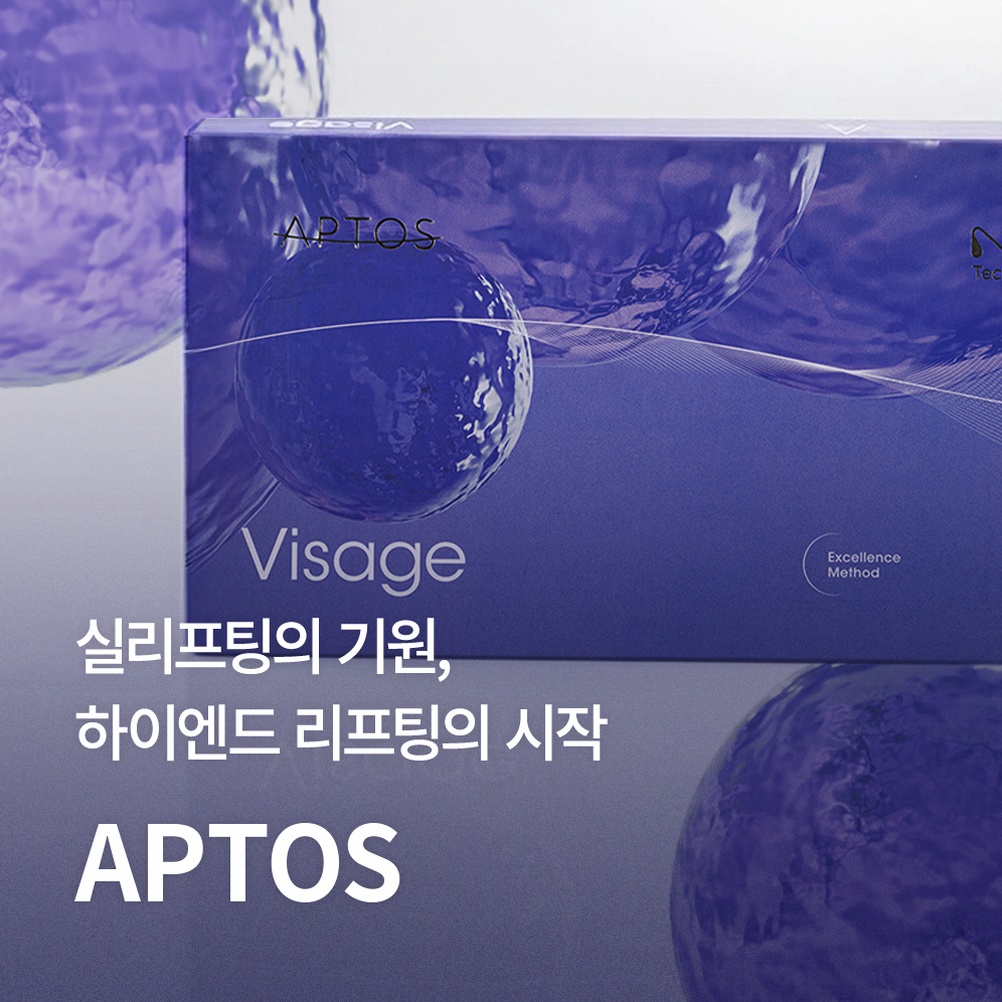
An Aptos thread lift is a minimally invasive lifting procedure. Fine barbed or cogged threads are inserted under the skin to catch and reposition sagging tissues, while also stimulating new collagen around the threads.
It is used mainly for facial tightening and contouring in areas such as the jawline, cheeks, nasolabial folds, marionette lines, and neck. The goal is to restore a cleaner facial line and reduce the look of heaviness in the lower face without surgical incisions.
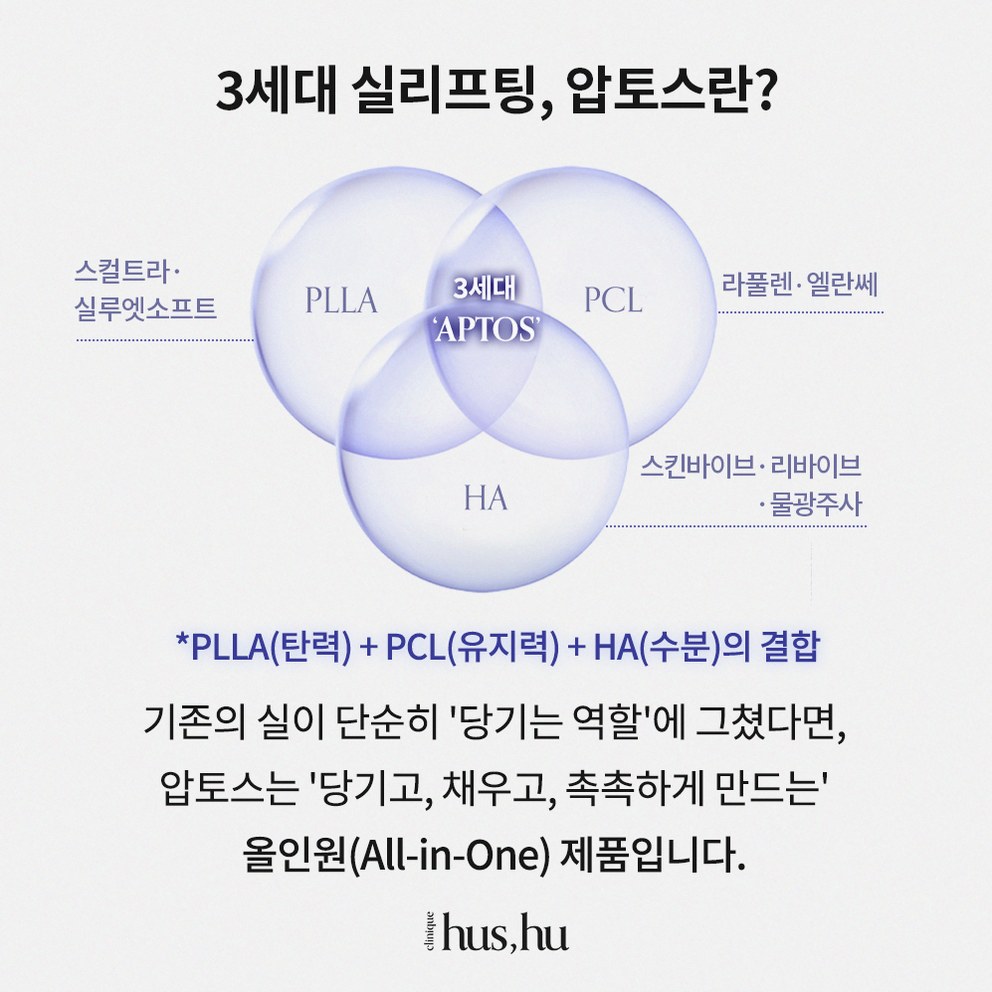
In Cheongdam, Gangnam, many anti‑aging clinics use the Aptos Namika series, including Namika 19, LL25, and LL50. These models have different lengths and lifting strengths, so they can be matched to different areas and degrees of sagging.
Aptos thread lifting is often part of a broader lifting program that can also include energy‑based devices such as Thermage FLX, Ulthera Prime, Exion, Emface, and other tightening systems. Compared with a surgical facelift, Aptos threads are non‑surgical, require less downtime, and have a finite duration. However, they can be repeated and combined with other treatments as part of a long‑term anti‑aging plan.
How long does an Aptos thread lift really last?
When you search online, you may see very different claims about Aptos thread lift duration. To set realistic expectations, it helps to separate the mechanical lift from the collagen effect.
Mechanical lifting duration
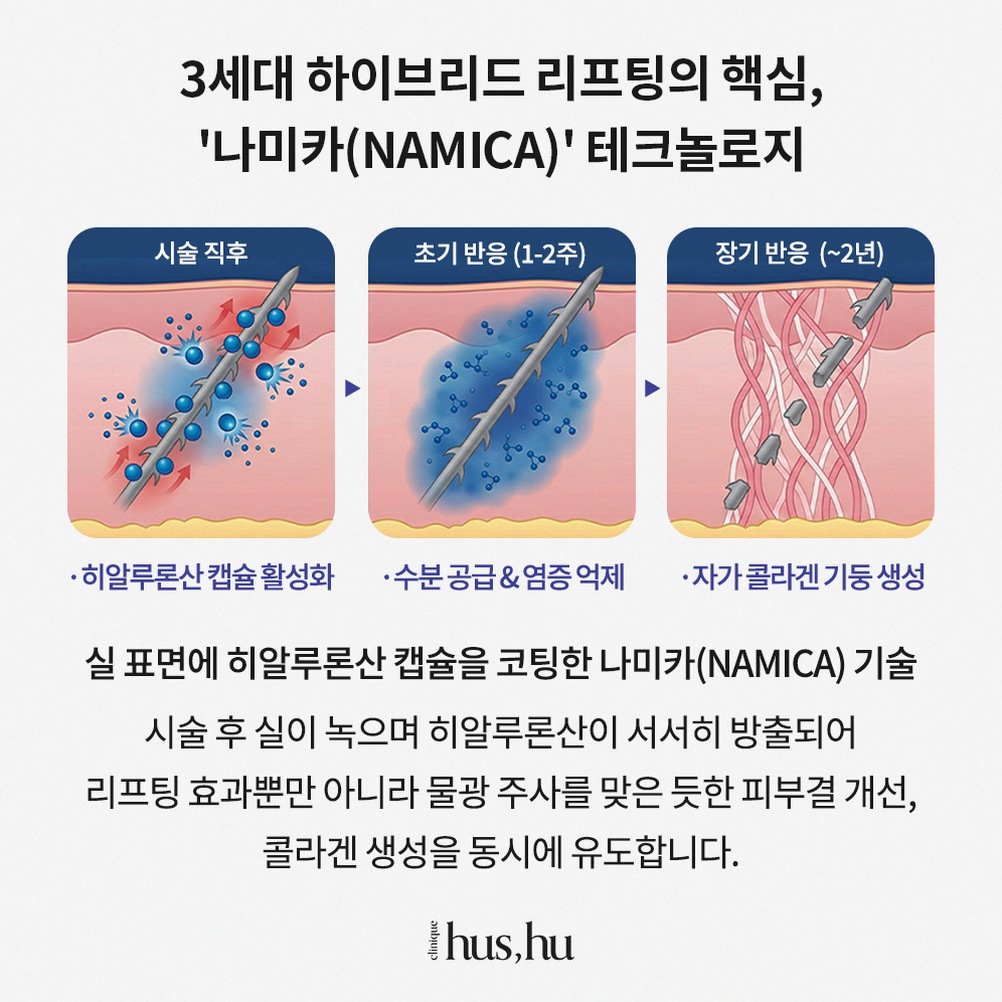
The mechanical effect is the physical lifting created by the barbs on the threads that hook into the tissue.
For most patients:
The lifting feels strongest in the first 1 to 3 months.
A stable, natural look is usually seen from about 1 to 9 months.
From around 9 to 18 months, the lift gradually softens as the threads are slowly absorbed.
Collagen stimulation duration
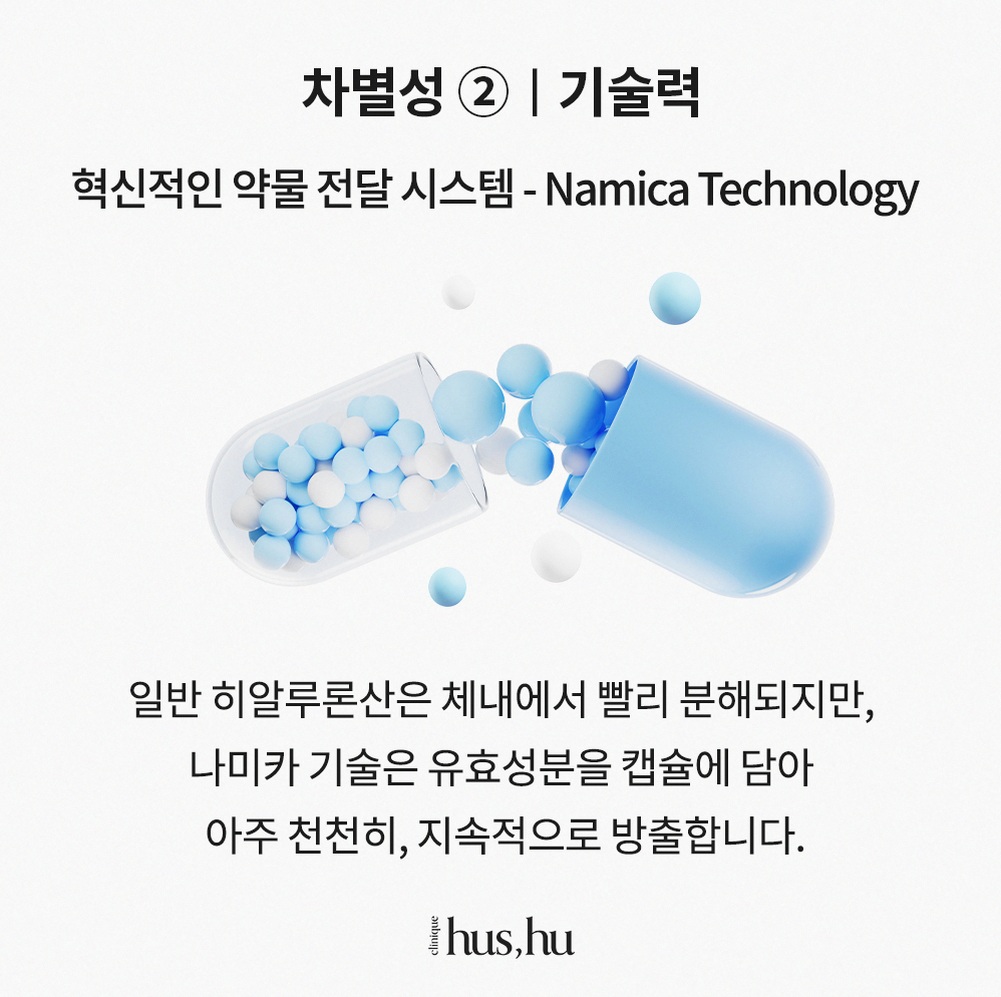
Around each thread, your body builds new collagen. This process helps support the skin even after the thread itself has largely dissolved.
Some tightening, improved texture, and better skin quality can remain for 18 to 24 months, sometimes longer in younger patients with good skin elasticity.
Why 3 to 5 year claims can be misleading
Some advertisements mention 3 to 5 year results. In reality, this is usually a best‑case scenario or refers to a mild residual benefit, not the strong lifting you see in the first year. Most people notice a gradual return of sagging and benefit from reassessment within 12 to 24 months.
Factors that affect how long Aptos lifting lasts
Every face is different, so Aptos thread lift duration varies. Several groups of factors play a role.
Patient related factors
Age and baseline laxity
Younger patients and those with mild to moderate sagging usually maintain their results longer. Their tissues are lighter and more elastic, so the threads can support them more easily. In contrast, very advanced laxity or a heavy lower face may shorten the visible duration.
Skin quality
Thicker, more elastic skin tends to hold threads better. Very thin, fragile, or heavily sun‑damaged skin may not grip the barbs as firmly, so the lift can soften sooner. Improving skin quality with regenerative treatments may indirectly extend how long the lift looks good.
Lifestyle habits
Smoking, heavy alcohol use, chronic lack of sleep, and high UV exposure all accelerate collagen breakdown. This can shorten the effect of any lifting treatment, including Aptos threads.
Weight fluctuation
Frequent or large weight changes stretch and relax facial tissues. If you gain and lose weight repeatedly after your procedure, your jawline and cheeks may sag again more quickly.
Procedure related factors
Thread type and length
Different Aptos Namika models have different properties.
Clinics can select different Namika thread models with varying lengths and strengths to match treatment areas; discuss which model is appropriate with your practitioner.
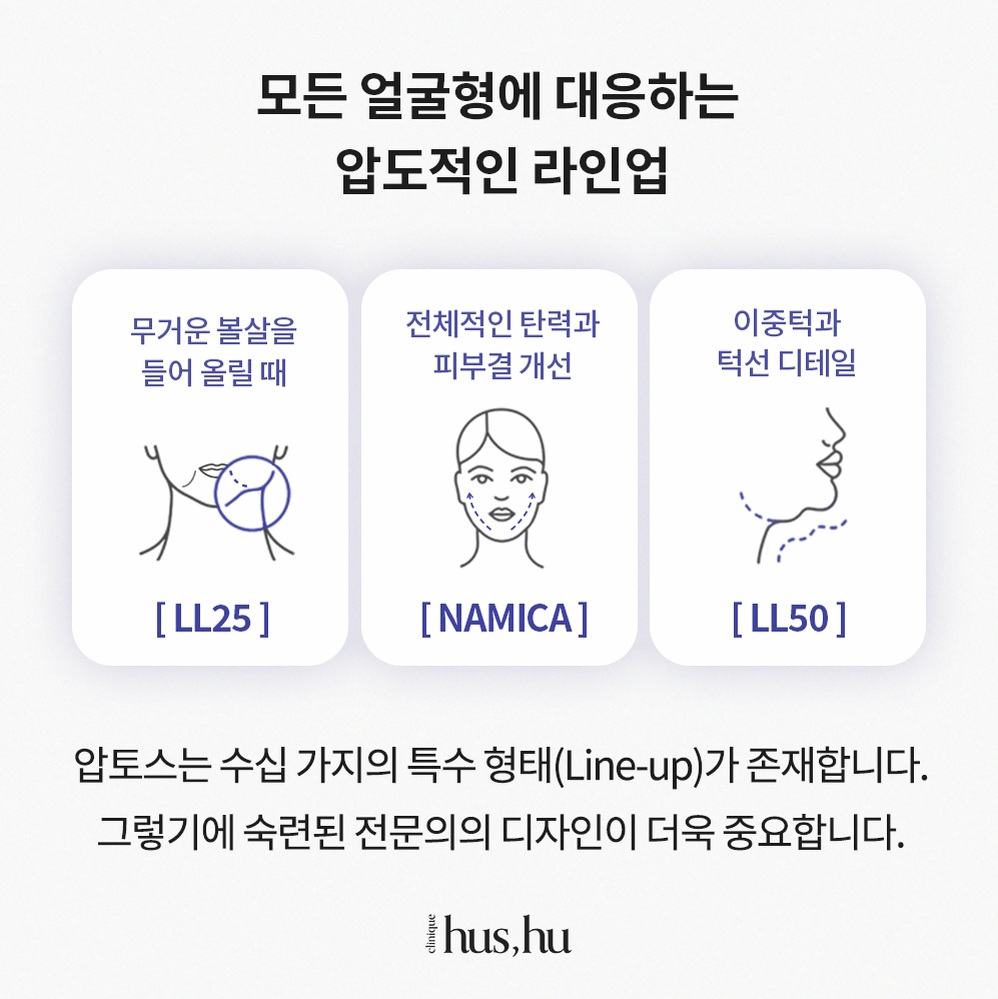
The number of threads and their arrangement also influence how strong and how long the lift will be.
Vector design
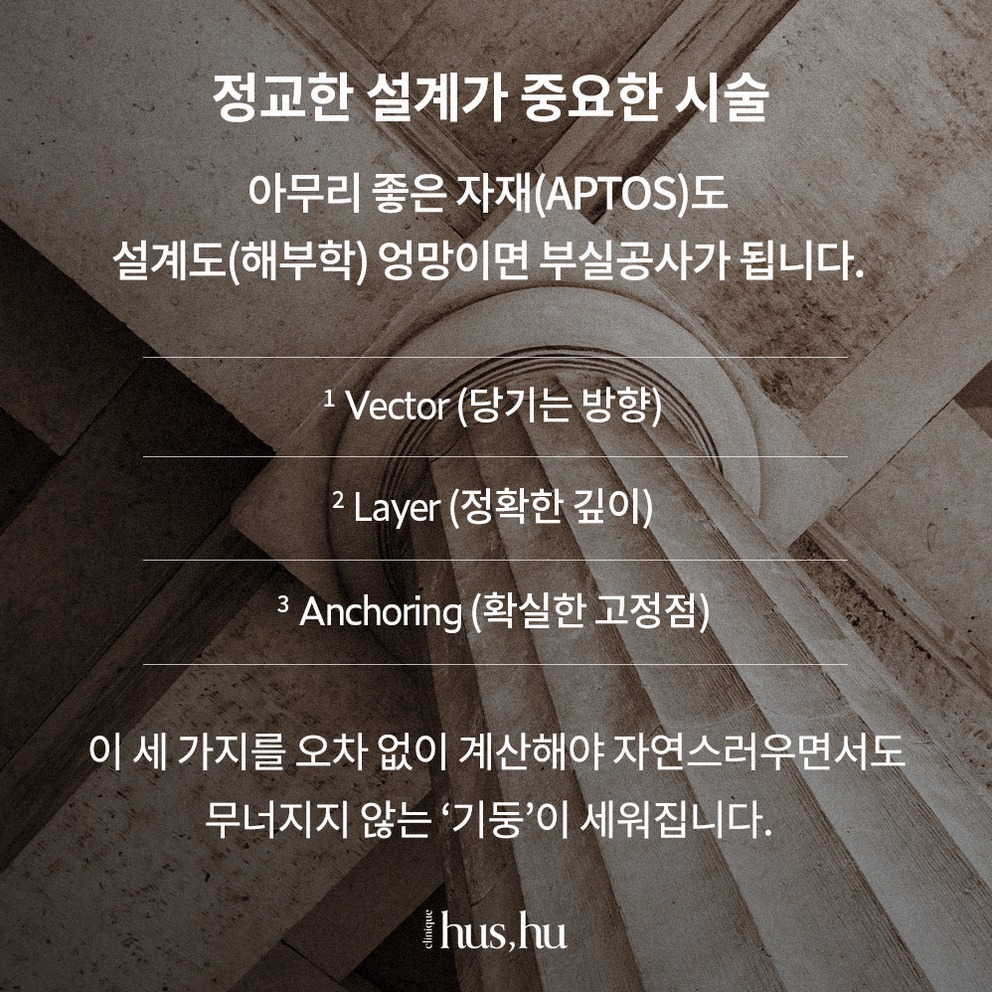
Vector design means how the lifting lines are planned. Thoughtful vectors can support the cheek, jawline, and neck in a way that looks natural and holds well over time. Poorly planned vectors may give a weaker or less stable result.
Depth and layer of insertion
Threads should be placed in the correct tissue plane to balance safety, comfort, and durability. If they are too superficial, they may be visible or cause irregularities. If they are too deep or in the wrong layer, the lift may not be effective.
Combination with other treatments
Combining Aptos threads with energy‑based lifting (such as Thermage FLX, Ulthera Prime, Exion, Emface, or similar devices) or regenerative injections can help maintain tissue tightness and slow the return of sagging. This does not freeze aging, but it can extend how long the overall improvement is noticeable.
Aftercare related factors
Following post‑procedure instructions
In the early period, you are usually advised to avoid strong facial massage, wide mouth opening, and intense exercise. Respecting these instructions helps the threads stay in the right position and integrate with the tissues.
Ongoing skin care and sun protection
Gentle daily skin care, regular use of sunscreen, and avoiding excessive sun exposure all help preserve collagen and prolong the effect.
Maintenance treatments
Non‑ablative lasers, collagen‑boosting injections, and exosome or stem cell based regenerative programs can support skin quality and help your face age more slowly, which indirectly supports thread lift duration.
Timeline: what to expect after an Aptos thread lift
Immediate to 2 weeks
The lifting effect is visible right away, but this period can include swelling, mild asymmetry, tightness, or a slightly over‑lifted look. Bruising or tenderness along the thread path is common and usually improves in days to a couple of weeks.
The face often looks more natural as swelling settles. During this time, you should be careful with chewing, yawning, and sleeping positions if your doctor advises.
1 to 3 months
The threads become more integrated with your tissues and collagen production increases around them. The lift usually looks more harmonious and stable. Many patients feel this is the peak period when their face looks most refreshed yet natural.
6 to 12 months
Depending on the thread type and your individual healing, the threads start to be gradually absorbed. You may notice that the very tight feeling has softened, but the contour is still improved compared to before treatment. Collagen remodeling continues, supporting the shape.
12 to 24 months
For many people, this is when they slowly notice signs of sagging returning, especially in heavier or more lax areas like the jowls or lower cheeks. However, some residual tightening and better skin quality often remain, so the face may still look younger than before the first procedure.
After 24 months
By this time, most patients benefit from a fresh evaluation. Some choose to repeat Aptos threads, others add or focus on energy‑based lifting, volume correction, or regenerative programs. If laxity has become severe, surgical options may be discussed as an alternative.
How a Cheongdam anti‑aging clinic approaches duration and planning
In Cheongdam, Gangnam, near Apgujeong Rodeo Station on the Suin–Bundang Line, anti‑aging clinics often see international patients who want effective lifting but have limited time in Korea. The approach to Aptos thread lifts focuses on planning and long‑term strategy rather than a single procedure.
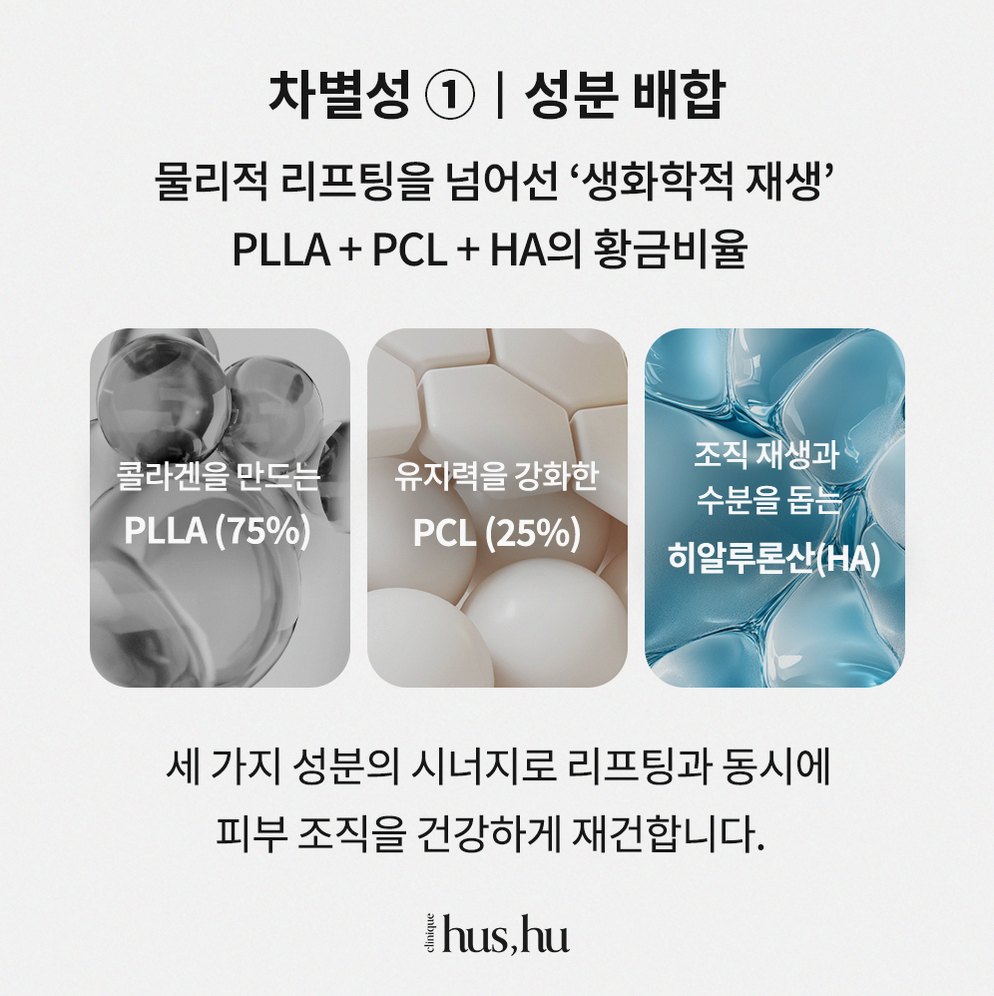
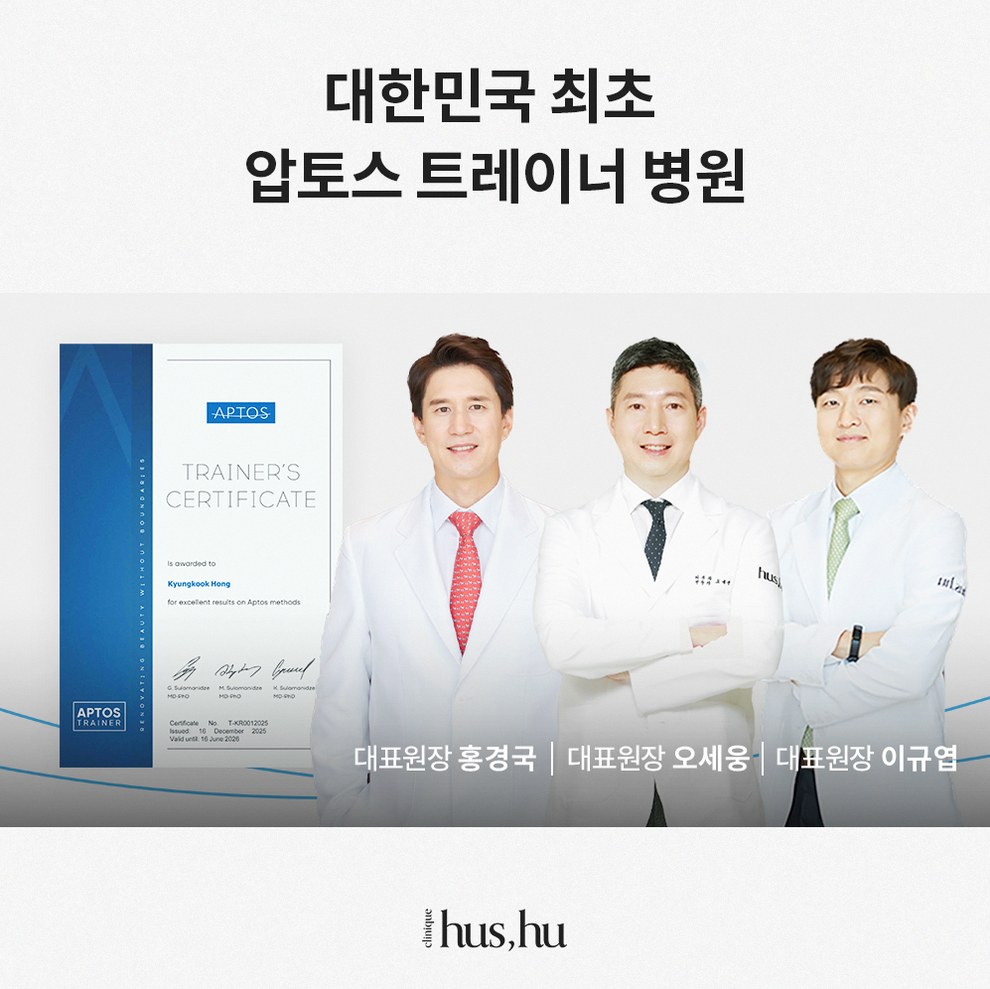
Clinique hus,hu is an example of a Cheongdam based clinic that uses multiple Aptos Namika models, including Namika 19, LL25, and LL50, to match lifting strength and coverage to each facial area. Rather than relying on one technique, the team integrates thread lifting with energy‑based devices such as Thermage FLX, Ulthera Prime, Emface, Exion, and Prime Raise to support longer lasting tissue tightening.
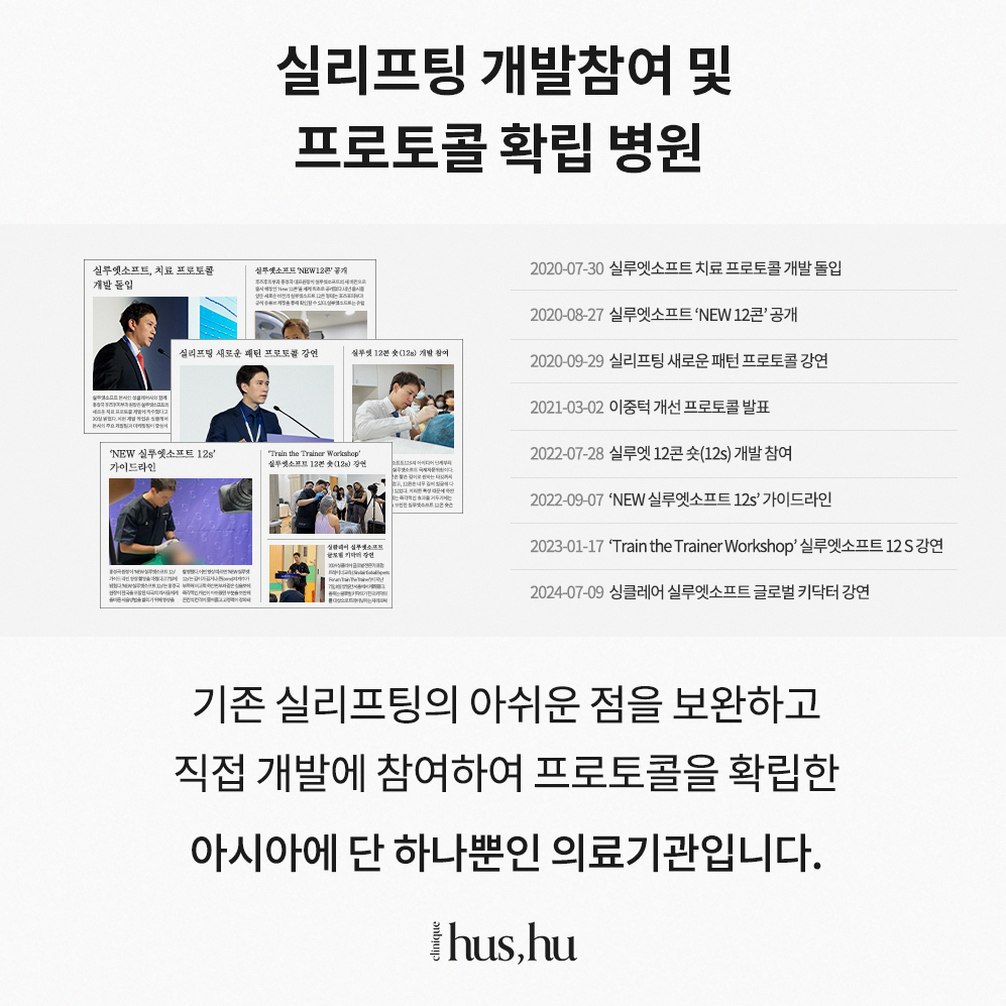
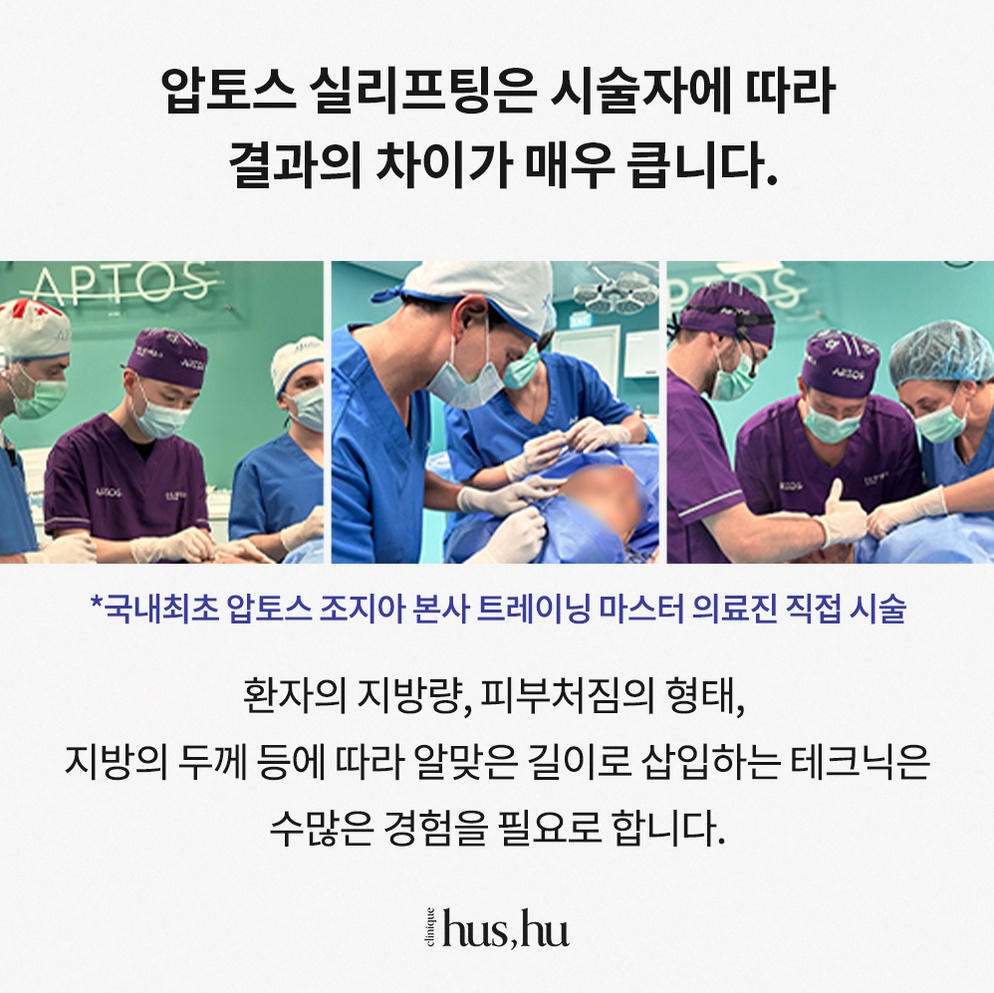
Experienced doctors with academic and international lecture backgrounds are involved in lifting and volumizing procedures. This level of experience can influence the consistency of results, safety, and the ability to design a realistic long‑term plan rather than a one‑time lift.
Who may consider an Aptos thread lift in Korea
Aptos thread lifting can be a good option if you:
Are in your late 20s to early 40s with mild to moderate sagging and good skin elasticity.
Have a relatively defined bone structure and not extremely heavy lower face or neck tissue.
Want visible lifting and contouring but are not ready for surgery or cannot take long downtime.
Are willing to follow aftercare instructions and maintain healthy lifestyle habits.
Prefer to combine threads with a structured anti‑aging program instead of relying on a single treatment.
Those with very advanced sagging or very heavy tissues may still improve with threads, but the duration and magnitude of lifting can be more limited. In such cases, a thorough consultation is important to compare non‑surgical and surgical options.
Online consultation and pre‑visit preparation for overseas patients
If you are planning to travel to Seoul for an Aptos thread lift, an online consultation is a practical first step. Most clinics in Cheongdam offer video or photo based assessments.
To prepare for your online consultation, it helps to:
Send clear photos of your face from the front, 45 degree angle, and side, with neutral expression and good lighting.
Share your main concerns, such as sagging jawline, deep nasolabial folds, or neck laxity.
List any previous procedures, such as fillers, threads, lasers, or surgeries, and when they were done.
Mention any medical conditions, medications, or allergies.
Explain your travel schedule, including how many days you can stay in Korea.
You may also want to prepare questions such as:
Which Aptos Namika threads are recommended for my case (Namika 19, LL25, LL50) and why?
How long is the expected visible effect for someone with my age and skin type?
What additional treatments are suggested to support or extend the result?
How many days of social downtime should I plan for after the procedure?
What follow‑up can be done remotely after I return home?
Expected Korea visit timeline for an Aptos thread lift
Every clinic has its own system, but a typical visit schedule for overseas patients might look like this.
Day 1: In‑person consultation and planning
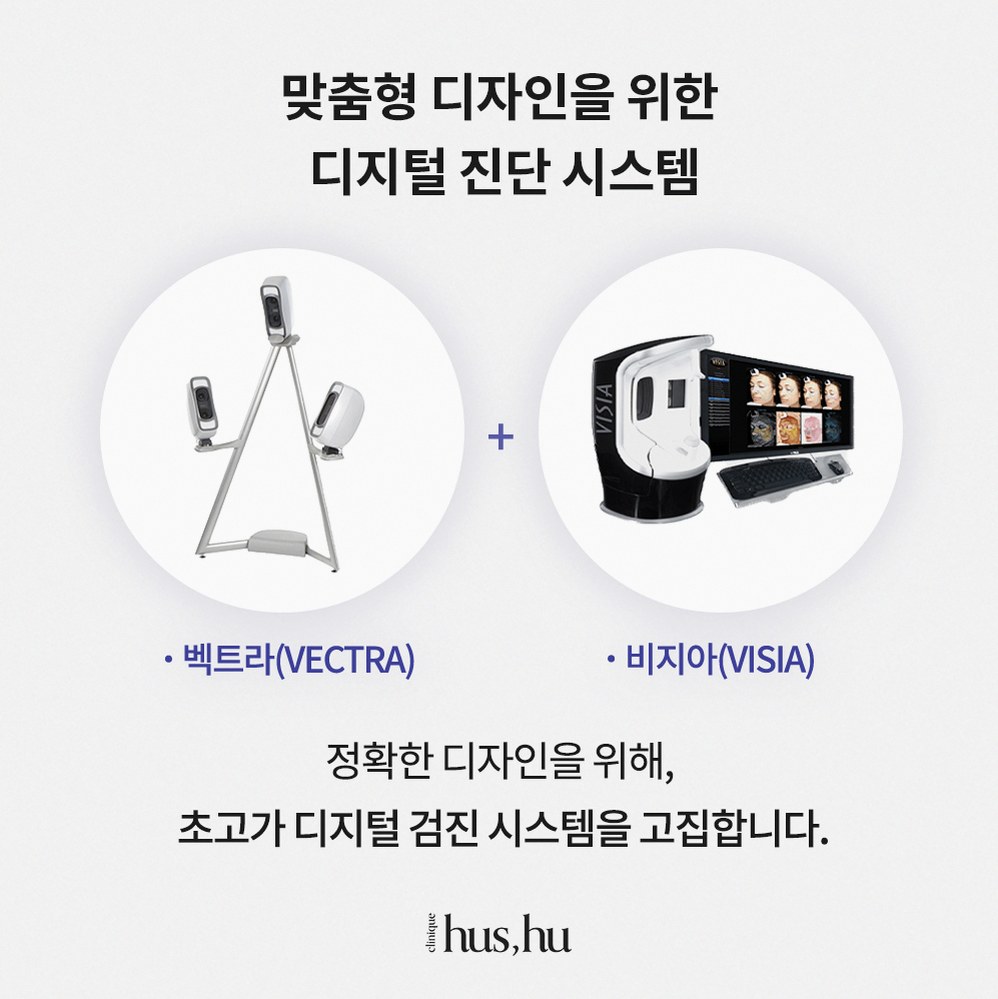
You meet the doctor, review your concerns, and confirm the plan. This includes deciding which threads to use, how many, and whether to combine them with energy‑based lifting or regenerative injections.
In some cases, the procedure can be done on the same day as the consultation if pre‑assessment is already completed online.
Day 1 or 2: Procedure day
Anesthesia and procedure time vary by clinic and case. Some clinics perform thread lifts under local anesthesia, with or without light sedation, and procedural duration depends on the number of treated areas and the techniques used — confirm expected anesthesia and timing during your consultation.
After the procedure, you rest at the clinic for a short time, receive aftercare instructions, and then return to your accommodation.
Days 2 to 5: Early recovery
Swelling, tightness, and bruising are most noticeable in this period. Many patients feel comfortable going out with light makeup and a mask after a few days, but you may prefer a quieter schedule.
You may have a short follow‑up visit to check healing and adjust any early issues.
Days 5 to 10: Settling period
Swelling usually improves significantly. You may still feel tightness or mild pulling with certain expressions, but this tends to decrease.
If your schedule allows, a final in‑person check before leaving Korea is ideal, but if not, follow‑up can continue online.
After you return home, you can usually send photos at set intervals so the clinic can monitor your progress remotely.
Aftercare to protect and extend your Aptos lift
Immediate aftercare
For the first 1 to 2 weeks, you are often advised to:
Avoid strong facial expressions that widely open the mouth, such as very big yawns or biting into large burgers.
Postpone dental procedures that require you to keep your mouth open for a long time, if possible.
Sleep on your back with your head slightly elevated to reduce swelling and avoid pressure on the treated side.
Avoid rubbing or massaging your face vigorously, and skip facial treatments that involve strong manipulation.
Limit intense exercise and activities that cause a lot of facial movement or bouncing.
Long term care
To help your results last as long as possible:
Use broad‑spectrum sunscreen daily and avoid excessive sun exposure.
Maintain a stable, healthy weight and avoid crash dieting.
Eat a balanced diet rich in protein and antioxidants to support collagen.
Consider maintenance treatments such as mild energy based tightening, collagen stimulating injections, or exosome based regeneration at intervals recommended by your doctor.
Who tends to enjoy longer lasting results
While individual results vary, certain patient profiles often experience longer lasting Aptos thread lift benefits.
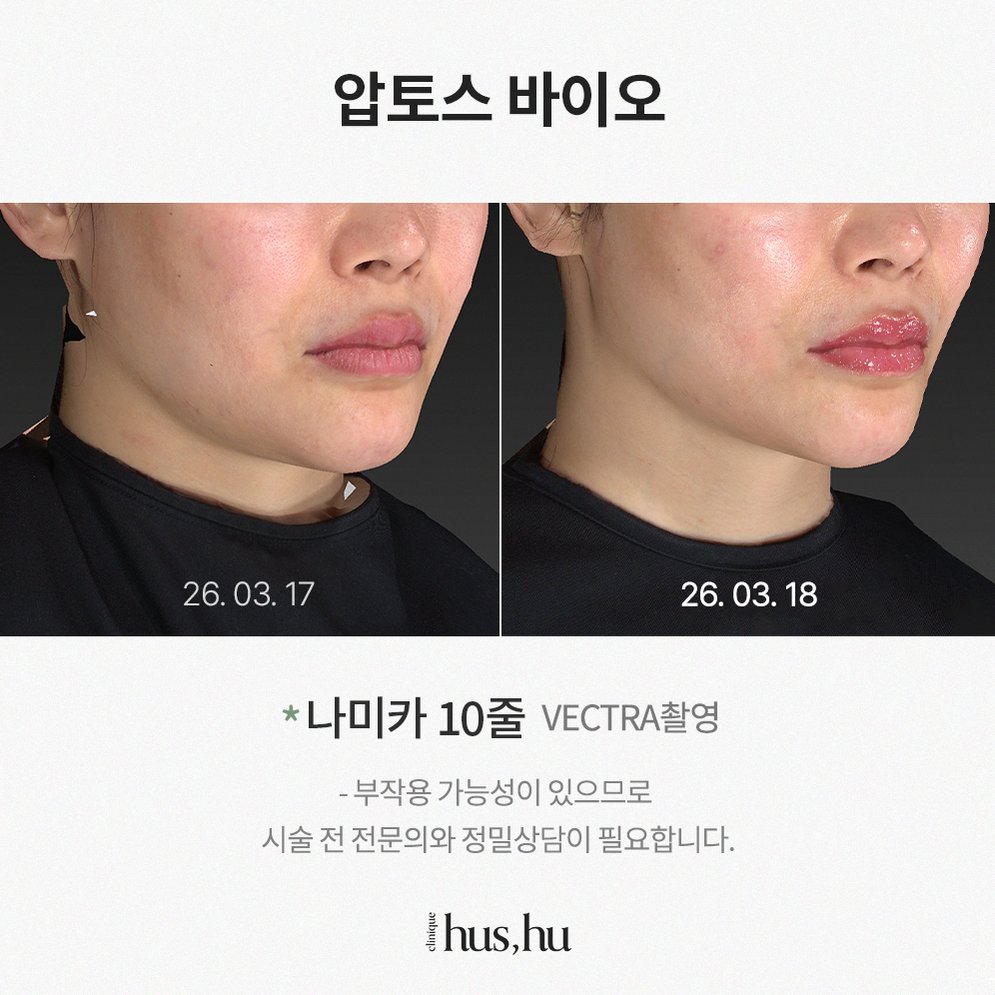
You are more likely to enjoy a longer duration if you:
Are in your late 20s to early 40s with mild to moderate sagging.
Have good skin elasticity and relatively firm underlying tissues.
Do not have very heavy lower face or neck tissue.
Follow aftercare instructions carefully and maintain healthy habits.
Combine Aptos threads with a structured anti‑aging plan, including energy devices and regenerative care when appropriate.
Safety, side effects, and realistic expectations
Common temporary side effects include swelling, bruising, mild pain or tightness, and temporary dimpling or irregularity along the thread path. These usually improve over days to a few weeks.
Less common but important risks include infection, thread exposure, prolonged asymmetry, nerve irritation, or unsatisfactory lifting if vectors are poorly designed. Choosing a clinic experienced in multiple lifting modalities and with a clear follow‑up system can help reduce complications and allow early management if issues arise.
It is important to understand that Aptos thread lifting improves sagging and contour but does not fully replace a surgical facelift, especially in severe laxity. Duration is finite. Planning for maintenance every 1 to 2 years is more realistic than expecting permanent change.
When to consider a follow‑up or repeat Aptos thread lift
You may start thinking about follow‑up when you notice:
Your jawline becoming less defined again.
Nasolabial folds and marionette lines deepening compared with your 6 to 12 month post‑procedure photos.
The lower face looking heavier or more square than right after treatment.
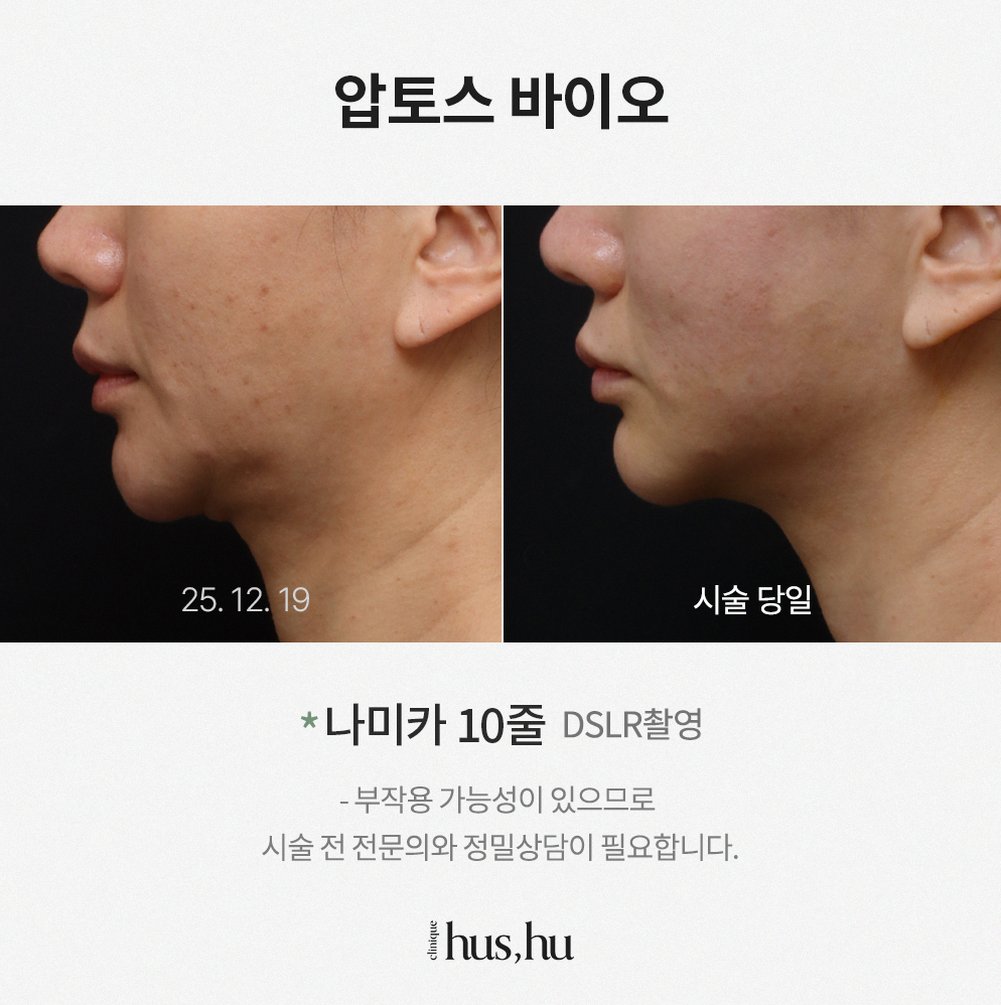
A typical re‑evaluation time is around 12 to 18 months after the first procedure. At that point, your doctor can help you decide whether to repeat Aptos threads, add energy based lifting, or focus on volume and skin quality.
Some patients benefit more from fewer threads plus strong energy based tightening, while others need more structural thread support. A clinic that offers both threads and multiple devices can adjust the plan instead of repeating the exact same protocol every time.
FAQ: Aptos thread lift duration and practical questions
How long does an Aptos thread lift usually last in the face and neck?
For most patients, the visible lifting effect in the face and neck lasts around 12 to 24 months. The strongest lift is usually in the first several months, then it gradually softens as the threads are absorbed. Some residual tightening and improved skin quality can remain beyond 18 to 24 months, especially if you have good skin elasticity and maintain healthy habits.
Is the second Aptos thread lift shorter or longer in duration than the first?
The duration of a second Aptos thread lift is not automatically shorter or longer; it depends on your age, skin condition, and overall plan. In some cases, the second lift can appear to last longer because previous collagen stimulation has improved the tissue quality. In other cases, if aging has progressed significantly, the benefit period may be similar or slightly shorter. A careful assessment before repeating threads is important.
How soon after an Aptos thread lift can I exercise or get facial treatments without affecting the result?
Light walking is usually allowed soon after the procedure, but more intense exercise is often postponed for about 1 to 2 weeks, depending on your doctor’s advice. Strong facial massage, deep cleansing facials, or treatments that involve heavy manipulation are generally delayed for several weeks. Always follow the specific timeline given by your treating clinic, as it may vary with the technique and areas treated.
Does combining Aptos threads with Thermage or Ulthera really make the effect last longer?
Combining Aptos threads with energy based devices such as Thermage FLX or Ulthera Prime does not freeze time, but it can help maintain tissue tightness and slow the return of sagging. Threads provide mechanical lift and immediate repositioning, while energy devices stimulate deeper collagen and elastin. Together, they can support a more gradual, balanced aging process and extend the period during which your face looks lifted and firm.
Soft call to action for online consultation
If you are considering an Aptos Namika thread lift in Seoul and want a realistic estimate of how long it may last in your case, an online consultation is a helpful first step. By sharing photos, your concerns, and your travel schedule, you can receive a personalized plan that includes thread selection, possible combination treatments, and an expected timeline.
Clinique hus,hu in Cheongdam, near Apgujeong Rodeo Station on the Suin–Bundang Line, offers Aptos Namika thread lifting within a broader anti‑aging program that includes energy based devices and regenerative care. If you are planning a visit to Korea, you can contact the clinic in advance to discuss options, arrange your schedule, and prepare for a safe and efficient treatment experience.
- 공유 링크 만들기
- X
- 이메일
- 기타 앱


댓글
댓글 쓰기