Early Signs of Hair Loss: How to Tell if It Is Really Starting
- 공유 링크 만들기
- X
- 이메일
- 기타 앱

[Thumbnail]https://iwriting.co.kr/media/transformed/7e78e65da59b41d29ba3fc2035daa2c5.jpg
Direct answer: what counts as early signs of hair loss
Early signs of hair loss usually appear long before clear bald patches or visible gaps in the hair. In the beginning, the hairline, crown, and overall thickness change very subtly: the part line widens, the scalp shows more easily under light, and individual hairs become finer and weaker. You may notice more shedding than usual for several weeks in a row, or your ponytail feels thinner. These early changes are important because hair loss is often progressive, and timely evaluation can help protect vulnerable follicles before they are permanently lost.
What early hair loss really means
Early hair loss is the stage where hair follicles are weakening but still present. The medical term often used is miniaturization of hair follicles. In simple terms, the roots are shrinking, so each new hair grows out thinner, softer, and shorter than before.
At this stage, you may still see hair growing everywhere on the scalp, but the density and quality are not the same as a few years ago. The goal of early detection is to notice these changes while the follicles are still alive and potentially responsive to treatment.
Different patterns of early hair loss
Androgenetic hair loss (male and female pattern)
This is the most common type. In men, it often starts as a receding hairline at the temples or thinning at the crown. In women, it usually appears as a gradual widening of the part line and diffuse thinning over the top of the head while the frontal hairline is relatively preserved.
Diffuse thinning
Here, hair becomes thinner across a wide area, sometimes over the entire scalp, without a clear pattern. It can be related to nutritional issues, thyroid problems, chronic illness, or long-term stress. Early on, you may simply feel that your hair has lost volume and does not cover the scalp as well as before.
Stress-related shedding
Strong physical or emotional stress, major illness, rapid weight loss, or certain medications can push more hairs than usual into the shedding phase. A few months later, you may notice increased hair fall. This is often called telogen effluvium. In early stages, you see more hair on the pillow, in the shower, or on your brush for several weeks.
Postpartum shedding
After childbirth, many women experience increased shedding for several months. This is usually temporary, but if it continues or reveals an underlying pattern of thinning, it may overlap with female pattern hair loss.
Typical early signs of hair loss: a practical checklist
You can use the following checklist as a mental scoring tool. If you recognize several of these signs and they persist for more than a few months, it is reasonable to consider a professional evaluation.
Visual changes
Gradual widening of the part line
If you part your hair in the middle or on the side and notice that the line of scalp looks wider than in older photos, this can be an early sign of reduced density.
Receding or uneven frontal hairline
Watch the small corners at your temples. Early male pattern hair loss often starts here, with the hairline slowly creeping back or becoming asymmetrical.
More visible scalp under light or when wet
If bright bathroom lighting, sunlight, or wet hair suddenly makes the scalp much more visible, especially on the top or crown, this suggests thinning coverage.
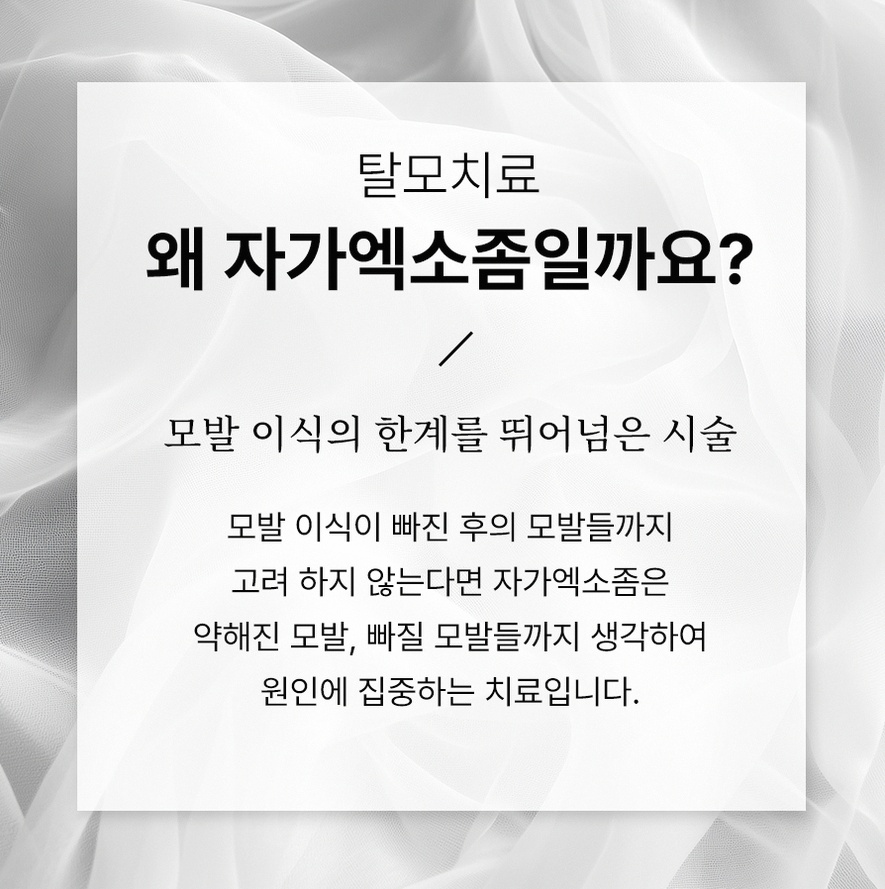
Reduced volume at the crown or top
Many people first notice a flatter top or a small area at the crown that looks less full in photos taken from behind.
Changes in hair quality
Thinner, weaker strands
Run your fingers through your hair. If individual strands feel finer and more fragile than they used to, miniaturization may be starting.
Loss of bounce and volume
Even after blow-drying or styling, the hair may fall flat quickly and feel less dense.
Soft, baby-like hairs that never grow long
You may see many short, soft hairs around the hairline or on the top that seem stuck at a certain length. These can be miniaturized hairs that are not reaching their full growth potential.
Shedding patterns
More hair on pillow, drain, or brush
It is normal to lose some hair every day, but if you clearly notice more hair than usual for several weeks, it is worth paying attention.
Hair coming out in small clusters
When you run your fingers gently through your hair, you may see several strands come out at once, repeatedly.
Seasonal shedding that is heavier and longer
Seasonal shedding can be normal, but if it is much heavier than in past years or continues for more than two to three months, it may indicate early hair loss rather than simple seasonal change.
Scalp symptoms that may accompany early hair loss
Itching, tightness, or tingling
Some people feel a tight or prickly sensation on the scalp where thinning is starting. This does not always occur, but when present, it can be a warning sign.
Increased oiliness or dandruff
A change in scalp oil production or flaking that appears together with thinning may reflect an irritated scalp environment.
Redness or inflammation around follicles
Red dots, visible irritation, or painful areas on the scalp should be evaluated by a medical professional, as they can indicate conditions other than simple pattern hair loss.
How to distinguish normal shedding from early hair loss
Understanding the normal hair cycle
Each hair follicle goes through a cycle: growth, rest, and shedding. It is normal to lose some hairs daily, and the exact amount varies between people. Seeing some hair in the shower or on your brush does not automatically mean you are experiencing hair loss.
Red flags that suggest early hair loss
Shedding that persists for several months
Short episodes of increased shedding can be related to stress or seasonal changes. If heavy shedding continues or worsens for a few months (commonly cited as around 2–3 months), it generally deserves medical attention and evaluation.
Noticeable decrease in ponytail thickness
If you have longer hair, you may feel that your ponytail is thinner, or you need to wrap your hair tie an extra time compared with a year or two ago.
Family history plus visible thinning
If close relatives have pattern hair loss and you see your own hairline, crown, or part line changing, the chance that this is early pattern hair loss is higher.
Thinning in typical pattern areas
When thinning is focused on the frontal hairline, temples, or crown rather than evenly across the whole scalp, this often points to androgenetic hair loss.
When it might be something else
Sudden patchy bald spots, severe itching, burning, or pain can signal other scalp conditions that require prompt evaluation. In these cases, do not wait to see if it improves on its own.
Self-check methods you can use at home
Mirror check
Stand under bright, even lighting and use a hand mirror or phone camera.
Compare your current hairline, temples, and crown with photos from one to three years ago taken in similar lighting.
Part your hair in several directions and see whether the scalp shows more than before.
Ponytail or volume test
If your hair is long enough for a ponytail, notice whether the bundle feels thinner in your hand.
Pay attention if the hair tie now wraps around more times than it used to.
Even without a ponytail, you may feel that your hair does not create the same fullness when styled.
Comb and towel test
After washing your hair, gently towel-dry without rubbing hard.
Use a wide-tooth comb and observe how many hairs are left on the comb and towel.
Repeat this over several washes to see if there is a clear increase compared with your usual baseline.
Family history check
Think about parents, siblings, and grandparents. Who has pattern hair loss, and at what age did it start?
If many family members developed hair loss at a relatively young age, your own risk of early onset is higher.
Why early diagnosis and treatment matter
When follicles are replaced by scar-like tissue, regrowth is often difficult and may be limited. The main goal of early treatment is to protect and support weakened follicles before they reach that stage.

Benefits of early intervention
Slowing or stabilizing progression
Treating early can help slow down the rate of thinning, giving you more years with your current density.
Maintaining thickness and coverage
Even if the hair does not return to its teenage fullness, preserving existing thickness can make a big difference in appearance and styling options.
Reducing the need for aggressive procedures later
If early stages are managed well, some people may delay or avoid more invasive options in the future.
Using conservative, tailored plans
Early stages often respond to a combination of medical treatments, scalp care, and lifestyle changes, rather than relying only on advanced procedures.
Limits of self-diagnosis
Online information and home checks are useful, but they cannot replace a professional assessment. A specialist can examine your scalp, measure hair density, and look for underlying causes such as hormonal imbalance, nutritional deficiency, or inflammatory scalp disease.
Professional evaluation and treatment approach in Seoul
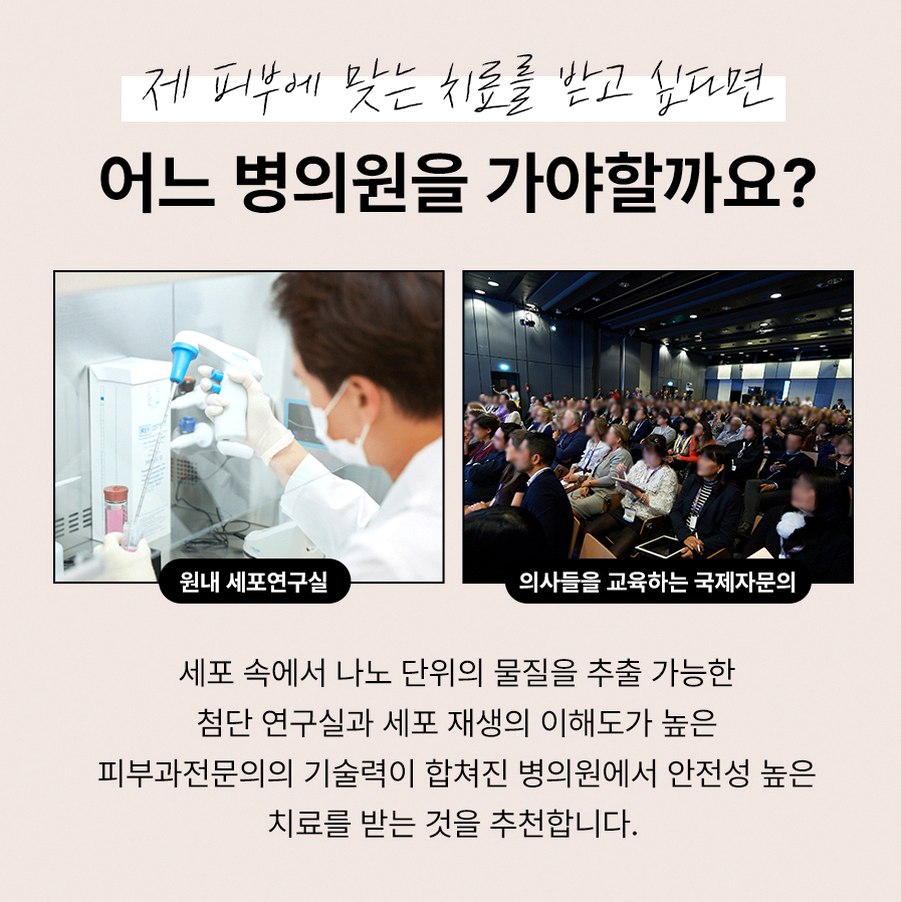
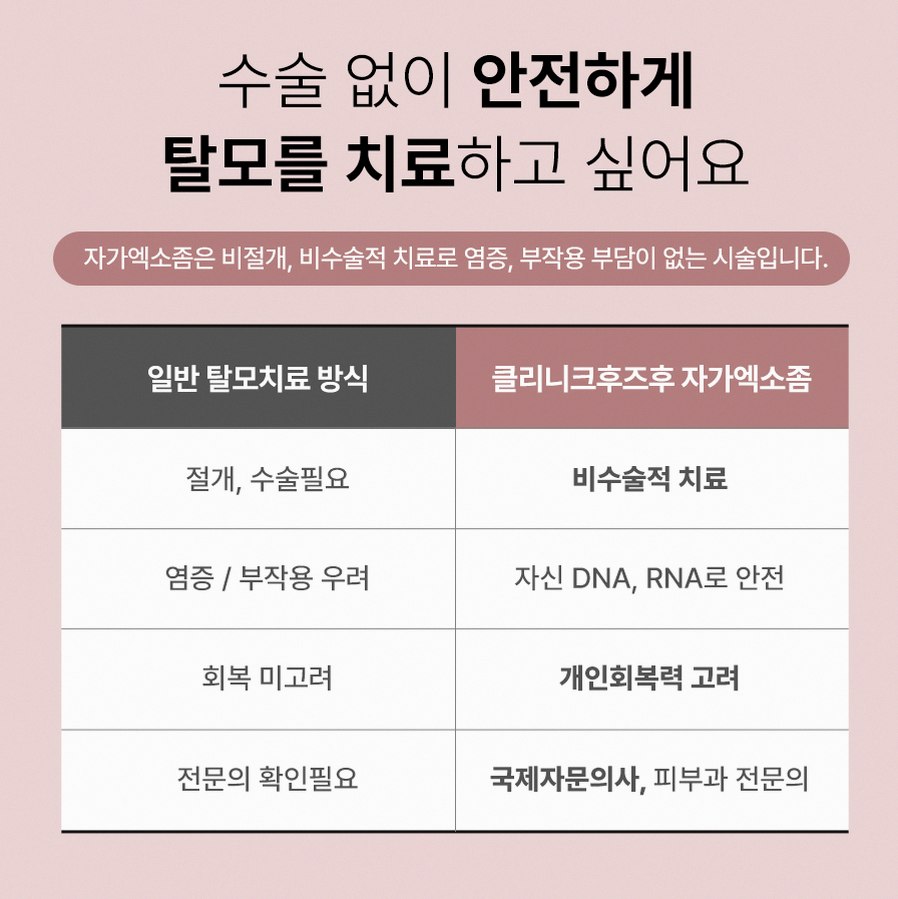
For international patients considering care in Korea, some Seoul clinics focus on both anti-aging and hair concerns. Clinique hus,hu is one such clinic in Cheongdam, Gangnam (near Apgujeong Rodeo Station on the Suin–Bundang Line) that offers a hair program as part of a broader anti-aging portfolio. Specific treatments and outcomes vary; certain programs may include cell-derived or exosome-related approaches, which should be discussed with a physician. Any treatment plan should be explained under medical supervision, and expected results will differ by individual.
aging concept.
General medical approach
Such clinics typically have medical teams with experience in hair and scalp disorders and in cell-focused anti-aging therapies. Instead of focusing only on cosmetic coverage, they aim to improve the scalp environment and support hair follicles at a cellular level.
Cell-level and regenerative strategies
Some centers incorporate an in-house cell research concept to explore regenerative treatments. Within this framework, a self-exosome hair program may be offered as part of an integrated protocol.
Understanding a self-exosome hair program
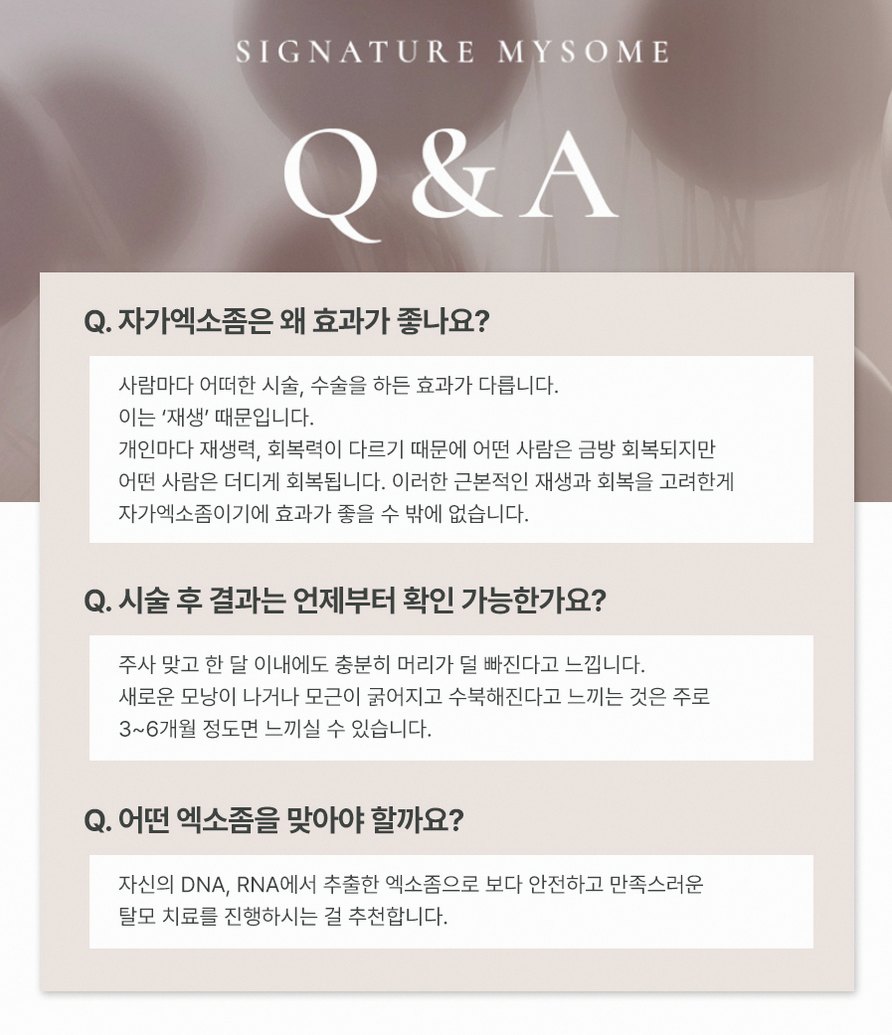
Exosomes are tiny vesicles released by cells that help them communicate and may play a role in tissue repair and regeneration.
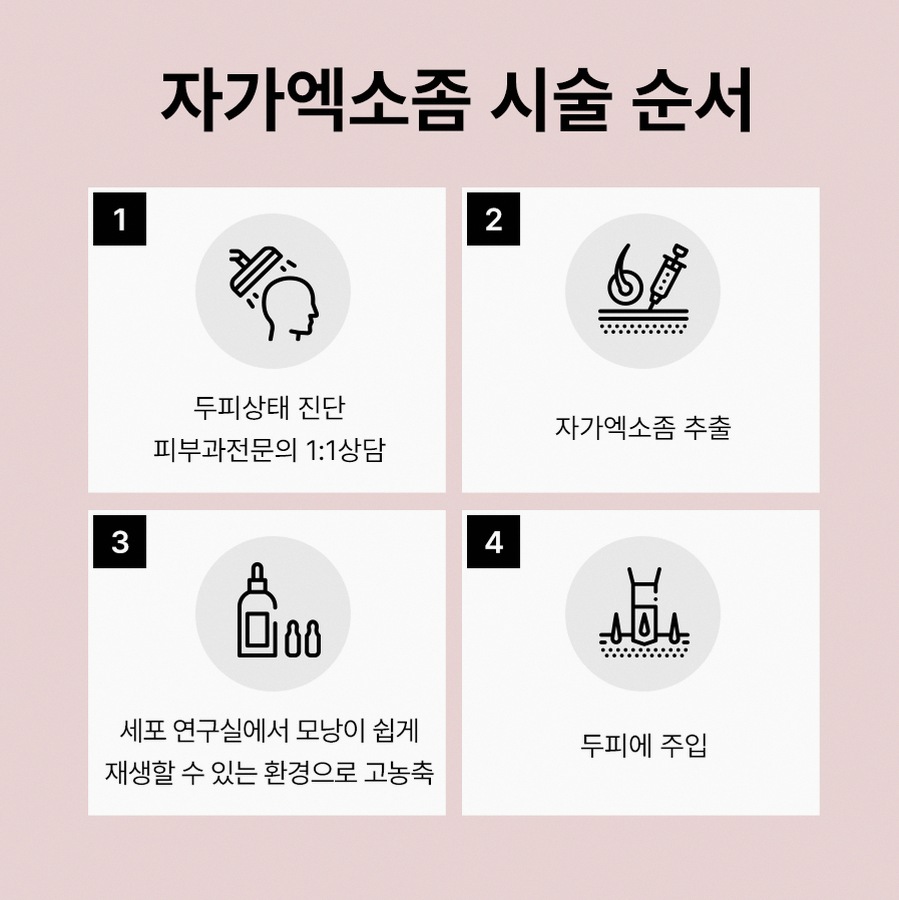
A self-exosome hair program uses exosomes derived from the patient’s own cells. In early hair loss, the intention is to support the scalp environment and stressed follicles alongside standard medical therapies.
Because exosome-based treatments are an emerging field, results can vary. They are usually combined with established treatments, careful diagnosis, and lifestyle guidance rather than used as a stand-alone solution.
What to expect during a hair loss consultation
Initial history and discussion
You can expect detailed questions about when you first noticed changes, how the shedding pattern has evolved, and whether there is a family history of hair loss.
The doctor will also ask about stress levels, sleep, diet, recent illnesses, medications, hormonal issues, and any previous treatments you have tried.
Scalp and hair examination
The scalp is examined visually and often with magnification or imaging devices to assess hair density, follicle size, and any signs of inflammation.
This helps distinguish between early androgenetic hair loss, diffuse shedding, and other scalp conditions.
Explaining your current stage
Based on the findings, the doctor will explain whether your situation fits early hair loss and what type it appears to be.
Understanding the stage is important for setting realistic expectations and choosing appropriate treatment intensity.
Treatment planning
For international patients, the plan is often tailored to fit the length of your stay in Korea and what can be continued safely at home.
Lifestyle and home-care tips for early stages
Managing stress and sleep
Chronic stress and poor sleep can negatively affect the hair cycle. Techniques such as regular exercise, relaxation practices, and consistent sleep schedules can support overall hair health.
Balanced nutrition
Hair needs adequate protein, iron, zinc, vitamin D, and other nutrients. A balanced diet with sufficient protein, vegetables, and healthy fats is important.
If you suspect deficiencies, laboratory testing and professional guidance are recommended before starting supplements.
Gentle hair care
Avoid frequent high-heat styling, strong chemical treatments, or very tight hairstyles that pull on the roots.
Use mild shampoos suited to your scalp type and avoid aggressive scratching or brushing when the hair is wet and fragile.
Be cautious with unproven remedies
Many products and home remedies promise quick results but may not be supported by evidence. Overuse of random tonics or harsh scalp treatments without guidance can sometimes irritate the scalp and worsen shedding.
Preparing for a visit to Korea for hair loss care
Who may consider treatment in Korea
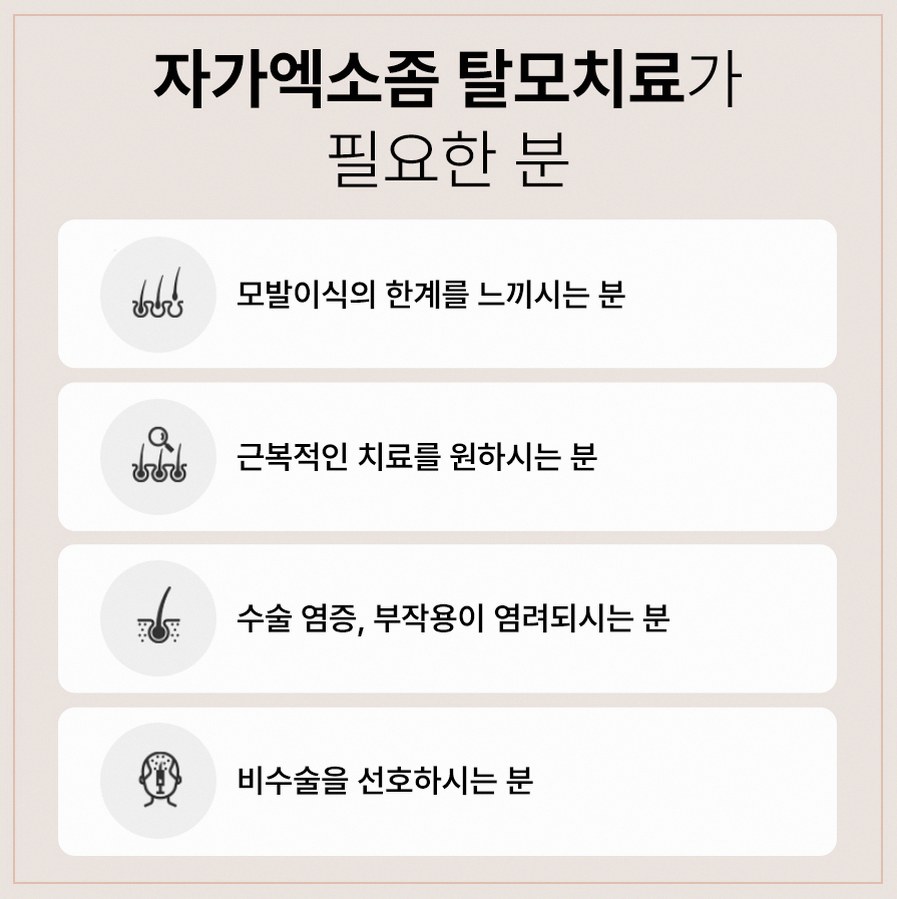
International patients who notice early signs of hair loss and want a structured, medically guided program may consider visiting a specialized clinic in Seoul.
Those interested in combining classic medical treatments with cell-level or regenerative approaches, such as self-exosome programs, may also look to Korea’s anti-aging and hair centers.
Online consultation and pre-visit preparation
Before booking flights, many clinics offer online or remote consultations.
You can prepare by collecting clear photos of your hairline, crown, and part line under good lighting, ideally compared with older photos.
Make a list of current medications, supplements, and any previous hair treatments.
Write down your main concerns and questions, such as expected number of visits, possible procedures, and how to continue care after returning home.
Expected visit timeline
First visit
Detailed consultation, scalp imaging, and confirmation of diagnosis and stage.
Discussion of treatment options that fit your stay length and preferences.
Possible start of topical or oral medications and initial in-clinic scalp treatments.
Follow-up sessions during your stay
Depending on the program, you may have several sessions over one to two weeks for procedures such as scalp care treatments or self-exosome applications.
The schedule is usually planned to allow sightseeing or rest between visits.
Long-term plan after returning home
You will typically receive instructions on how to continue topical or oral treatments, how often to follow up online, and what signs to monitor.
Photos and periodic online check-ins can help track progress over several months, since hair cycles change slowly.
Aftercare and realistic expectations
Hair grows in cycles, so even with appropriate treatment, visible changes often take three to six months or longer.
The main aims in early stages are to slow down further thinning, stabilize shedding, and support thicker regrowth where possible.
Consistency is essential: following the recommended routine, attending follow-ups, and maintaining healthy lifestyle habits all contribute to outcomes.
Frequently asked questions about early signs of hair loss
How do I know if my shedding is normal or a sign of early hair loss?
If you notice more hair on your brush or in the shower for a short period, it may still be within normal variation. However, if heavier shedding continues for more than two to three months, and you also see changes like a wider part line or a thinner ponytail, this suggests early hair loss rather than simple daily shedding. A family history of pattern hair loss makes this more likely. When in doubt, a professional scalp examination is the safest way to clarify.
Can early hair loss be reversed?
In many cases, early hair loss can be improved or stabilized, especially if the follicles are still alive and only miniaturized. Treatments aim to strengthen these weakened follicles and extend the growth phase of the hair cycle. Complete reversal to childhood density is not always realistic, but slowing progression and improving thickness is often possible with timely, consistent care.
How long should I wait before seeing a specialist?
If you notice several early signs, such as increased shedding, visible scalp under light, or a changing hairline, and these changes persist for more than a few months, it is reasonable to seek evaluation. Waiting until obvious bald spots appear can limit treatment options. Early consultation allows you to understand your risk, explore conservative treatments, and set up a long-term plan.
What is a self-exosome hair program and is it safe?
A self-exosome hair program uses exosomes derived from your own cells. Exosomes are tiny particles that help cells communicate and may support tissue repair. In hair care, they are used with the goal of improving the scalp environment and supporting weakened follicles, usually alongside standard treatments. Exosome-based therapies are still an emerging area of medicine, so outcomes can vary, and they should be provided under medical supervision with clear explanation of potential benefits and limits.
Considering next steps
If you recognize early signs of hair loss, it is better not to wait for clear bald spots before taking action. A structured evaluation and treatment plan can help protect your current hair density and support healthier regrowth over time.
For those planning a visit to Seoul and interested in a cell-focused, anti-aging approach to hair care, you may explore options such as the self-exosome hair program offered at Clinique hus,hu in Cheongdam, Gangnam, near Apgujeong Rodeo Station. An online consultation before your trip can help you understand whether such a program suits your situation and how to plan your visit.
By paying attention to subtle early changes and seeking timely guidance, you can take an active role in maintaining your hair health for the future.
- 공유 링크 만들기
- X
- 이메일
- 기타 앱


댓글
댓글 쓰기