Emface non‑invasive facial lifting in Seoul for overseas patients
- 공유 링크 만들기
- X
- 이메일
- 기타 앱
Emface in Seoul – quick answer for overseas patients
Emface is marketed as a non‑invasive facial lifting and contouring treatment that, according to manufacturer materials, combines radiofrequency (RF) and electromagnetic muscle stimulation to firm the skin and tone facial muscles. At clinics in Cheongdam, Gangnam such as Clinique hus,hu, it is usually used as part of a structured contour‑fixing plan rather than a one‑time gadget session. Typical goals include a more defined jawline, lifted cheeks, and a fresher upper face. Many protocols report short sessions and minimal downtime; confirm exact session length, number of sessions, and expected durability with your clinic.
This guide explains how Emface works, who may consider it, what to expect if you travel to Seoul, and how to prepare for an online consultation.
What is Emface
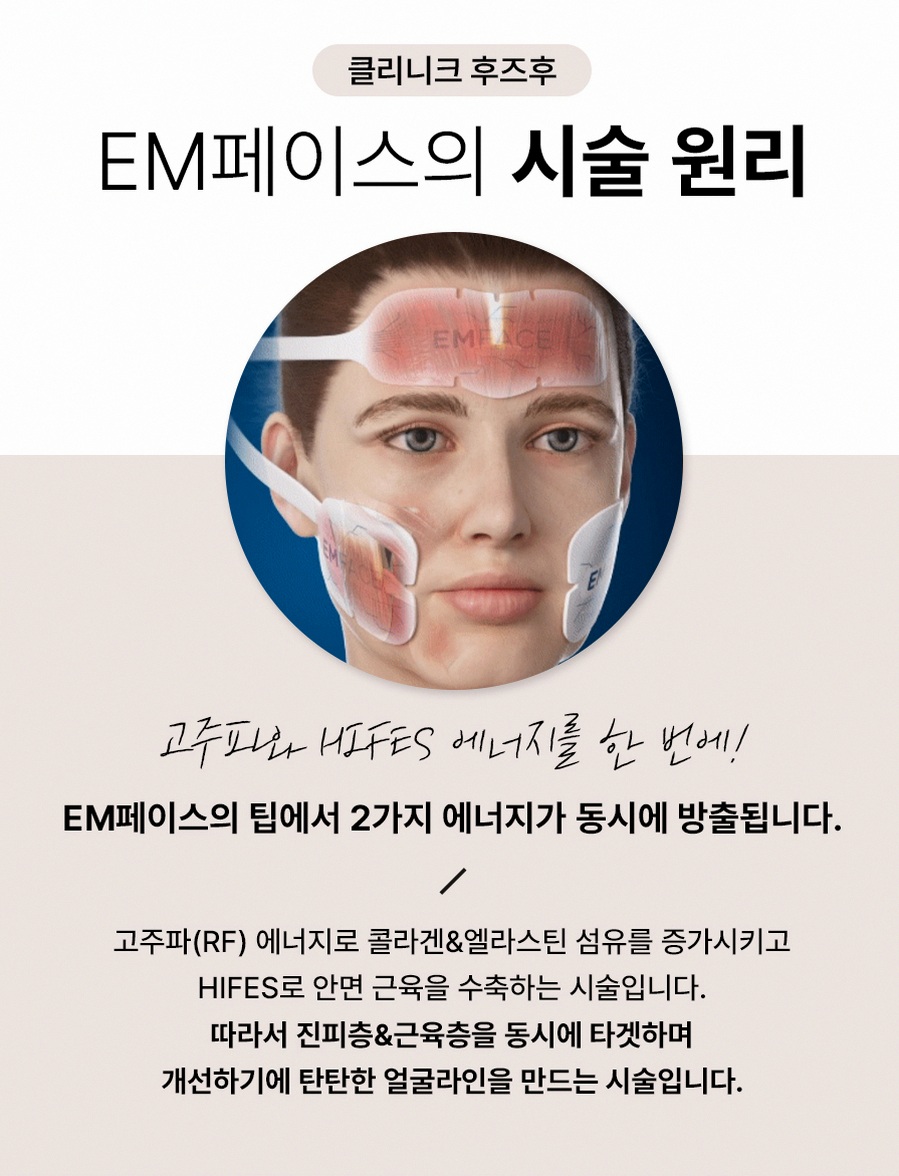
Emface is marketed as a device‑based treatment designed to lift and contour the face without needles or surgery; manufacturer materials describe it as combining radiofrequency and electromagnetic muscle stimulation in a single session.
The first is synchronized radiofrequency. RF gently warms the deeper skin and subcutaneous layers. This controlled heat can stimulate collagen and elastin remodeling, which may improve firmness and elasticity over time.
The second is HIFES, high‑intensity focused electromagnetic stimulation. This energy targets specific facial muscles responsible for support and lifting. During treatment, these muscles contract repeatedly in a way that is difficult to achieve voluntarily. Over a series of sessions, this can increase muscle tone and density, similar to a targeted workout for the lifting muscles of the face.
Target areas typically include the forehead and brow area, to help open the upper face; the cheeks and mid‑face, to address sagging and nasolabial folds; and the jawline, to sharpen contour and reduce a jowly appearance.

Emface is non‑invasive. There are no incisions and, in typical cases, no anesthesia injections.
How Emface works in simple terms
To understand what Emface may do, it helps to separate its two main actions.
The RF component gently heats the dermis and the layer just under the skin. This thermal effect can trigger a repair response in the skin, encouraging new collagen and elastin fibers to form and older ones to reorganize. Over time, this process may lead to firmer, tighter skin and smoother texture.
The HIFES component sends focused electromagnetic pulses into selected facial muscles. These pulses cause rapid, strong contractions that go beyond normal facial expressions. The sensation can feel unusual but is generally described as intense contractions rather than sharp pain. With repeated sessions, these muscles may become stronger and more toned, providing better support for the overlying skin and soft tissue.
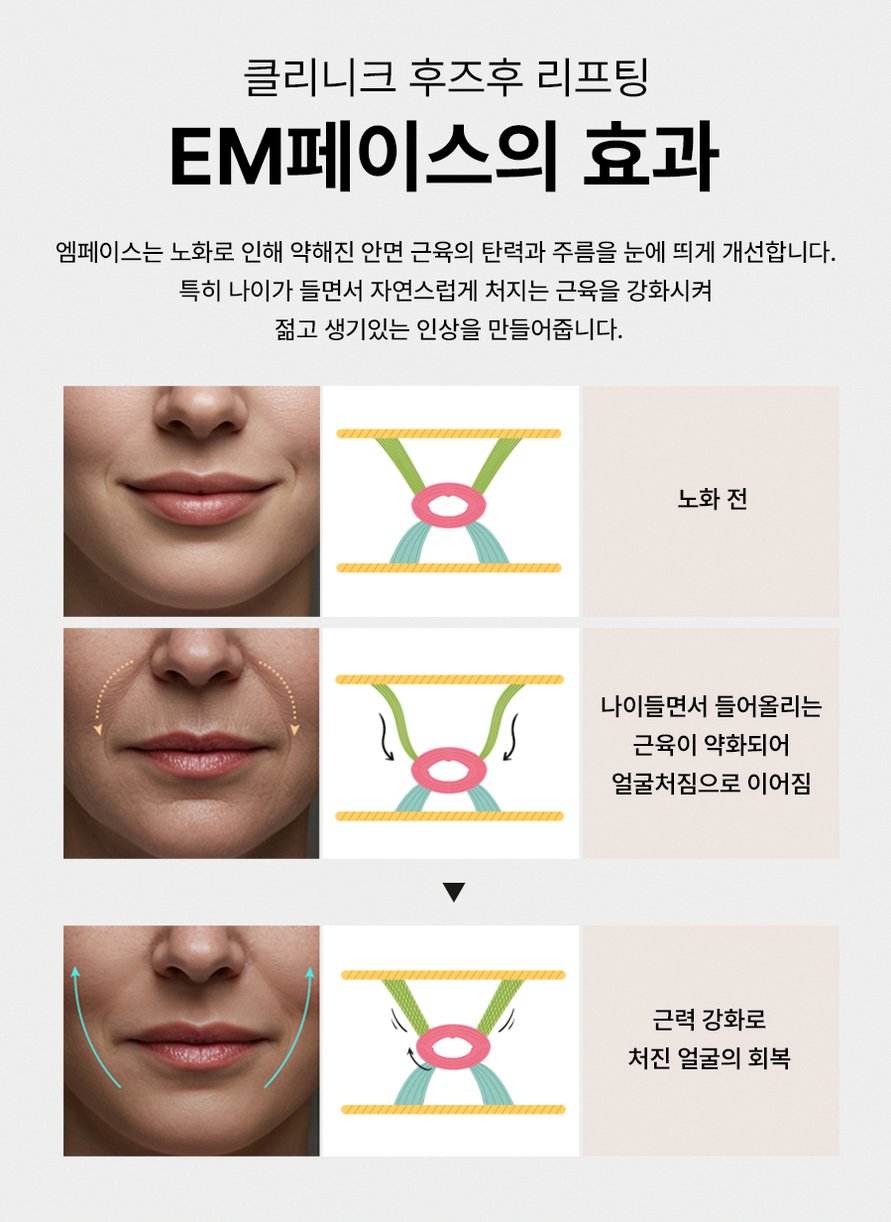
Visually, this dual action can translate into a lifted mid‑face, better cheek support, a more defined jawline with less visible jowling, and a subtle brow lift that opens the eye area. The overall effect is usually described as natural and structural, because no extra volume is added; the device works with your existing tissues.
It is important to understand what Emface is not. It is not a filler or thread lift, so it does not add material under the skin or mechanically pull tissue. It is not a surgical facelift, so changes are more gradual and subtle. It is also not a treatment for pigmentation or acne; its main focus is lifting, contouring, and firmness.
Who may consider Emface
Emface may be considered by adults who are starting to notice early to moderate sagging but do not feel ready for injections or surgery.
Typical candidates include people in their late twenties to fifties who see softening of the jawline, mild jowls, or flattening of the cheeks. Many are looking for a sharper contour or a fresher upper face without adding more volume.
It can also be an option for those who already have fillers or thread lifts and want to maintain or subtly enhance lifting without more injections. Because Emface works on skin and muscle rather than adding material, it can complement existing treatments when planned carefully.
People with busy schedules often appreciate that sessions are short and downtime is minimal. You can usually return to work or social plans the same day.

On the other hand, those with very advanced skin laxity, heavy jowls, or significant neck sagging may need more aggressive lifting options, including surgical procedures. In such cases, Emface might still play a supportive role but may not be sufficient as the main treatment.
Certain conditions require caution. People with implanted electronic devices such as pacemakers or some neurostimulators, or with metal implants in the treatment area, need careful medical evaluation before considering electromagnetic treatments. Pregnant patients and those with uncontrolled systemic diseases should also be individually assessed. A proper consultation with a qualified aesthetic physician is essential to decide suitability.
How Emface compares with other lifting options
Many people search Emface while comparing it with other well‑known devices and procedures.
Compared with Thermage FLX, which uses monopolar RF to heat deeper skin and subcutaneous tissue for collagen tightening, Emface adds the muscle‑stimulation component. Thermage is usually performed as a single, more intense session that focuses on skin tightening. Emface is generally done as a series of shorter sessions, aiming to improve both skin firmness and muscle lift.
Compared with Ulthera, which uses focused ultrasound (HIFU) to create precise thermal points at specific depths including the SMAS layer, Emface uses RF and electromagnetic energy without ultrasound. Ulthera can feel more uncomfortable for some patients because of the focal heat points. Emface is often perceived as more tolerable, though it requires multiple visits.
Compared with thread lifts, which physically insert threads under the skin to reposition tissue, Emface is completely non‑invasive. There are no needles or foreign materials, and downtime is usually minimal. However, thread lifts may create a more immediate and visible mechanical lift, while Emface tends to produce more gradual, subtle changes.
Compared with fillers, which add volume to fill hollows and support sagging areas, Emface does not add volume at all. Instead, it aims to improve the quality of the support structures: skin, connective tissue, and muscle tone. In some patients, a combination of volume restoration and Emface‑based lifting can create a balanced result without overfilling.
In clinics with a wide device lineup, Emface is viewed as one tool in a larger lifting toolbox. The choice between Emface, Thermage, Ulthera, thread lifts, fillers, or combinations depends on your anatomy, age, degree of laxity, and comfort level with needles and downtime.
What to expect during treatment
A typical Emface journey in a Cheongdam, Gangnam clinic follows several steps, though exact details may vary.
First is consultation and assessment. The medical team will evaluate your facial structure, skin laxity, muscle tone, and any volume loss. They will also review previous treatments such as fillers, threads, or implants. This is the time to discuss your main concerns, such as jawline definition, mid‑face sagging, or a tired eye area, and to clarify how much change is realistic with Emface alone versus in combination with other methods.
Your medical history is important. You will be asked about heart conditions, implanted devices, metal in the treatment area, pregnancy, and other health issues to ensure safety.
Before treatment, the skin is cleansed and makeup or skincare products are removed. The practitioner will explain what the session feels like, including the strong muscle contractions and warmth. Adhesive applicators are then placed on the forehead and cheeks or jawline according to the plan.
During the session, the device settings are adjusted to match your tolerance and clinical goals. The intensity is usually increased gradually so you can adapt to the sensation. Most people feel rhythmic, strong contractions and a warm feeling but not sharp pain. If it feels too intense, you can ask to reduce the level.
The session usually lasts around 20–30 minutes. Afterwards, there may be mild redness or warmth that settles quickly. You can typically return to work, shopping, or sightseeing right away.
Aftercare and follow‑up are simple. There is usually no special wound care because the skin surface is not broken. You may be advised to avoid very hot saunas or intense facial massages for a short time. A common regimen is about four sessions at weekly intervals, though this can vary. Later, booster sessions may be suggested depending on how you age, your lifestyle, and whether you combine Emface with other anti‑aging treatments.
Results, timeline, and expectations
Many people feel a slight tightness or lifting sensation soon after their first Emface session because of the immediate muscle contractions. However, visible contour changes usually develop gradually over several weeks.
As collagen remodeling and muscle adaptation progress, you may notice a firmer mid‑face, a more defined jawline, and a slightly more open eye area. The changes are typically described as natural and subtle rather than dramatic. Friends may comment that you look more rested or refreshed rather than obviously treated.
In general, effects can last for several months, especially when a full series is completed and maintenance sessions are scheduled as needed. Longevity depends on your age, baseline laxity, genetics, sun exposure, smoking, sleep, and how well you care for your skin.
It is important to remember that individual results vary. Before‑and‑after photos, if shown during consultation, are examples rather than promises. A realistic discussion with your doctor about likely outcomes for your specific face is essential.
Safety, pain, and possible side effects
Most patients describe Emface as tolerable. The most noticeable feeling is the strong, repetitive muscle contractions, along with a warm sensation from the RF. Because there are no injections or incisions, there is usually no needle‑related pain or bruising.
Possible temporary reactions include mild redness, warmth, or a sensation of tightness or muscle fatigue in the treated areas. These typically settle quickly. In some cases, there may be short‑term swelling or sensitivity.
As with any energy‑based device, safety depends on proper patient selection, correct settings, and experienced operators. Emface should be performed by trained medical staff who understand facial anatomy and device physics. Pre‑treatment screening for implanted devices, metal, pregnancy, and local skin conditions is important.
If you have existing fillers or threads, the doctor will consider their placement and age before planning Emface, to avoid unwanted interactions. In many cases, Emface can be used safely with prior treatments, but this must be evaluated individually.
If you are considering Emface, it is advisable to consult a qualified aesthetic physician who can review your medical history and explain potential risks and benefits in your situation.
How clinics in Cheongdam integrate Emface
Clinics in the Cheongdam area of Gangnam, within walking distance of Apgujeong Rodeo Station on the Bundang Line, often focus on anti‑aging and regenerative approaches. At Clinique hus,hu, Emface is one of several lifting platforms alongside Thermage FLX, Ulthera Prime, Exilis Ultra, and thread‑based procedures.
Rather than using Emface as a stand‑alone gadget, some clinics build it into a structured contour‑fixing program. For example, a patient whose main issue is muscle laxity and mild skin sagging but minimal volume loss may focus primarily on Emface. Another patient with both laxity and noticeable hollowing might combine Emface with volumizing treatments such as collagen stimulators or hyaluronic acid fillers, planned carefully to avoid an overfilled look.
For patients interested in deeper anti‑aging at the cell level, Emface can be combined conceptually with treatments like exosome or stem‑cell based skin repair to address both structural support and skin quality. The exact combination depends on individual assessment rather than a fixed package.
A large device portfolio allows the medical team to choose when Emface is the priority, when Thermage or Ulthera should lead, and when threads or injectables are better suited. Energy levels, number of sessions, and maintenance intervals are adjusted according to age, skin thickness, and response.
Online consultation and pre‑visit preparation
If you live overseas and are considering Emface in Seoul, an online consultation is a practical first step.
Before your call or video consultation, it is helpful to prepare clear photos of your face from the front, 45‑degree angles, and side, in good lighting and without heavy makeup. These images allow the doctor to assess your mid‑face, jawline, and brow position.
Prepare a list of previous aesthetic treatments, including dates and areas treated. This includes fillers, thread lifts, laser or RF treatments, and any surgeries. Also list any implanted devices, metal plates, or health conditions such as heart disease, autoimmune disorders, or bleeding problems.
Think about your main goals and priorities. For example, you might rank them as sharper jawline, lifted cheeks, or fresher eye area. Be honest about your tolerance for discomfort, the number of visits you can make, and how much downtime you can accept.
During the online consultation, you can ask whether Emface alone is likely to address your concerns or whether a combination plan is advisable. You can also ask how many sessions are commonly recommended for someone with your age and laxity, how long you should stay in Korea, and what kind of aftercare is needed.
Expected Korea visit timeline
For Emface alone, many international patients can plan a relatively short stay in Seoul.
If you aim to complete a typical four‑session series in one trip, you might schedule one session per week over about four weeks. Some people choose to stay the entire time, while others combine the first session with a later visit for the remaining ones. In some cases, clinics may help you coordinate an adjusted schedule, but spacing is usually kept close to weekly.
If you are combining Emface with other procedures such as Thermage, Ulthera, or injectables, the timeline may change. Some treatments can be done on the same day, while others are spaced out. Your doctor can propose a schedule that fits your travel dates and recovery needs.
When planning your trip, consider including time for an in‑person consultation and imaging on arrival, your scheduled sessions, and at least one follow‑up visit before you leave. If your schedule is very tight, discuss this in advance so the clinic can advise whether your goals are realistic within your available dates.
Aftercare and returning home
After Emface sessions, most people can resume sightseeing, work, or flights without difficulty. There are usually no bandages or visible marks, aside from temporary redness.
You may be advised to keep your skin moisturized, use sunscreen diligently, and avoid excessive heat exposure such as very hot saunas or intense sun for a short period. Gentle skincare is usually fine, but harsh scrubs or strong home devices on the treated areas may be discouraged immediately after sessions.
Once you return home, you can continue to monitor changes over the following weeks. Some clinics offer follow‑up via email or video to review your progress and discuss whether and when maintenance sessions might be beneficial.

If you notice unusual or persistent symptoms such as prolonged swelling, pain, or asymmetry, you should contact the clinic promptly and, if needed, see a local physician.
Key questions to ask before booking
When you compare clinics for Emface in Seoul, it can help to prepare a checklist of questions.
You may want to ask how many Emface sessions are commonly recommended for someone of your age and laxity, and how they schedule them for overseas patients. Ask who performs the treatment, what kind of monitoring is done during the session, and how they adjust energy levels for comfort and safety.
It is useful to ask how Emface fits into the clinic’s broader lifting strategy. For example, in what situations do they recommend Emface instead of Thermage or Ulthera, and when do they combine them. You can also ask how they handle patients who already have fillers or threads.
Clarify what kind of follow‑up is available once you return home and what you should do if you experience side effects. Rather than focusing only on cost, consider the clinic’s experience with multiple devices, their ability to individualize plans, and how clearly they explain expectations and limitations.
FAQ
What is Emface and how is it different from other lifting treatments
Emface is a non‑invasive facial lifting and contouring treatment that uses synchronized RF to heat and firm the skin and HIFES to stimulate and tone facial muscles. Unlike Thermage or Ulthera, which focus mainly on skin and deeper tissue tightening through heat, Emface adds a strong muscle‑toning component. It also differs from thread lifts and fillers because it does not insert or inject any material; it works by improving the quality and tone of existing tissues.
How many Emface sessions do I usually need and how long does each session take
Many protocols use around four Emface sessions spaced about one week apart, but the exact number can vary depending on age, laxity, and goals. Each session typically takes about 20–30 minutes, making it relatively easy to fit into a busy schedule or a short stay in Seoul. Your doctor will suggest a regimen after assessing your face and travel plans.
When will I see results from Emface and how long might they last
Some people feel a sense of tightness or lift right after the first session because of immediate muscle contractions. More visible changes in contour usually appear gradually over several weeks as collagen remodeling and muscle adaptation progress. Effects can last for several months, especially with a full series and occasional maintenance, but this varies with age, lifestyle, and whether you combine Emface with other anti‑aging treatments.
Is Emface painful and do I need anesthesia
Most patients find Emface tolerable without injected anesthesia. The main sensations are strong, rhythmic muscle contractions and warmth from the RF. These can feel intense or strange but are usually manageable, and the energy level can be adjusted to your comfort. Because there are no needles or incisions, there is typically no needle‑related pain or bruising.
Is there downtime after Emface and can I go back to work the same day
Downtime after Emface is usually minimal. You may experience mild redness, warmth, or a tight feeling in the treated areas, which typically settles quickly. Most people can return to work, meetings, or sightseeing immediately after the session, making it suitable for overseas visitors with limited time.

Is Emface safe if I already have fillers or threads in my face
Emface can often be used in patients who already have fillers or threads, but planning is important. The doctor will review where and when your fillers or threads were placed and adjust the treatment plan accordingly. In some cases, Emface may be scheduled before new fillers or after older fillers have settled. A personalized consultation is essential to minimize risks and coordinate treatments safely.
Can Emface be combined with Thermage, Ulthera, fillers, or thread lifts
Yes, Emface is frequently considered as part of a broader lifting strategy. For example, some patients may benefit from Emface for muscle‑based lifting plus Thermage or Ulthera for deeper collagen tightening, or from Emface plus fillers for both support and volume. Others may combine it with threads when a more mechanical lift is needed. The right combination depends on your anatomy, degree of sagging, and comfort with different procedures.
How do I choose between Emface and other lifting options for my face
Choosing between Emface and other options such as Thermage, Ulthera, threads, or fillers depends on several factors. These include your age, skin thickness, where sagging is most noticeable, whether you are comfortable with needles, and how much downtime you can accept. In clinics with a wide range of devices and injectables, the doctor can explain which tool or combination best matches your goals. An in‑depth consultation, either online or in person, is the most reliable way to decide.
If you are considering Emface in Cheongdam, Gangnam, you can start with an online consultation with a clinic such as Clinique hus,hu to discuss your concerns, review your photos, and explore a personalized lifting plan that may include Emface as a central element.
This article is for general information only and does not replace a personal consultation or medical advice. Individual assessment by a qualified medical professional is necessary to determine suitability, risks, and expected outcomes for any treatment.
- 공유 링크 만들기
- X
- 이메일
- 기타 앱


댓글
댓글 쓰기