Seoul guide: why weekly sessions are common
- 공유 링크 만들기
- X
- 이메일
- 기타 앱

Direct answer: Emface treatment interval in Korea
This guide explains how often Emface is usually done, why the interval matters physiologically, how a clinic in Cheongdam, Gangnam (near Apgujeong Rodeo Station in Seoul) tailors the schedule for international patients, and what kind of Korea visit you can expect.
What is Emface
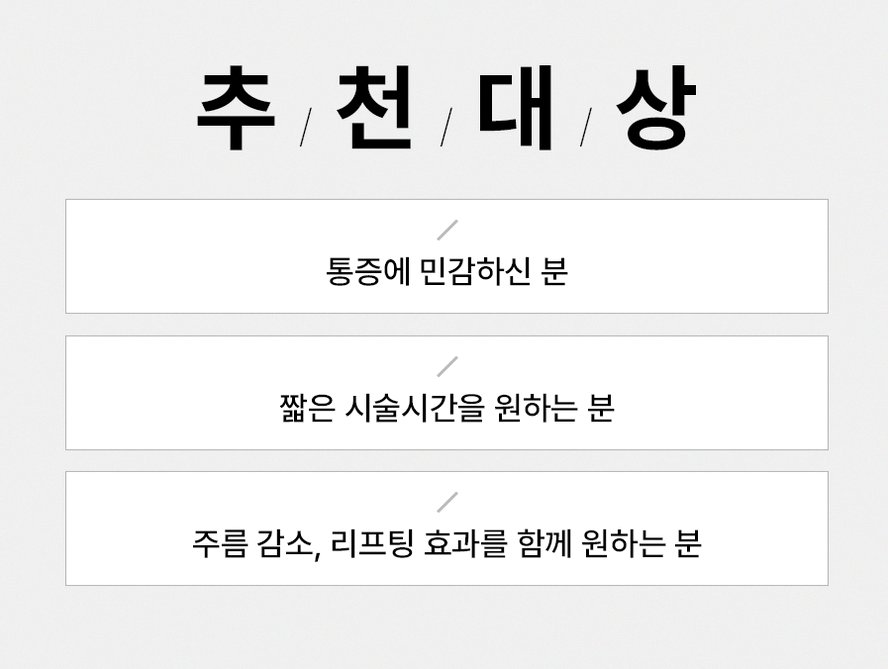
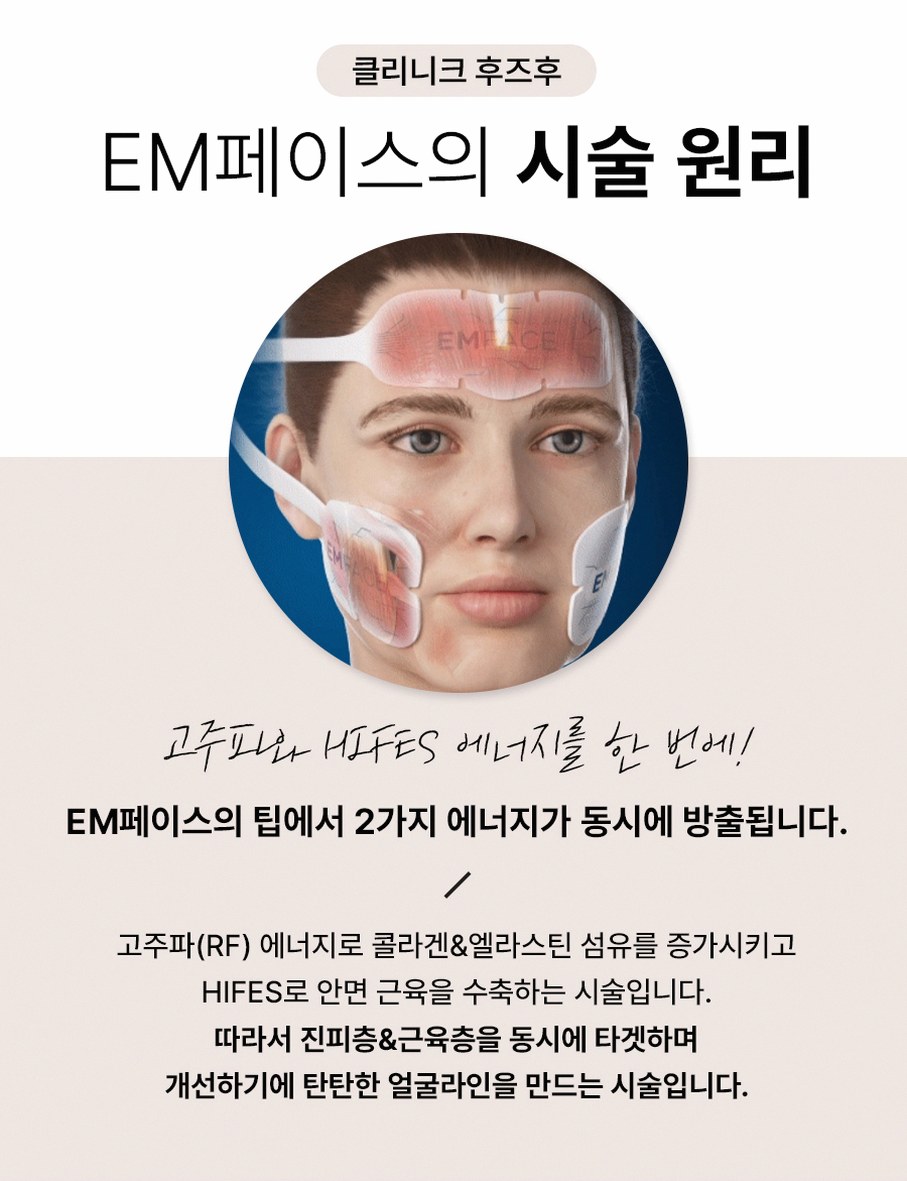
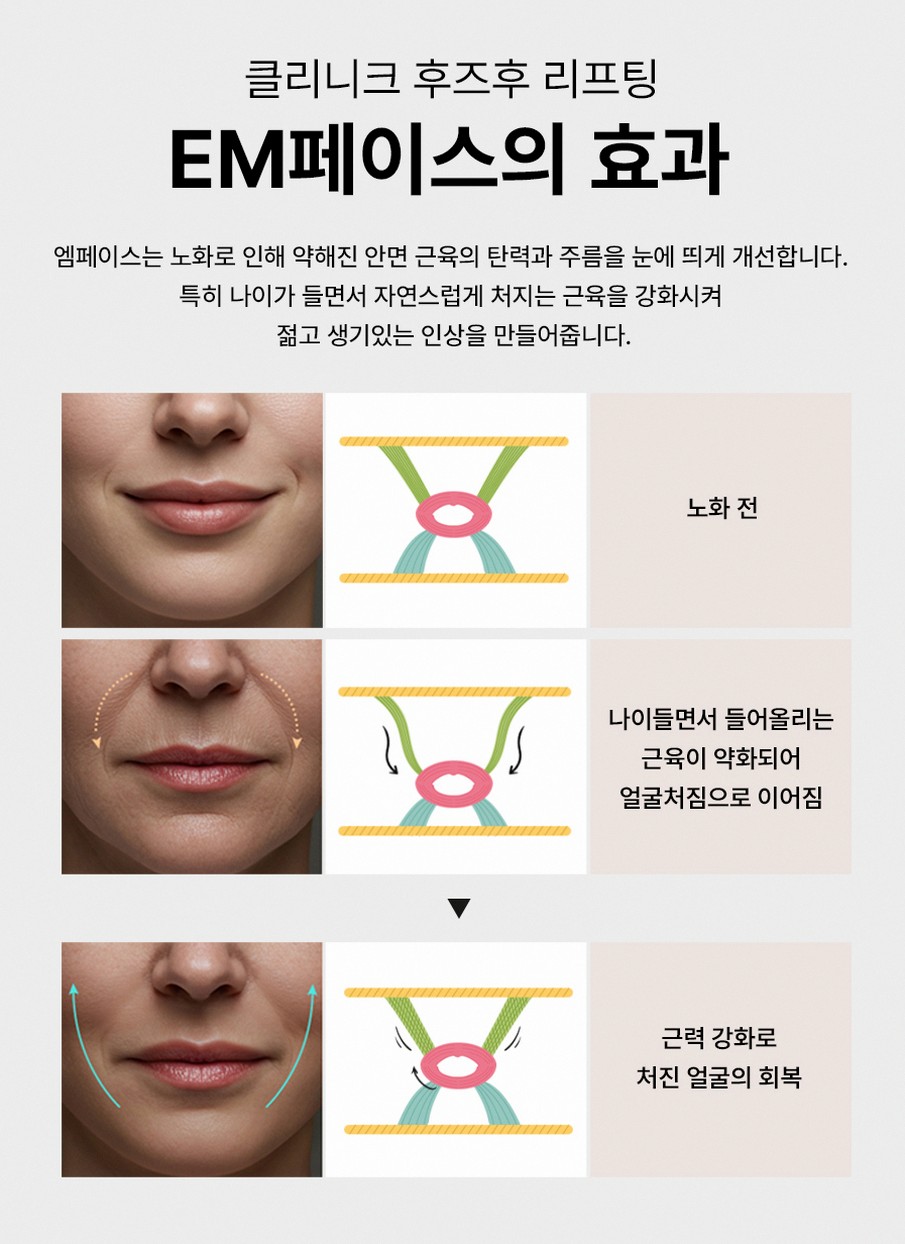
Emface is described by providers as a non-invasive device intended to improve facial lift and tone. Providers report it targets both the skin and facial musculature to help improve tone and lift in some patients.
The goal is to firm and lift the midface and forehead, refine facial contours, and soften fine lines without needles or downtime. During treatment, applicators are placed on the forehead and cheeks. The device delivers controlled energy to the skin and underlying muscles, leading over time to a more lifted and toned appearance.
In many anti‑aging clinics in Cheongdam, Gangnam, Emface is one of several lifting options, alongside radiofrequency devices such as Thermage‑type systems, ultrasound‑based lifting similar to Ultherapy, thread lifts, and other monopolar RF platforms. It is often used as part of a multi‑step contour‑fixing program, where muscle tone, skin laxity, and volume are addressed in a structured way rather than with a single procedure.
Standard Emface treatment interval
Weekly intervals are common for two main reasons. First, the facial muscles being stimulated respond best to repeated, consistent loading, similar to a structured workout plan. The device targets elevator muscles that help lift the cheeks and brows. Stimulating them at regular weekly intervals allows adaptation and strengthening without excessive fatigue.
Second, each radiofrequency session triggers collagen remodeling in the dermis. This process is not instant; it unfolds over weeks. When you space sessions by about a week, you allow the skin to start its repair and remodeling cycle, while still stacking the effects from one session to the next. Doing sessions too close together does not give the tissue time to respond, while spacing them too far apart in the initial course can reduce the cumulative synergy.
For some patients, especially those in their 40s, 50s, or with more noticeable sagging, a 6‑session course may be suggested. Even in these cases, the interval typically remains weekly. The exact number of sessions and spacing is decided after an in‑person assessment of skin laxity, muscle tone, age, and how Emface fits into the overall treatment plan.
Why the interval matters
The Emface interval is not just a scheduling convenience; it is closely linked to how your tissues respond.
Facial muscles need time to recover and adapt after high‑intensity stimulation. If sessions are done too frequently, such as every day or every second day, the muscles may feel overly fatigued or sore, without producing better lifting. A weekly rhythm allows enough time for recovery while still maintaining consistent stimulation.
Collagen and elastin synthesis is also a slow biological process. Radiofrequency energy gently heats the dermis, triggering a wound‑healing response that leads to new collagen formation and tightening over weeks to months. If sessions are packed too closely, there is little added benefit because the skin has not yet progressed through the early phases of remodeling from the previous treatment.
On the other hand, if the gaps between sessions in the initial course are too long, such as several weeks or months, the treatments may behave more like isolated single sessions. You can still see some benefit, but the stacked, program‑like effect may be weaker or slower.
Risks of too‑short intervals can include more pronounced temporary swelling, muscle soreness, or discomfort, as well as unnecessary cost and time. Risks of too‑long intervals in the first course include slower visible improvement and less synergy between sessions. For these reasons, following the recommended schedule from your treating physician is important.
How long Emface results last and maintenance schedule
Many patients notice an initial sense of lifting and toning within a few weeks after completing the 4‑session course. The most meaningful changes, especially in skin firmness and fine lines, usually develop gradually as collagen remodeling continues over several months.
Emface is not a permanent procedure in the sense that it cannot stop natural aging. Gravity, sun exposure, and lifestyle factors continue to influence your tissues. However, by improving muscle support and collagen quality, Emface can help slow visible sagging and maintain a more lifted appearance for a period of time.
After the initial course, a common maintenance schedule is one session every 3–6 months. Younger patients with mild laxity and healthy habits may extend maintenance toward the longer end of this range. Patients with more advanced laxity, heavier sun exposure, or lifestyle factors such as smoking may benefit from more frequent maintenance, closer to every 3–4 months.
Some people choose a short booster of 1–2 sessions around 6–12 months after the initial course, especially if they notice gradual return of laxity. The purpose of maintenance is not to create a one‑time, unchanging lift, but to help preserve and support the results as aging continues.
Tailoring the interval by age and skin type
Although the standard Emface interval is weekly during the initial course, it is often adjusted based on age, skin type, and overall treatment goals.
Younger patients in their late 20s to 30s with mild laxity usually do well with the standard 4 sessions at weekly intervals. Their tissues tend to respond quickly, and maintenance can often be spaced out to every 6 months or even longer if lifestyle is healthy and other preventive measures are in place.
Middle‑aged patients in their 40s to early 50s with moderate laxity may be advised to have 4–6 sessions, still roughly one week apart. Maintenance for this group is more often in the 3–6 month range. The exact plan depends on facial structure, degree of sagging, and whether other treatments are combined.
Older patients or those with pronounced sagging often benefit from a combination approach. Emface may be integrated with radiofrequency tightening, ultrasound lifting, thread lifts, or volume restoration. In such cases, the Emface interval often remains weekly, but the overall calendar is carefully arranged so that high‑energy procedures do not overlap in a way that overwhelms the skin or muscles.
For patients with thin, sensitive skin or underlying conditions that slow recovery, intervals may be slightly extended, for example to 10–14 days between Emface sessions. If there is prolonged redness, discomfort, or unusual sensitivity after a session, the clinic may reduce energy levels or lengthen the gap before the next treatment. This conservative approach helps maintain safety and comfort while still progressing toward lifting goals.
Combining Emface with other treatments
In Cheongdam, Gangnam, Emface is frequently used as part of a three‑step contour‑fixing program that may include other devices and injectables. When treatments are combined, the Emface interval can be influenced by the timing of other procedures.
When Emface is combined with radiofrequency tightening such as Thermage‑type devices or ultrasound lifting, clinics often avoid scheduling all high‑energy treatments on the same day. A common pattern is to perform a major RF or ultrasound session first, then start Emface a short time later, or vice versa, depending on the plan. Emface sessions are then kept on a weekly rhythm, but the start date is chosen so that the skin is not overstressed.
If fillers or collagen‑stimulating injectables are planned, Emface may be scheduled before or after them with a gap of several days to a few weeks. Performing Emface first can sometimes help lift and tone the structure, making it easier to judge how much volume is truly needed. In other cases, volume correction is done first, followed by Emface once swelling has settled. The exact sequence is customized.
Because combination plans are highly individual, the Emface interval may be slightly adjusted to fit safely around other procedures. The goal is to achieve synergy without overlapping downtime or overstimulation.
Who may consider Emface in Seoul
Emface can be an option for international patients who want noticeable yet non‑invasive lifting and toning, and who prefer to avoid needles or surgical procedures.
Typical candidates include people who notice early to moderate sagging of the midface or brows, softening of facial contours, or fine lines in the forehead and cheeks. It can also be considered by those who have had other lifting treatments in the past and now want to maintain or enhance their results with a non‑invasive method.
People with pacemakers, certain implanted devices, or specific medical conditions may not be suitable for Emface. A proper medical review is essential before planning treatment. Expectations should be realistic: Emface aims to improve support and firmness, but it does not replace the effect of surgical lifting.
What to expect at each Emface session
Typical sessions are relatively brief and usually fit into a short outpatient appointment; your clinic will confirm exact timing. This can make scheduling regular sessions practical for patients with busy schedules.
During the session, the skin is cleansed and applicators are placed on the forehead and cheeks. As the device runs, you will feel strong but generally tolerable muscle contractions and a warming sensation in the skin. Most patients do not require anesthesia.
After the session, there may be mild redness or swelling, which typically resolves quickly. You can return to normal daily activities immediately, including work and sightseeing. These short‑term changes are taken into account when deciding whether to keep a one‑week interval or extend it slightly in sensitive individuals.
Planning your Korea visit and treatment timeline
For overseas patients coming to Cheongdam, Gangnam, a typical Emface schedule can be organized within a short stay, especially if you plan ahead.
If you aim to complete the full 4‑session course in one trip, you should allow at least 3 weeks in Korea. This allows one session per week, with some flexibility for 5–10 day gaps depending on your travel and work plans. If your stay is shorter, you may start the course in Seoul and finish remaining sessions in your home country, if an Emface provider is available there.
A sample timeline for a 3‑week stay could be:
Day 1–2: In‑person consultation, facial analysis, and first Emface session.
Day 7–9: Second session.
Day 14–16: Third session.
Day 21–23: Fourth session and final review before departure.
Between sessions, there is no strict downtime, so you can continue sightseeing, shopping, or business activities. If you are combining Emface with other treatments such as RF tightening or ultrasound lifting, the clinic will help arrange the order and spacing so that your schedule remains manageable.
Online consultation and pre‑visit preparation
Before traveling to Seoul, it is helpful to arrange an online consultation with the clinic. Many clinics near Apgujeong Rodeo Station offer video calls or secure messaging to review your concerns and medical history.
To make the most of this consultation, prepare the following:
Clear front and side photos of your face in natural light, without heavy makeup.
A brief description of your main concerns, such as sagging cheeks, jawline, or forehead lines.
A list of previous treatments in the last 12–18 months, including any RF, ultrasound, threads, or injectables.
Your medical history, including implanted devices, chronic illnesses, medications, and any history of facial nerve issues.
During the online consultation, you can ask specific questions about the recommended number of Emface sessions, the interval, whether you are likely to need 4 or 6 sessions, and how maintenance might work if you live overseas. This is also the time to discuss combination options if you are considering other procedures.
Aftercare and lifestyle considerations
Emface aftercare is generally simple, which makes weekly intervals easy to follow. Most patients can resume normal skincare and makeup shortly after treatment, as advised by the clinic.
You may be asked to avoid very hot environments such as saunas or intense workouts immediately after the session, especially on the same day, to allow the skin to cool and settle. Gentle skincare, sun protection, and adequate hydration support the collagen remodeling process.
Lifestyle factors have a strong influence on how long Emface results last. Regular sun protection, avoiding smoking, maintaining stable weight, and following a balanced diet all help preserve skin quality and muscle support. If you live in a very sunny climate, consistent use of sunscreen and hats is particularly important.
If you experience unusual discomfort, prolonged redness, or asymmetry between sessions, you should contact the clinic rather than adjusting the interval on your own. The physician may recommend a longer gap, lower energy, or additional assessment.
Safety and who sets the interval
The Emface treatment interval should always be set by a qualified physician familiar with the technology and your medical background. During pre‑treatment evaluation, your medical history, medications, and any implanted devices are reviewed to rule out contraindications.
The doctor will assess your skin thickness, elasticity, facial muscle pattern, and degree of laxity. Based on this, they determine appropriate energy settings and the safest interval. It is not advisable to book extra sessions or shorten the interval on your own in the hope of faster results. Emface does not work like a simple cosmetic; more frequent use does not linearly increase benefits.
If you are traveling from overseas and your schedule changes, communicate with the clinic so they can adjust the plan safely. In some cases, a slightly longer gap between one or two sessions is acceptable, but this should be decided by your doctor.
Key questions to ask before booking Emface
When you compare clinics or prepare for consultation, it can be helpful to have a checklist of questions related to Emface intervals and planning.
You may want to ask:
How many Emface sessions do you usually recommend for someone my age and with my degree of laxity?
What interval between sessions do you suggest for me, and why?
If I am staying in Seoul for a limited time, can we realistically complete the recommended course, or should I plan some sessions in my home country?
If I combine Emface with RF, ultrasound, or injectables, how will you space these treatments to avoid overstressing my skin?
How do you adjust the interval if I have sensitive skin or delayed redness after a session?
Clear answers to these questions will help you understand whether the proposed plan is realistic and tailored to your situation.
Soft call to action
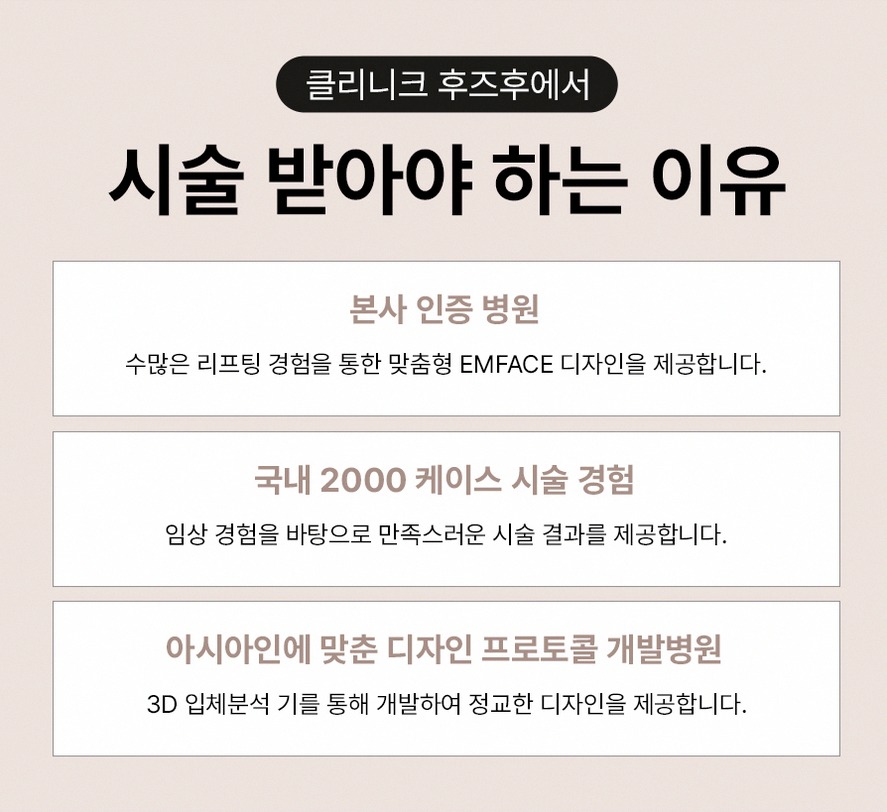
Clinique hus,hu in Cheongdam, Gangnam, near Apgujeong Rodeo Station in Seoul, offers Emface as part of a broader anti‑aging and contour‑fixing program. If you are considering Emface and would like to know the ideal treatment interval for your face and travel schedule, you can start with an online consultation. By sharing photos, medical history, and your planned dates in Korea, you can receive a personalized session plan, including how many treatments are recommended, how far apart they should be, and how to integrate Emface with any other procedures you are considering.
FAQ about Emface treatment intervals
How many Emface sessions do I need in one course, and how far apart should they be?
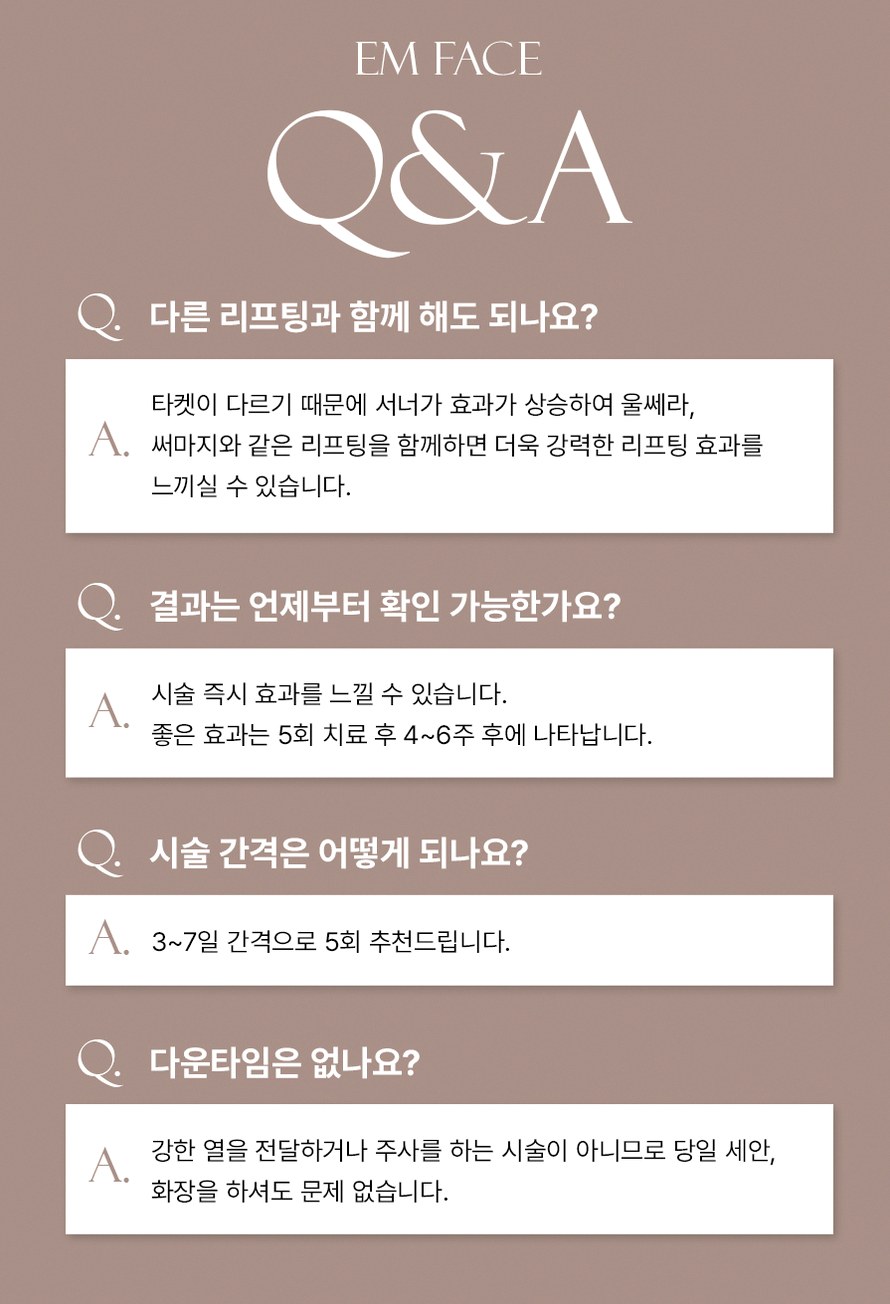
Most patients are advised to have 4 Emface sessions in the initial course, spaced about one week apart, with 5–10 days between treatments. Some people with more pronounced sagging or older age may benefit from up to 6 sessions, still at roughly weekly intervals. The exact number and spacing are decided after a detailed assessment of your skin, muscles, and goals.
Can I do Emface more than once a week for faster results?
Doing Emface more than once a week is generally not recommended. Facial muscles and skin need time to recover and respond after each high‑intensity session. Increasing the frequency does not usually improve results and may increase temporary soreness or swelling, as well as cost and time. Following the schedule set by your physician is the safest and most efficient approach.
What happens if I miss a session and there is a longer gap than planned?
If you miss a session and there is a longer gap, such as two or three weeks instead of one, you do not need to restart the entire course. However, the stacked effect between sessions may be slightly reduced. You should inform the clinic, and your doctor may adjust the remaining schedule or energy settings. For overseas patients, it is helpful to plan travel dates in advance to minimize missed sessions.
How long do Emface results last, and when should I come back for maintenance?
Many people notice improvements within weeks after finishing the initial course, with further changes developing over several months as collagen remodels. Results are not permanent because aging continues, but maintenance sessions every 3–6 months can help preserve the lifting and toning effect. The ideal maintenance interval depends on age, baseline laxity, lifestyle, and whether you use other anti‑aging treatments.
Is the interval different if I combine Emface with RF, ultrasound lifting, or fillers?
When Emface is combined with other treatments, the weekly Emface rhythm is often maintained, but the start date and exact timing may be adjusted. High‑energy RF or ultrasound sessions are usually spaced so they do not overlap with Emface on the same day, and fillers or collagen stimulators may be placed before or after Emface with a gap of days to weeks. Your doctor will design a calendar that balances safety, synergy, and your travel schedule.

Are the intervals shorter or longer for people in their 20s compared with those in their 40s or 50s?
The basic weekly interval is similar across age groups, but the total number of sessions and maintenance frequency differ. Younger patients with mild laxity often do well with 4 weekly sessions and maintenance every 6 months or more. Patients in their 40s or 50s may need 4–6 sessions and more frequent maintenance, around every 3–6 months. Individual factors such as skin quality and lifestyle are also important.
Can I adjust the interval if I have sensitive skin or more redness after a session?
If you have sensitive skin or experience prolonged redness or discomfort after Emface, you should discuss this with your doctor before changing the interval yourself. In many cases, the clinic can slightly extend the gap between sessions, for example to 10–14 days, and adjust energy settings. This conservative approach helps maintain comfort while continuing the course.
Who is not a good candidate for frequent Emface sessions?
People with certain implanted electronic devices, specific neurological or muscular disorders, or uncontrolled medical conditions may not be suitable for Emface at all, let alone frequent sessions. Also, those who cannot follow basic aftercare or who expect surgical‑level lifting from a non‑invasive procedure may not be ideal candidates. A thorough consultation and medical review are essential to determine if Emface is appropriate and how often it can be safely performed.
- 공유 링크 만들기
- X
- 이메일
- 기타 앱


댓글
댓글 쓰기