Types of Thread Lifting and How Silhouette Soft Fits In
- 공유 링크 만들기
- X
- 이메일
- 기타 앱
Direct answer: types of thread lifting
When people search for types of thread lifting, they are usually trying to understand which method might suit their face and aging concerns. In simple terms, thread lifting is a minimally invasive procedure that uses dissolvable threads placed under the skin to gently lift sagging tissues and stimulate collagen.
The main types of thread lifting are:
Mono threads (smooth threads) for collagen stimulation and subtle tightening
Cog or barbed threads for mechanical lifting of sagging areas
Cone-type threads such as Silhouette Soft for structured lifting and collagen stimulation
Specialized threads designed for specific areas like the neck, under-chin, or eyebrows
Among these, Silhouette Soft is a representative cone-type thread lift that is often chosen for patients who want a more defined, vector-based lift of the midface and jawline without undergoing surgery. This guide explains the main thread types and then focuses on Silhouette Soft so you can better understand when and why a doctor might recommend it.
Overview of main thread lifting types
Mono threads (smooth threads)
Mono threads are thin, smooth dissolvable threads placed in a mesh-like pattern under the skin. Their main role is not to physically pull the skin up, but to stimulate collagen production around the threads.
They are often used for:
Fine lines and mild creping on the cheeks or lower face
Subtle tightening in areas like the neck or under the chin
Improving skin texture and firmness rather than changing facial shape
Because mono threads do not have hooks or cones, they offer limited mechanical lifting. Results are usually subtle and best for people with early signs of aging or those wanting a skin-quality boost.
Cog or barbed threads
Cog or barbed threads have tiny barbs or hooks along the thread. These barbs catch onto the surrounding tissue, allowing the doctor to gently pull and fix the tissue in a higher position.
They are commonly used for:
Jawline contouring and jowls
Nasolabial folds (smile lines)
Midface lifting (cheek area)
With cog threads, patients often see an immediate lifting effect. Over time, the presence of the thread also encourages collagen formation along the thread path. However, the exact lifting pattern depends on the thread design and how the barbs engage with the tissue.
Cone threads (Silhouette Soft)
Cone threads use small, three-dimensional cones along the length of the thread instead of barbs. Silhouette Soft is a well-known example of this cone-type system.
The cones are arranged in opposite directions (bidirectional), which helps anchor the tissue more securely when the thread is tightened. This design allows for a more controlled, vector-based lift, especially in the midface and lower face.
Specialized threads for specific areas
Some thread systems are designed with particular regions in mind. These may differ in thickness, length, and flexibility.
Examples include:
Shorter or finer threads for delicate areas such as the eyebrows or under-eye region
Longer, stronger threads for the neck, jawline, or under-chin area
Threads combined with other technologies or materials to enhance collagen stimulation
In practice, doctors often combine different thread types in one treatment plan. The choice depends on skin thickness, the degree of sagging, facial volume, and how much downtime the patient can accept.
What is Silhouette Soft and how is it different?
Silhouette Soft in simple terms
Silhouette Soft is a branded, cone-based, absorbable thread lift system designed mainly for lifting the midface, jawline, and lower face, and in some cases the neck. It is intended for people who want visible lifting and contour improvement but are not ready for a surgical facelift.
Material and mechanism
Silhouette Soft threads are made of a dissolvable suture material combined with tiny, biocompatible cones. These cones are placed in two opposite directions along the thread.
When the doctor inserts the thread under the skin and gently pulls, the cones catch and anchor into the tissue. Because they face opposite directions, they create a stable support structure that holds the lifted tissue in its new position.
This system has two main actions:
Immediate mechanical lift from the cones anchoring and repositioning the tissue
Gradual collagen stimulation as the body responds to the thread and cones over time
How Silhouette Soft differs from typical barbed threads
Compared with standard barbed threads, Silhouette Soft uses cones rather than hooks. This difference can offer:
More defined lifting vectors: the doctor can plan and execute clearer lifting directions, especially in the cheek and jawline areas.
Potentially fewer threads: because each Silhouette Soft thread has multiple cones, fewer threads may be needed to achieve a structured lift in suitable candidates.
Balanced focus on lift and collagen: while barbed threads also stimulate collagen, the cone design emphasizes both the mechanical repositioning and longer-term tissue support.
Indications for Silhouette Soft
Silhouette Soft is generally considered for:
Mild to moderate sagging in the cheeks
Early jowls and softening of the jawline
Mild sagging or laxity in the lower face and sometimes the neck
Patients who want noticeable lifting but prefer to avoid incisions and general anesthesia
It is not a replacement for a full surgical facelift in cases of very advanced sagging, but it can be a meaningful option for those in an earlier to mid stage of facial aging.
Longevity of results
Visible lifting effects may persist for many months in some patients, but duration varies widely by individual factors such as age, skin quality, facial volume, lifestyle (for example, smoking or significant weight changes), and adherence to aftercare instructions.
Because the material is absorbable, the thread and cones gradually break down over time. The collagen produced around them can help maintain some improved firmness even after the thread itself has dissolved, but the exact duration is individual.
Silhouette Soft vs other thread lifting types
Compared with mono threads
Mono threads are best thought of as a skin-quality and mild-tightening treatment. They can:
Improve fine lines and mild laxity
Subtly firm the skin texture
However, they usually do not create a strong change in facial contour. Silhouette Soft, in contrast, is used when a more structural lift is desired. While it also stimulates collagen, its main strength is repositioning sagging tissues to restore cheek and jawline definition.
Compared with standard barbed threads
Both Silhouette Soft and barbed threads aim to lift sagging tissue. The main differences are:
Design: cones versus barbs
Lifting pattern: Silhouette Soft is often used for clear, vector-based lifting, especially in the midface and jawline
Number of threads: in some cases, fewer Silhouette Soft threads may be needed for a given area compared with certain barbed systems
The choice between cone-type and barbed threads depends on facial anatomy, the degree of sagging, and the doctor’s experience with each system. Some patients may benefit from a combination.
Comfort and downtime
All thread lifts involve some degree of swelling, tenderness, and possible bruising. With Silhouette Soft, because the lift can be relatively strong, patients may notice a feeling of tightness or pulling for several days to a couple of weeks.
Common short-term experiences include:
Swelling and mild bruising along the thread path
Sensation of tightness when talking, smiling, or chewing
Slight asymmetry or dimpling that usually settles as tissues adapt
Most people can return to light daily activities within a few days, but are advised to avoid intense exercise and strong facial movements for a short period.
Combination strategies with other treatments
Silhouette Soft is often combined with other treatments to address different aspects of aging:
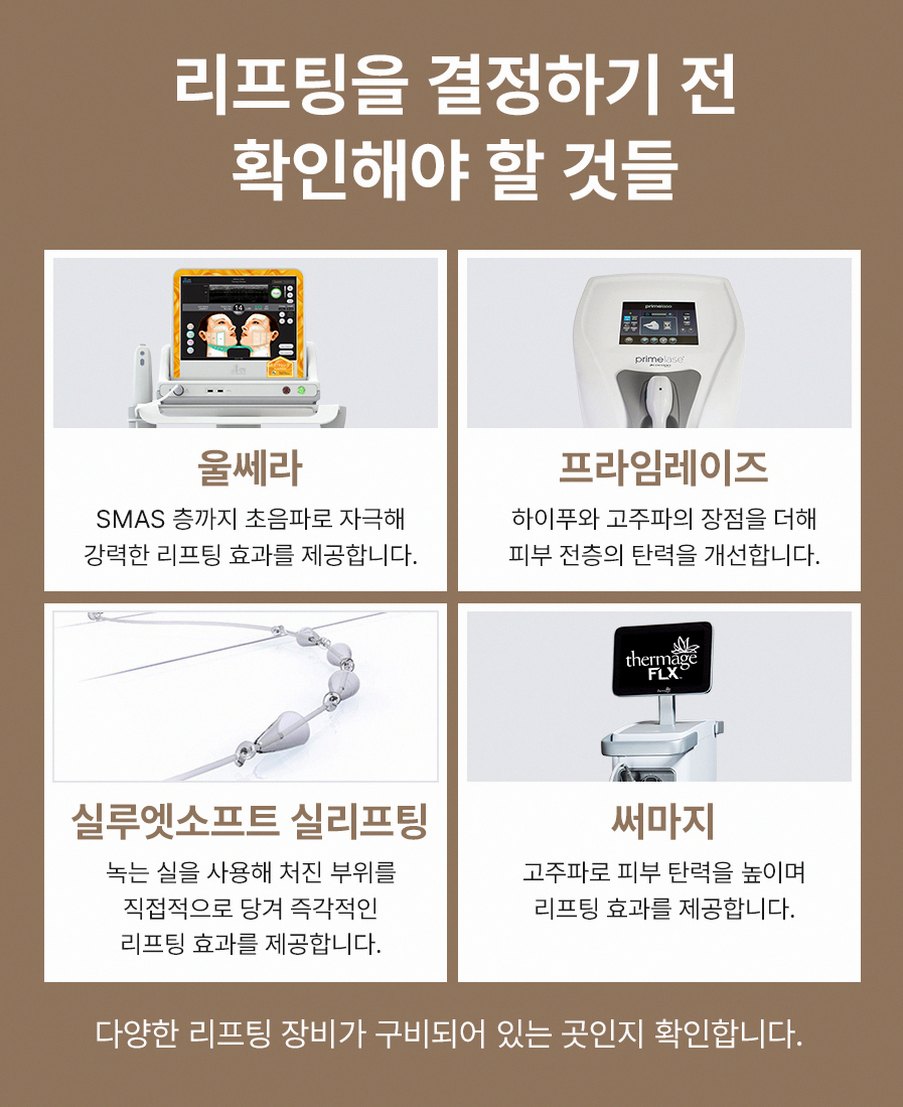
Energy-based lifting: Devices such as Thermage FLX, Ulthera Prime, or Emface can help tighten deeper structures or improve skin firmness before or after threads.
Volumizing fillers: Hyaluronic acid or other fillers can restore lost volume in areas like the cheeks or temples, complementing the lifting effect of Silhouette Soft.
Skin-quality treatments: Lasers, radiofrequency microneedling, or exosome-based therapies can improve texture, pores, and overall skin health.
No single thread type is ideal for everyone. A tailored plan that considers threads, energy devices, and volume restoration often gives more harmonious results than threads alone.
How a multi-modality lifting clinic approaches Silhouette Soft
Assessment and planning
In a clinic that offers multiple lifting tools, the process usually begins with a detailed assessment of:
Skin laxity and thickness
Volume loss in areas like the cheeks, temples, and under-eye region
Facial proportions and symmetry
Previous treatments such as fillers, botulinum toxin, or earlier thread lifts
Silhouette Soft may be recommended when the patient has enough tissue for the cones to anchor and needs a more defined lift of the midface or jawline, but does not yet require surgical intervention.
Integration with lifting devices
Clinics with a broad device portfolio can time Silhouette Soft in relation to other treatments:
Thermage FLX or similar radiofrequency devices for overall skin tightening and collagen stimulation
Ulthera Prime or other focused ultrasound systems for deeper SMAS-level tightening
Emface or related technologies for muscle toning and support in the midface and forehead
These can be performed before or after thread lifting, depending on the treatment plan, to support both the superficial skin and deeper structures.
Cell-focused anti-aging support — the clinic offers an in-house autologous exosome program (Mysome™) intended to support tissue signaling and recovery; individual responses vary and outcomes are not guaranteed.
Some centers, such as Clinique hus,hu in Cheongdam, Gangnam, Seoul, incorporate cell-focused anti-aging programs. This may include an in-house cell research approach and autologous exosome-based treatments designed to support tissue quality and recovery around lifting procedures.
By improving the skin’s regenerative environment, these supportive treatments can help the tissue respond better to threads, though individual responses vary and results cannot be guaranteed.
Silhouette Soft procedure: from consultation to aftercare
Pre-treatment consultation
Before scheduling Silhouette Soft, an in-depth consultation is important. During this visit, the doctor will typically:
Review medical history, including medications, allergies, and chronic conditions
Ask about previous facial treatments such as fillers, botulinum toxin, or other thread lifts
Discuss your main concerns and what kind of change you hope to see
Take standardized photos and sometimes use imaging tools to plan lifting vectors and evaluate symmetry
This is also the time to ask questions about expected results, downtime, and how Silhouette Soft compares with other options in your case.
Treatment planning
Based on the assessment, the doctor decides:
How many threads are needed for each side
Where to place the entry and exit points
In which directions to pull (lifting vectors) to best support your facial structure
Whether to combine Silhouette Soft with fillers, energy-based lifting, or skin treatments, and in what order
For example, a patient with early jowls and midface sagging might receive Silhouette Soft for structural lift, plus a skin-tightening device for overall firmness and a small amount of filler to restore cheek volume.
Step-by-step procedure outline
While details can vary by clinic and individual case, a typical Silhouette Soft session includes:
Cleansing and marking: The face is cleansed, and the doctor marks the planned thread paths and key anatomical points.
Local anesthesia: Local anesthetic is applied or injected at the entry and exit points to minimize discomfort.
Thread insertion: Using a fine needle or cannula, the doctor inserts the Silhouette Soft threads under the skin along the pre-marked paths.
Adjustment of lift: The doctor gently pulls the threads to engage the cones and lift the tissue, checking symmetry and contour.
Trimming: Any external thread ends are trimmed and the entry points are cleaned.
The procedure is often completed in a single outpatient visit; overall time depends on the number of threads and the areas treated.
Immediate post-procedure expectations
Right after the procedure, you may notice:
An immediate lifting effect, especially in the cheeks and jawline
Swelling and possible bruising along the thread paths
Mild asymmetry or dimpling that typically improves as the tissue relaxes
A sensation of tightness when making strong facial expressions
Most patients can leave the clinic shortly after the procedure. Makeup may be limited on or near the entry points for a short time, depending on the doctor’s advice.
Aftercare basics
To help the threads settle and reduce the risk of complications, doctors usually recommend:
Avoiding strong facial movements, wide yawning, or exaggerated chewing for a certain period
Sleeping on your back and avoiding face-down or side sleeping for several days if possible
Avoiding heavy exercise, saunas, and intense heat for a short time
Keeping the entry points clean and following any topical care instructions
Attending follow-up visits to monitor healing and symmetry
Following these guidelines can help protect the lift and support a smoother recovery.
Who may consider Silhouette Soft and what are the risks?
Ideal candidates
Silhouette Soft is generally suitable for:
Adults in good overall health with mild to moderate sagging
People with reasonably good skin quality and some remaining elasticity
Individuals, often in their late 30s to 50s, who notice early jowls, midface descent, or loss of jawline definition
Patients who want visible improvement but prefer a minimally invasive option rather than surgery
Age alone is not the only factor. The condition of the skin, facial structure, and expectations are more important.

Less suitable cases
Silhouette Soft may be less appropriate for:
Very thin, fragile skin with little support
Very heavy or thick skin with advanced sagging where a surgical facelift would be more realistic
Patients expecting the same results as surgery from threads alone
Individuals with certain medical conditions or on medications that significantly increase bleeding or impair healing
In such cases, the doctor may recommend alternative or staged treatments.
Common temporary side effects
Most side effects after Silhouette Soft are mild and temporary, such as:
Swelling and bruising
Tenderness or discomfort along the thread paths
Mild dimpling, irregularity, or tightness that usually improves over days to weeks
Cold compresses and prescribed medications can help manage discomfort and swelling.
Potential complications
Although less common, possible complications include:
Infection at the entry points or along the thread path
Prolonged asymmetry or irregular contour
Visible or palpable threads under thin skin
Excessive dimpling or puckering that does not settle on its own
This is why choosing experienced medical staff and a clinic that follows strict sterile techniques is important. A thorough consultation and honest discussion of risks and benefits are essential before deciding on the procedure.
Importance of full disclosure
During consultation, you should inform your doctor about:
Any blood thinners or supplements that affect bleeding
Autoimmune conditions or connective tissue disorders
Previous facial surgeries or thread lifts
History of keloids or abnormal scarring
This information helps the doctor assess your suitability for Silhouette Soft and adjust the plan for safety.
Preparing for a visit to Korea and online consultation
Online consultation before travel
For overseas patients, an online consultation is often the first step. You can usually share:
Front and side photos of your face and neck in good lighting
Information about your age, general health, and main concerns
Details of any previous fillers, threads, or energy-based treatments
The clinic can then suggest whether Silhouette Soft, other thread types, or a combination with devices like Thermage FLX, Ulthera Prime, or Emface might be appropriate for you.
Pre-visit preparation
Before flying to Seoul, it is helpful to:
Confirm your tentative treatment plan and possible schedule
Ask about how many days you should stay for follow-up
Discuss medications you may need to stop temporarily (only under guidance from your local doctor and the treating clinic)
Prepare a list of questions about results, downtime, and aftercare
Clinique hus,hu is located in Cheongdam, Gangnam, within walking distance from Apgujeong Rodeo Station on the Bundang Line, in the direction of Galleria Department Store, which can be convenient for international visitors.
Expected Korea visit timeline
While schedules vary, many overseas patients plan:
Many patients planning short visits schedule consultation and procedure on separate days within a 2–5 day stay, but exact timing depends on the clinic's plan and any combined treatments. Confirm scheduling and follow-up requirements with the clinic.
If you plan to combine Silhouette Soft with other treatments, your stay may need to be slightly longer. It is wise to avoid very tight sightseeing schedules or long outdoor activities immediately after the procedure, as you may feel some tightness and prefer rest.
Frequently asked questions about Silhouette Soft and thread types
How is Silhouette Soft different from other thread lifting types?
Silhouette Soft uses tiny cones along the thread instead of barbs. These cones are arranged in opposite directions to create a stable anchor when the thread is tightened. This design allows for a more controlled, vector-based lift of the midface and jawline compared with many standard barbed threads.
Mono threads mainly focus on collagen stimulation and mild tightening, while Silhouette Soft aims to both lift and support the tissue structure. The choice among thread types depends on your facial anatomy, degree of sagging, and treatment goals.
How long do Silhouette Soft results usually last compared with other threads?
Some barbed thread systems have a similar range, while mono threads may offer more subtle, shorter-term tightening.

Factors such as age, skin quality, lifestyle, and how well you follow aftercare instructions influence how long the results remain noticeable. No thread system can stop aging, but they can help reposition and support tissues for a period of time.
Can Silhouette Soft be combined with Thermage, Ulthera, or Emface?
Yes, Silhouette Soft is often combined with energy-based lifting devices. Thermage FLX can help tighten collagen in the deeper dermis, Ulthera Prime can target deeper structures like the SMAS layer, and Emface can work on facial muscles and skin.
Your doctor will decide the best order and timing. In some plans, energy devices are done first to improve tissue firmness, followed by Silhouette Soft for structural lift. In others, threads are placed first and devices are added later as maintenance.
Is Silhouette Soft suitable for the neck and jawline?
Silhouette Soft is frequently used for early jowls and jawline definition. In suitable candidates, it can help reduce the appearance of sagging along the jaw and improve the contour.
For the neck, it may be used in selected cases with mild to moderate laxity. However, very heavy neck bands or advanced sagging may respond better to other treatments or surgery. A face-to-face assessment is needed to decide.
What does recovery feel like after Silhouette Soft thread lifting?
Most patients experience swelling, mild bruising, and a feeling of tightness or pulling when they talk, smile, or chew. These sensations are usually most noticeable in the first few days and gradually improve over one to two weeks.
Some temporary dimpling or irregularity can appear along the thread path as the cones engage the tissue. This often settles as the skin adapts and the swelling decreases. Your clinic will provide specific guidance on what is normal and when to contact them.
How many threads are typically used for a midface or jawline lift?
The number of Silhouette Soft threads varies depending on facial size, degree of sagging, and the desired lift.
During consultation, your doctor will explain how many threads they recommend and why, so you understand the plan and the areas each thread will support.

Can previous fillers or threads affect my suitability for Silhouette Soft?
Yes, previous treatments can influence planning. Existing fillers may change how the tissue moves and where threads can be placed safely. Old threads, especially if they are still present or have caused scar tissue, may also affect the path and anchoring of new threads.
This is why it is important to tell your doctor about all past procedures, including when and where they were done. In some cases, the doctor may adjust the plan, stage treatments over time, or recommend alternative options.
Soft call to action
If you are considering thread lifting in Korea and want to understand whether Silhouette Soft or another thread type is better for you, an online consultation can be a helpful first step. By sharing clear photos and your treatment history, you can receive a more personalized explanation of options, expected downtime, and how a combined plan with threads, fillers, and lifting devices might look.
This article is for general information only and does not replace a one-on-one medical consultation. Always discuss your individual situation, medical history, and expectations directly with a qualified doctor before deciding on any procedure.
- 공유 링크 만들기
- X
- 이메일
- 기타 앱


댓글
댓글 쓰기