Aptos thread lift prices in Seoul — key cost factors
- 공유 링크 만들기
- X
- 이메일
- 기타 앱
Direct answer: Aptos thread lift price in Seoul
ignificantly higher. The exact figure depends on how many threads are used, which Aptos Namica models are chosen, which areas are treated, and whether it is combined with energy‑based devices or volume treatments.
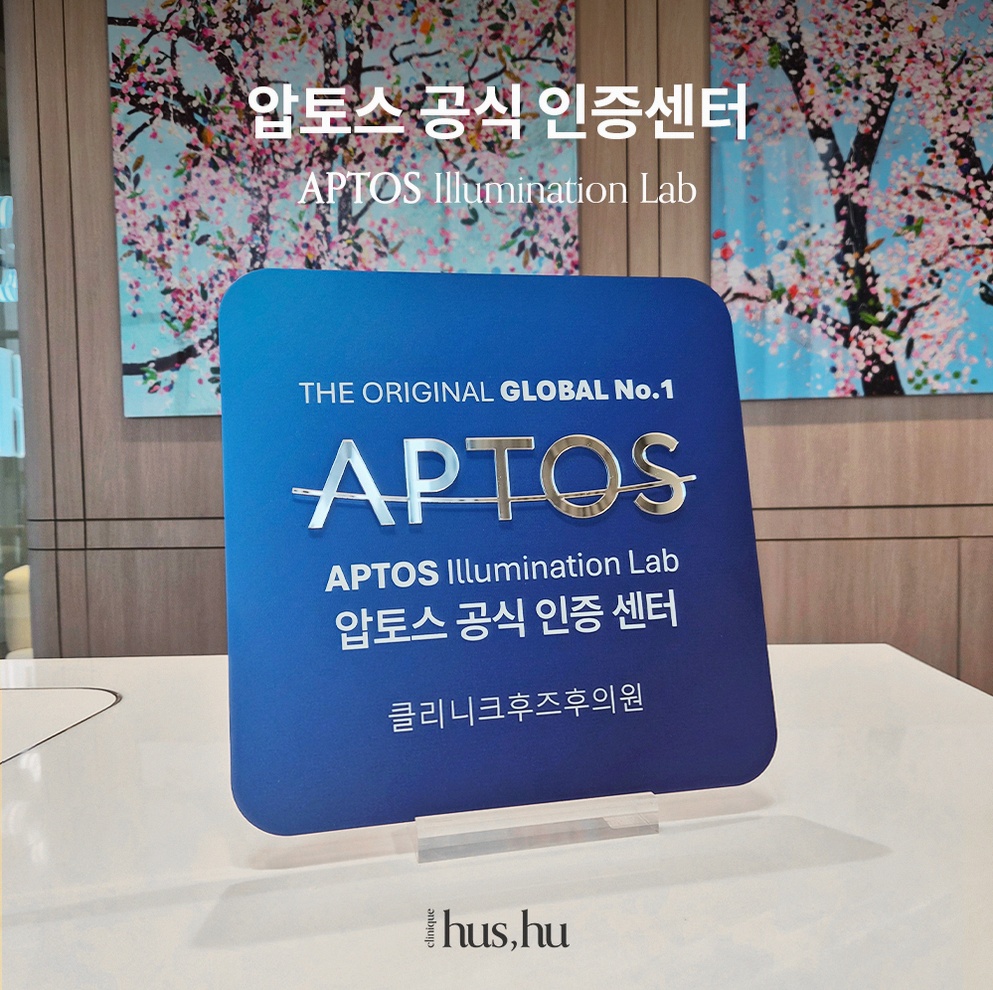
Instead of focusing on the lowest price, it is safer to compare what is actually included: thread type, number of threads, doctor’s experience, devices used, and aftercare. Clinics like Clinique hus,hu in the Cheongdam area of Gangnam tend to position Aptos lifting in a mid‑to‑high bracket, reflecting individualized planning and combination anti‑aging programs rather than a single simple procedure.
What is Aptos thread lifting
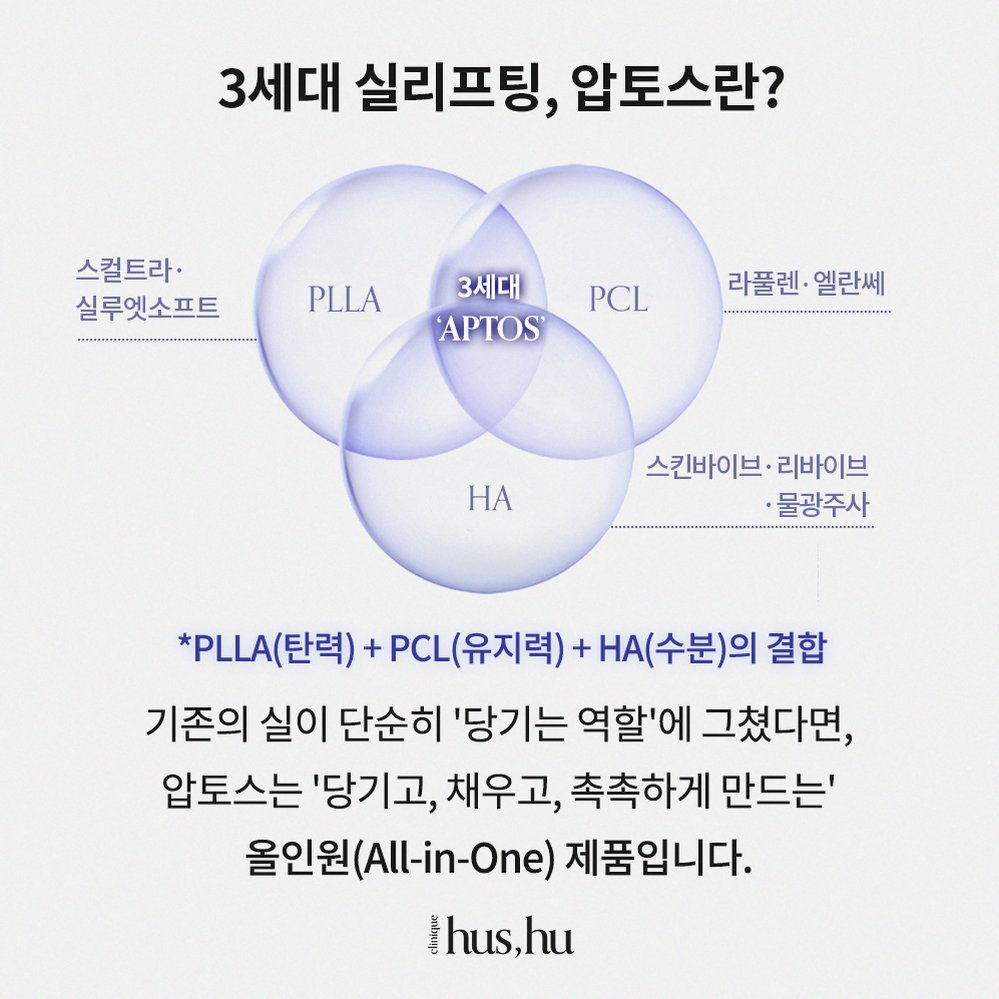
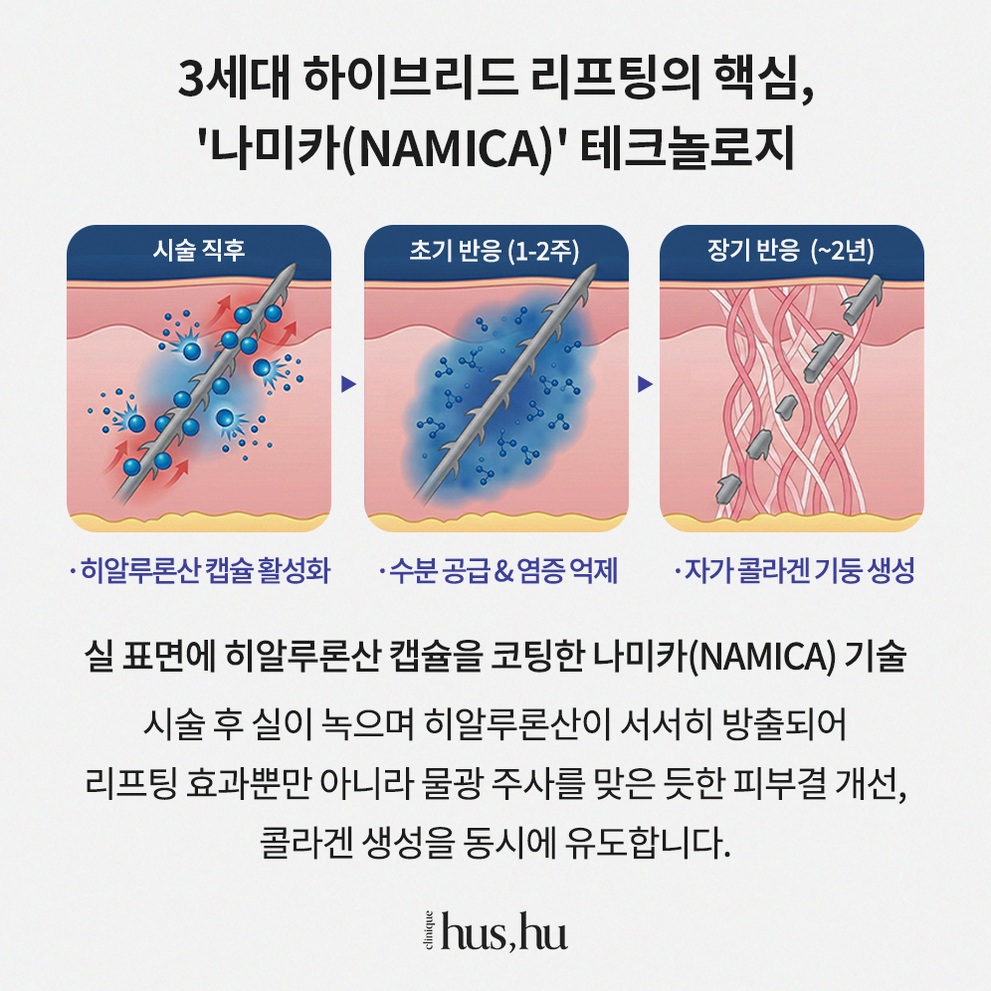
Aptos thread lifting is a minimally invasive procedure that uses specially designed lifting threads to reposition sagging facial and neck tissue. The threads have barbs or complex structures that anchor into the tissue, allowing the doctor to gently lift and support areas that have descended with age.
Typical target areas include the jawline, jowls, nasolabial folds, marionette lines, midface, cheeks, and neck. The goal is to restore a cleaner contour and soften folds without open surgery.
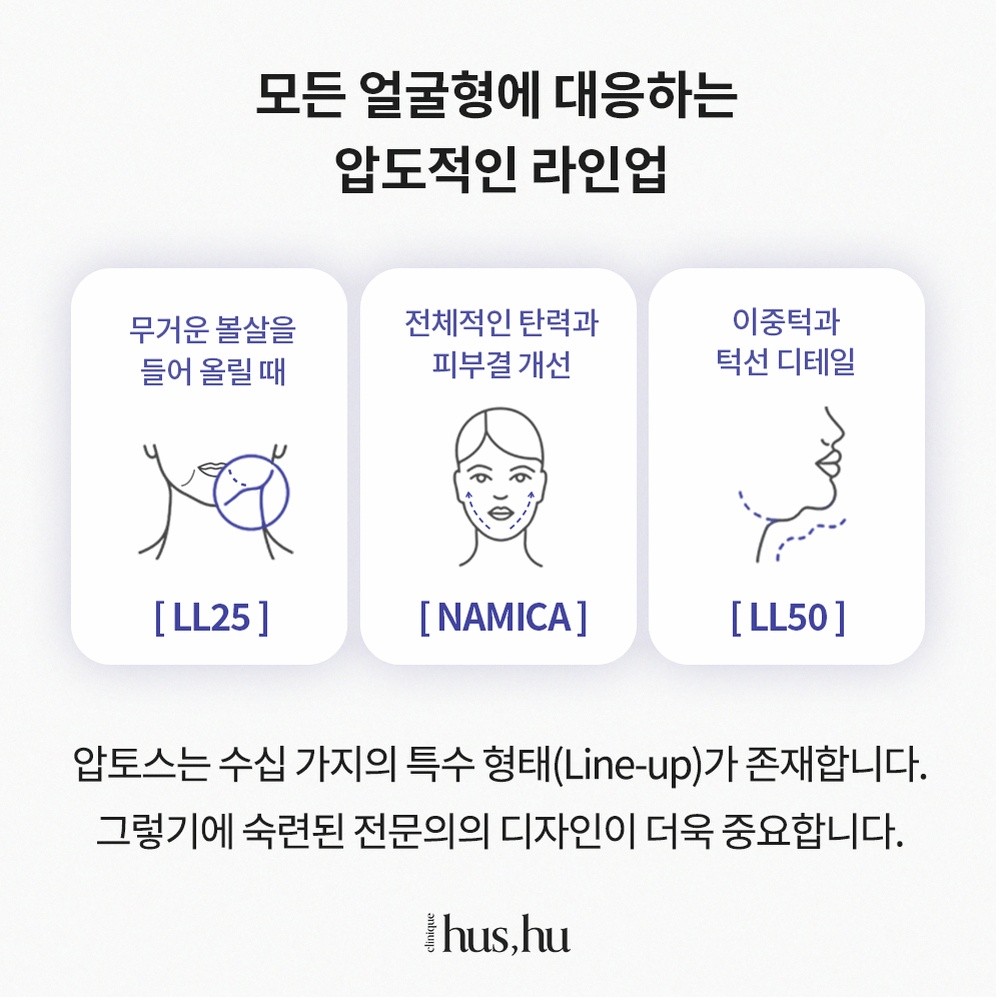
Aptos Namica threads such as Namica19, LL25, and LL50 come in different lengths and designs. Shorter or more delicate threads may be used for smaller zones or fine adjustments, while longer or stronger threads are used for more structural lifting, such as the jawline or lower face. Your doctor chooses the combination according to your anatomy, degree of sagging, and desired result.
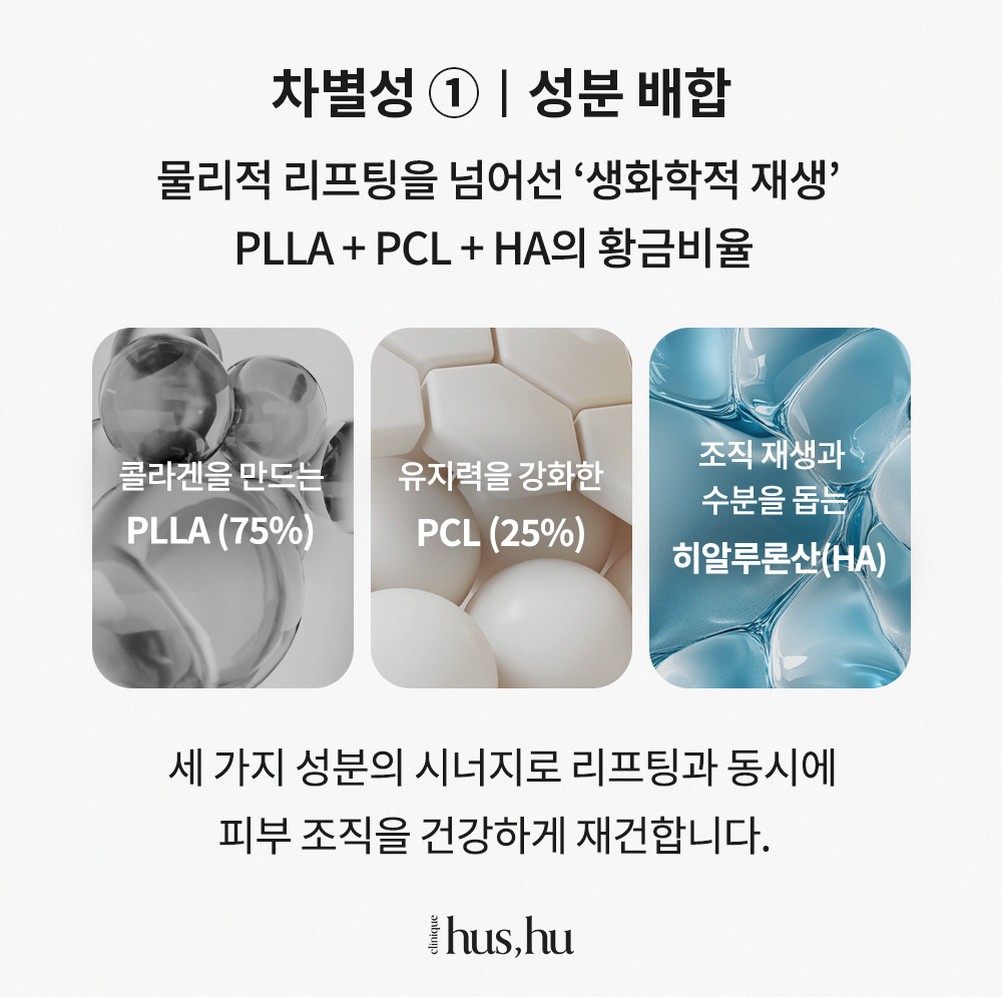
Compared with general PDO threads, Aptos systems are usually more structurally complex and engineered for stronger mechanical lifting and longer‑lasting support. This engineering, along with brand and training requirements, is one reason why Aptos thread lift prices are typically higher than simple PDO thread procedures.
Main factors that influence Aptos thread lift price
Number of threads
The total number of threads is one of the biggest cost drivers.
A small touch‑up of the jawline or a limited area may require only a few threads. A full lower‑face contouring plan or combined lower face and neck lifting will often need more threads placed in several vectors. More threads mean more material cost and more procedure time, which naturally increases the overall fee.
Thread type and length
Within the Aptos Namica range, different models are priced differently.
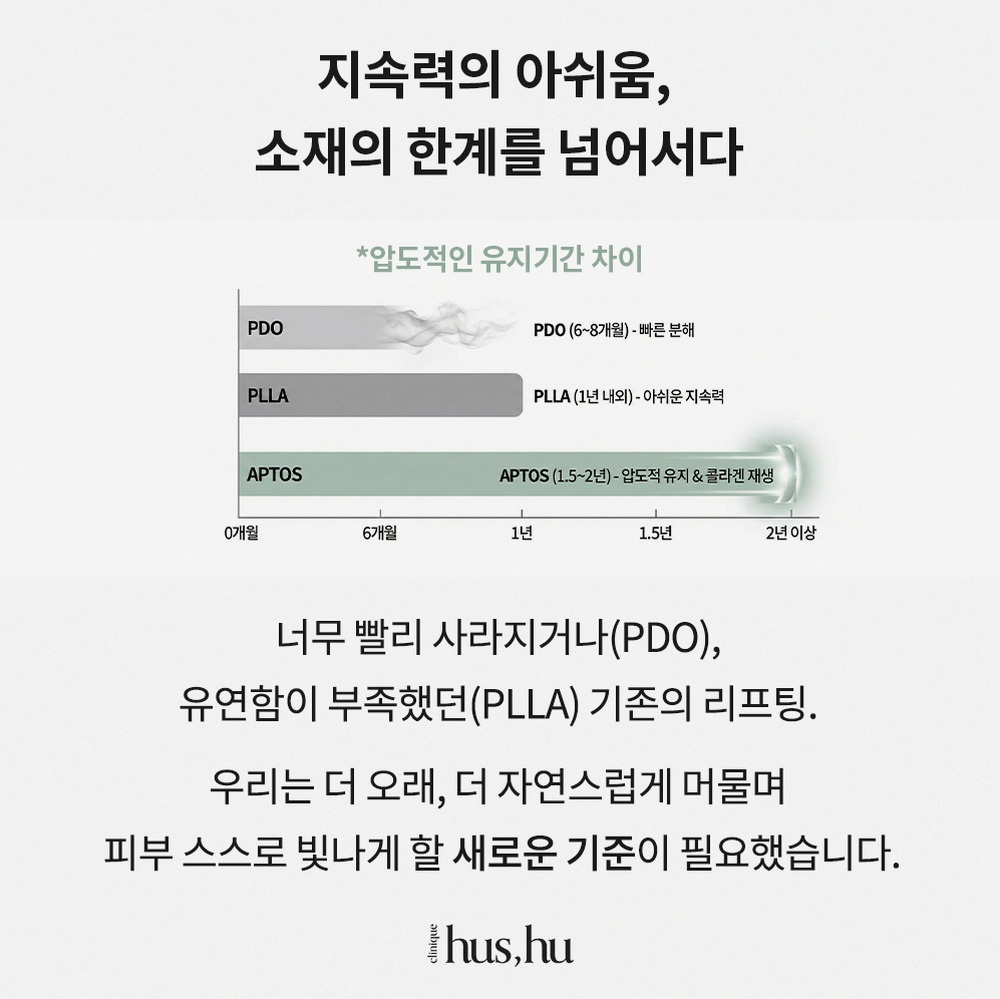
Namica19, LL25, and LL50 vary in length and design. Longer or more complex threads that provide stronger lifting or cover a wider area usually cost more per piece. Deep structural lifting that uses long LL threads will therefore be more expensive than a plan that relies mainly on shorter threads for subtle support.
Treatment area and scope
The scope of treatment also affects the price.
Localized lifting
If you treat only one localized area, such as nasolabial folds or a small segment of the jawline, the cost will be lower because fewer threads and less time are required.
Midface and cheek lifting
Lifting the midface and cheeks often involves several vectors to support the central face. This generally requires more threads and more detailed planning, so the price is higher than a single localized zone.
Lower face and jawline contouring
Defining the jawline and improving jowls is a common request. This usually needs robust lifting threads placed along the mandibular border and sometimes combined with midface support. The cost reflects the number and type of threads used.
Combined lower face and neck lifting
Adding the neck increases complexity and thread count. Neck skin and platysmal bands can be more challenging to support, so more planning and time are needed, which is reflected in a higher price range.
Degree of sagging and skin condition
Your tissue quality and the degree of sagging directly influence how much work is needed.
Mild laxity
If you have mild sagging with reasonably good skin thickness and elasticity, you may need fewer threads and a simpler plan. This tends to be on the lower side of the Aptos price spectrum.
Moderate to advanced laxity
Heavier tissue, deeper folds, or more advanced laxity usually require more threads, stronger vectors, and sometimes combination treatments with energy‑based devices or volume restoration. All of these add to the total cost.
Very thin or very heavy skin
Very thin skin may need more careful planning, additional skin quality treatments, or a staged approach. Very heavy tissue may require more threads or even a recommendation for surgical lifting elsewhere. In both cases, the complexity tends to increase the price.
Combination with other devices or procedures
Aptos thread lifting is often part of a broader anti‑aging plan rather than a stand‑alone procedure.
Energy‑based lifting
Devices such as Thermage FLX, Ulthera Prime, Exion, or Emface can be used together with Aptos threads. Threads provide mechanical lifting, while devices stimulate collagen and tighten skin. Combining them usually increases the upfront cost but may improve overall tightening and longevity.
Volume correction
If volume loss is a major issue, fillers or collagen stimulators such as Ellanse or Lafullen may be recommended to restore midface volume or support around the mouth and chin. Adding these treatments raises the total price beyond the thread fee alone.
Skin quality treatments
Exosome injections, skin repair injections, or other regenerative therapies can be used to improve texture, elasticity, and healing after threads. These are separate treatments and will be itemized or bundled depending on the clinic’s policy.
Medical team expertise
Doctor experience and training are important components of the price.
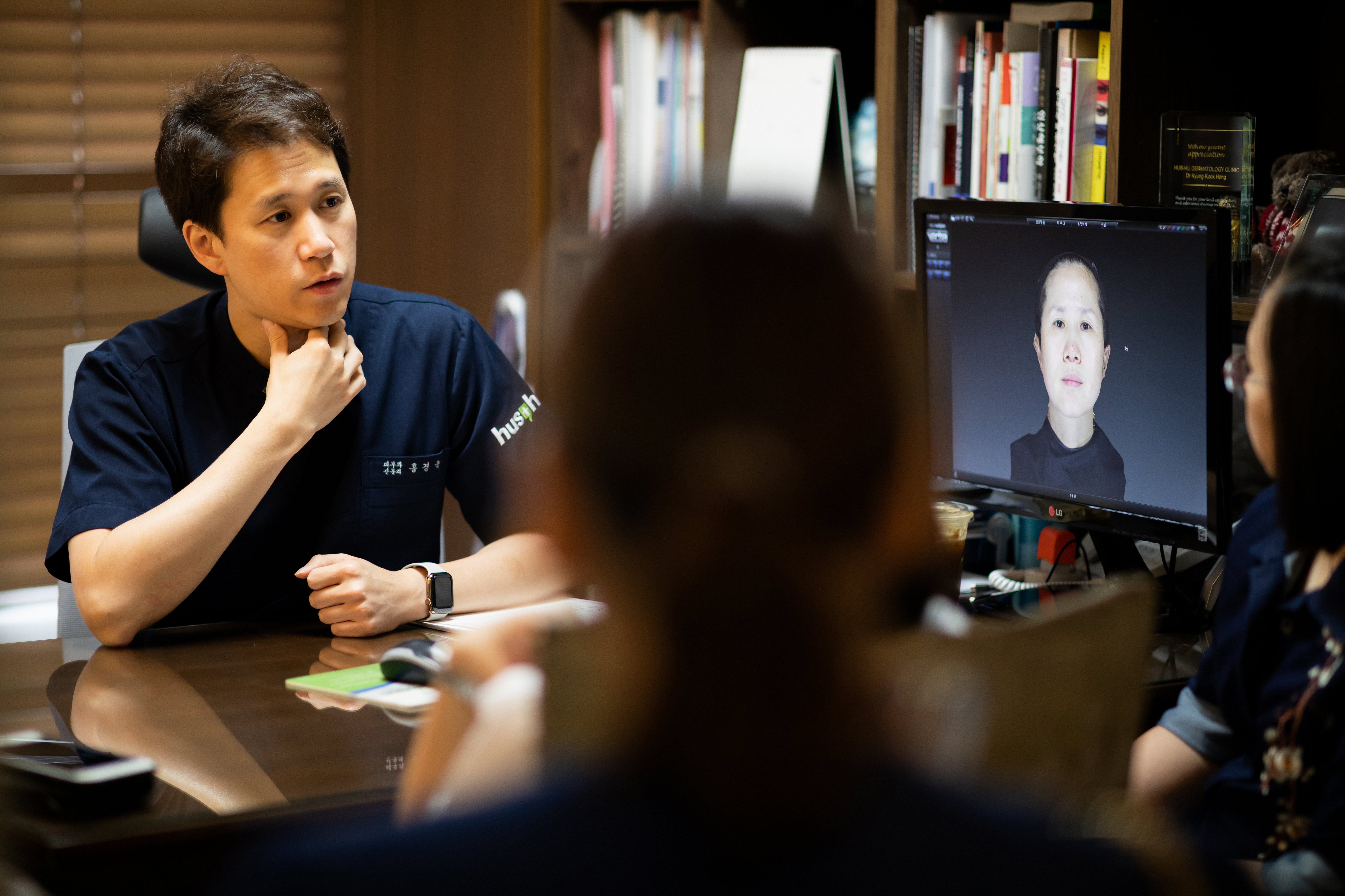
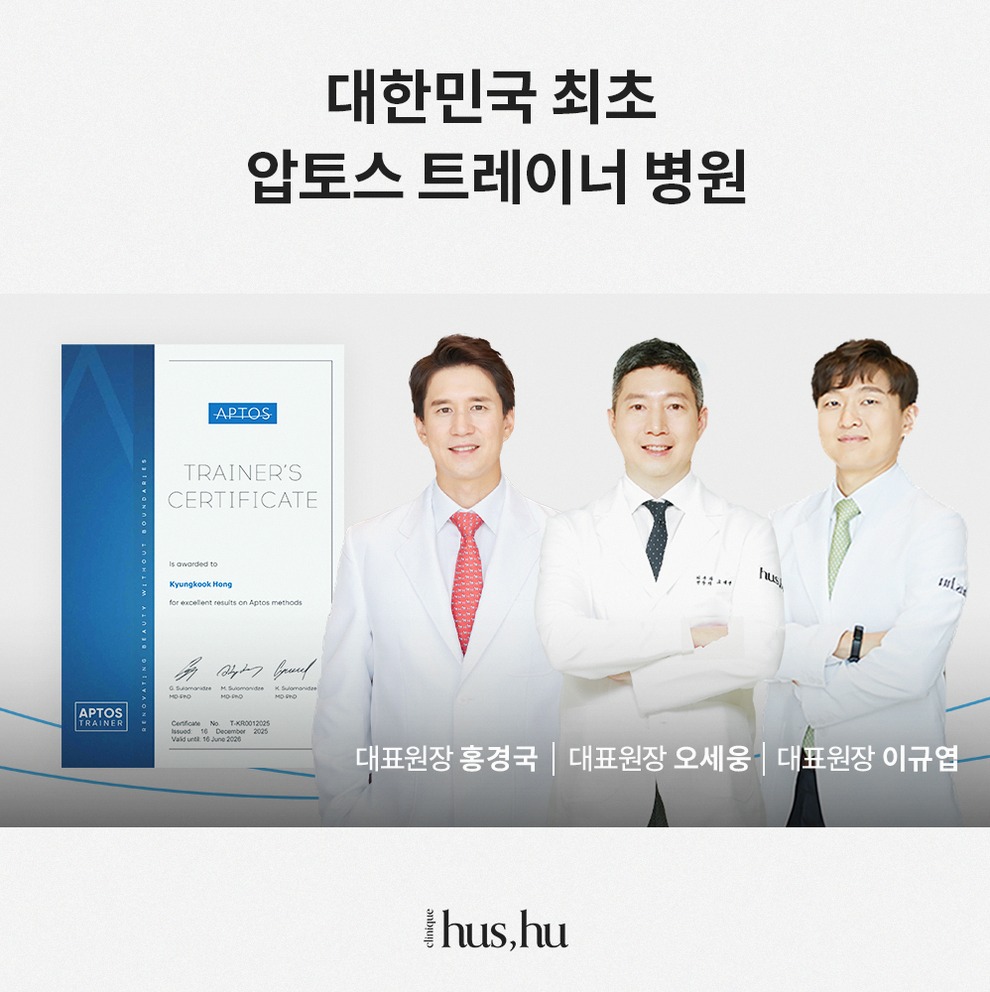
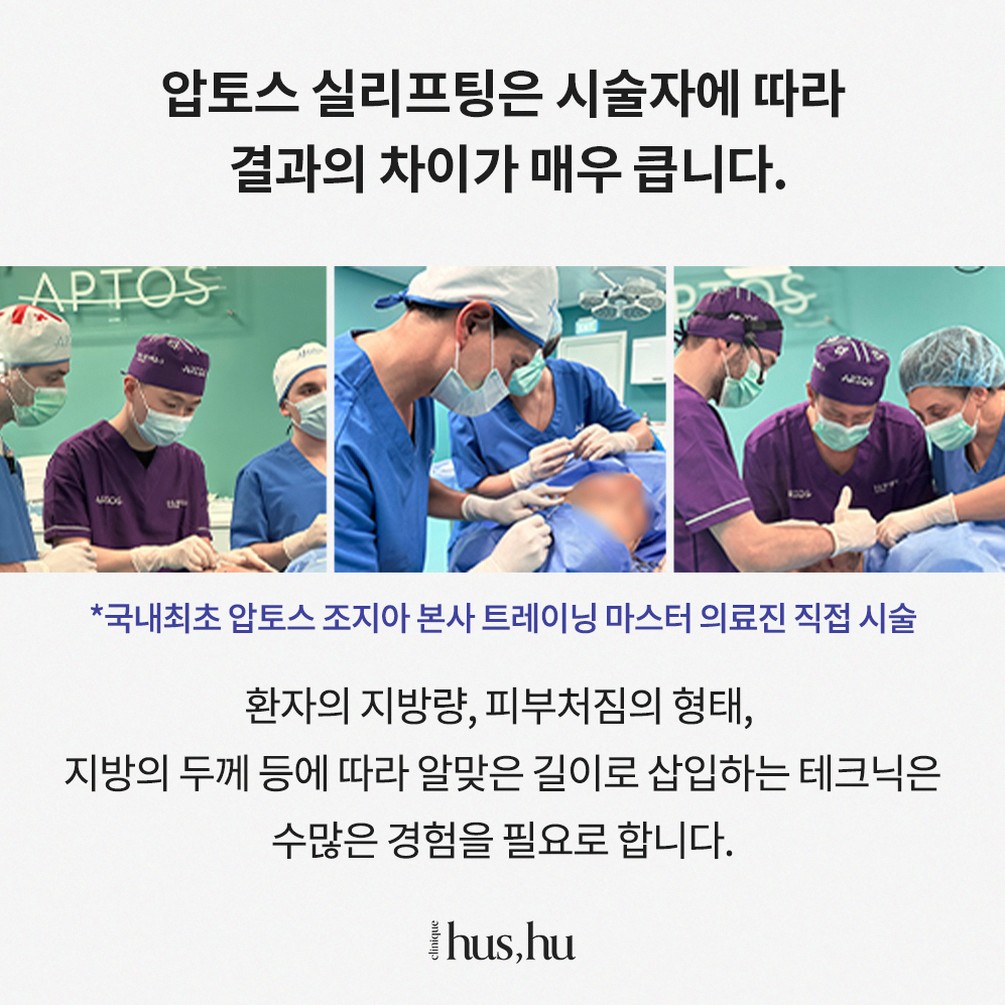
At clinics such as Clinique hus,hu, Aptos thread lifting is carried out by doctors with academic and international lecture experience in lifting and volumizing procedures. In general, practitioners who invest in ongoing training and have a strong background in facial anatomy may charge more than average.
A higher fee can reflect safer vector design, more natural lifting directions, and more careful management of asymmetry or complex facial shapes. While this does not guarantee a perfect result, it often reduces the risk of complications and the need for corrective procedures.
Clinic equipment and diagnostic system
The level of equipment and diagnostic tools also affects pricing.
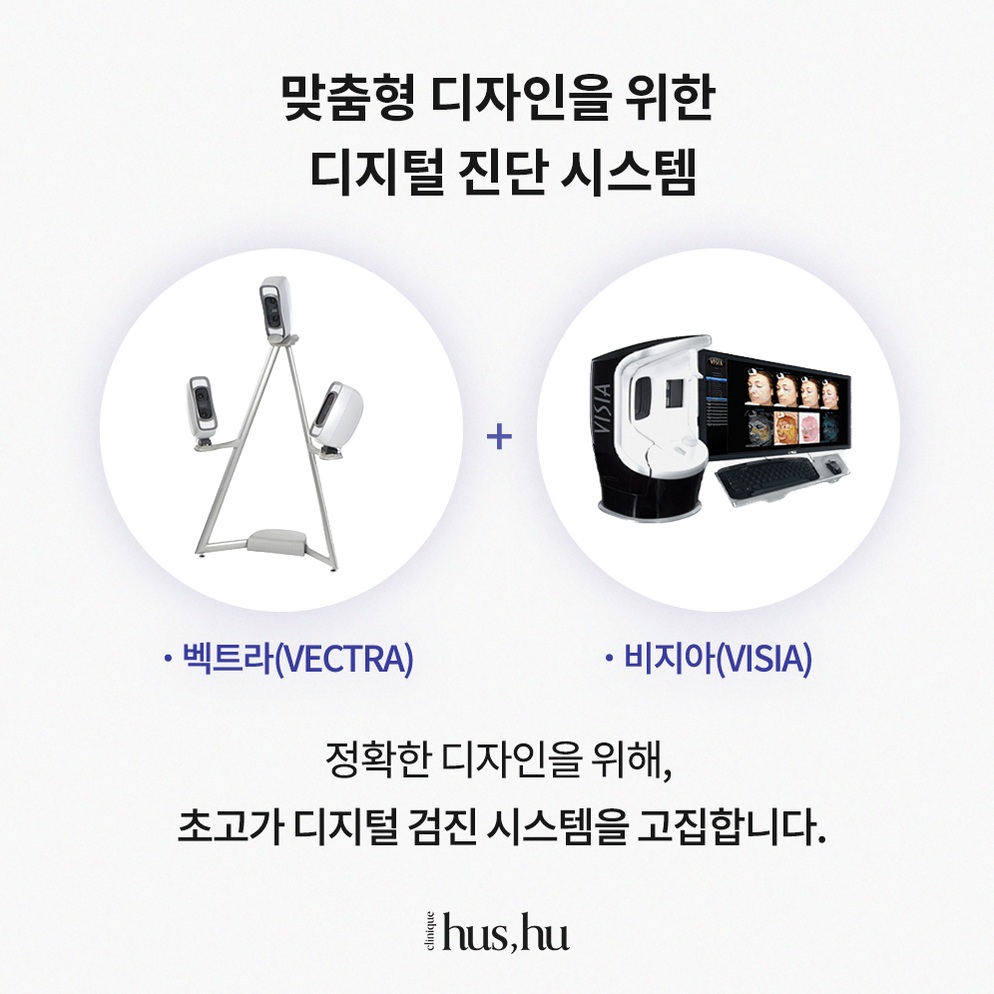
Some clinics hold multiple lifting and skin devices such as Ulthera Prime, Thermage FLX, Emface, Exion, Prime Raise, Advatx, Onda, Exilis Ultra, and others. They may also use imaging systems or structured photo analysis to plan lifting vectors and combination therapy.
Running and maintaining this kind of equipment requires investment, which is reflected in the clinic’s general fee level. In return, patients can benefit from more tailored combination plans rather than a single technique applied to everyone.
Aftercare system
Aftercare is another factor that can be included in the price or charged separately.
Follow‑up visits to check healing, manage swelling or bruising, and adjust expectations are often built into the package at mid‑to‑high‑end clinics. Some also include gentle post‑procedure care such as soothing treatments or basic skin care sessions.
When comparing prices, ask whether follow‑up consultations, emergency visits for unexpected issues, and minor touch‑ups are included or charged as extra.
How Aptos thread lift pricing is usually presented
Clinics in Seoul commonly present Aptos thread lift prices in several ways.
Per thread or per pair of threads
Some clinics quote a price per thread or per pair. This can help you understand how the total cost scales with the number of threads, but it can be confusing if you do not know how many you actually need.
Per treatment zone
Others offer package prices for zones such as jawline, midface, or neck. This can feel clearer for patients, but it is still important to know how many threads and which models are included in each zone.

Full‑face or combined plans
Full‑face Aptos lifting, or combined face and neck plans, are usually significantly more expensive than simple PDO thread procedures. The reasons are the higher material cost, the complexity of Aptos threads, and the higher skill level required.
Because exact figures vary by clinic, city, and even by doctor within the same clinic, it is best to use price as one factor among many. A very low quote can be a warning sign, while a very high quote should be justified by clear explanations of what is included.
Questions to ask during consultation
To judge whether an Aptos thread lift price is reasonable, prepare specific questions.
Ask how many threads are planned and which Aptos Namica models (for example Namica19, LL25, LL50) will be used for each area. Clarify whether the quote includes local anesthesia, follow‑up visits, and the management of possible minor touch‑ups.
If combination treatments such as Thermage FLX or Ulthera Prime are recommended, ask why they are needed in your case and how they change the total cost and expected longevity of the result.
Clinique hus,hu context in Cheongdam, Gangnam
Clinique hus,hu is located in the Cheongdam area of Gangnam in Seoul, within walking distance from Apgujeong Rodeo Station exit 4, in the direction of Galleria Department Store. This area is known for clinics that focus on anti‑aging and aesthetic treatments.
The clinic offers more than ten lifting options, including Aptos threads, Silhouette Soft, Exion needle RF, Emface, Thermage FLX, Ulthera Prime, Prime Raise, Onda, Exilis Ultra, Advatx, and others. Its anti‑aging concept emphasizes cellular‑level care, with an in‑house cell laboratory, autologous exosome programs such as Mysome, stem cell‑based approaches, and comprehensive contour‑fixing protocols.
Because of this setup and the involvement of doctors with academic backgrounds and international lecture experience, Aptos thread lift pricing here tends to fall into a mid-to-high range. The focus is on individualized planning and combination therapy rather than a single quick procedure.
Who may consider Aptos thread lifting and how that affects cost
Ideal candidates
Aptos thread lifting is generally suitable for people with mild to moderate sagging of the midface, jawline, or neck. Ideal candidates usually have reasonably good skin thickness and elasticity and realistic expectations about how much lift and how long it will last.
In this group, the number of threads can often be kept moderate, and the plan may not require extensive combination treatments, keeping the price closer to the lower or middle part of the Aptos range.
Less ideal cases
If you have very thin skin, severe laxity, or very heavy tissue, Aptos threads alone may not be enough to achieve your goals. You may need more threads, stronger vectors, or additional energy‑based tightening and volume restoration. In some cases, doctors may suggest that a surgical facelift elsewhere would be more appropriate.

These situations naturally increase the cost, and a responsible clinic will explain this clearly during consultation, rather than promising a dramatic result from a minimal number of threads.
Age range
Many Aptos patients fall between their late 30s and 60s, but biological aging and tissue quality matter more than age itself. A person in their early 40s with early sagging and good skin can sometimes achieve a good result with fewer threads than someone older with advanced laxity.
Treatment process overview for overseas patients
Pre‑treatment consultation
Your journey usually starts with an online consultation. You will be asked to send clear photos of your face from the front and sides, and to describe your main concerns such as jowls, nasolabial folds, marionette lines, or neck bands.
During the consultation, the doctor or coordinator explains whether Aptos threads are suitable, which areas might benefit most, and whether additional treatments such as Thermage FLX or Ulthera Prime are recommended. You can also receive a preliminary estimate based on the expected number and type of threads.
Planning
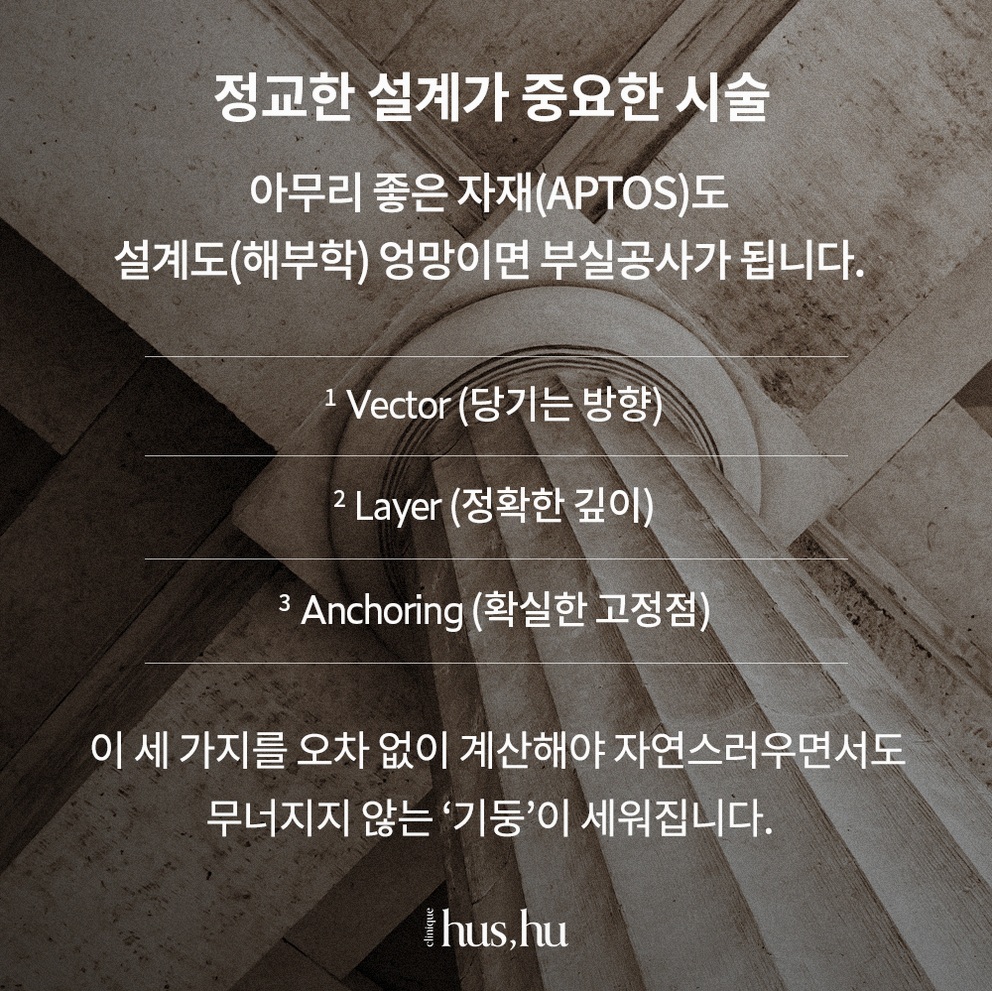
Once you arrive in Seoul, an in‑person assessment is done. The doctor examines your facial structure, skin thickness, and degree of sagging. Lifting vectors are marked on the skin, and a final decision is made about the number and type of Aptos Namica threads to be used.
If combination treatments are planned, the sequence is explained. For example, some clinics prefer to perform energy‑based tightening before or after threads, depending on the protocol.
Procedure day
On the day of the procedure, local anesthesia is applied to the entry points and along the planned thread paths. Small entry points are created, and the Aptos threads are inserted using cannulas or needles along the pre‑marked vectors.
The doctor then adjusts the tension to lift the tissue and trims any excess thread ends. Procedure time varies by case; the total appointment will include preparation and rest, so confirm the expected duration during your consultation.
Recovery
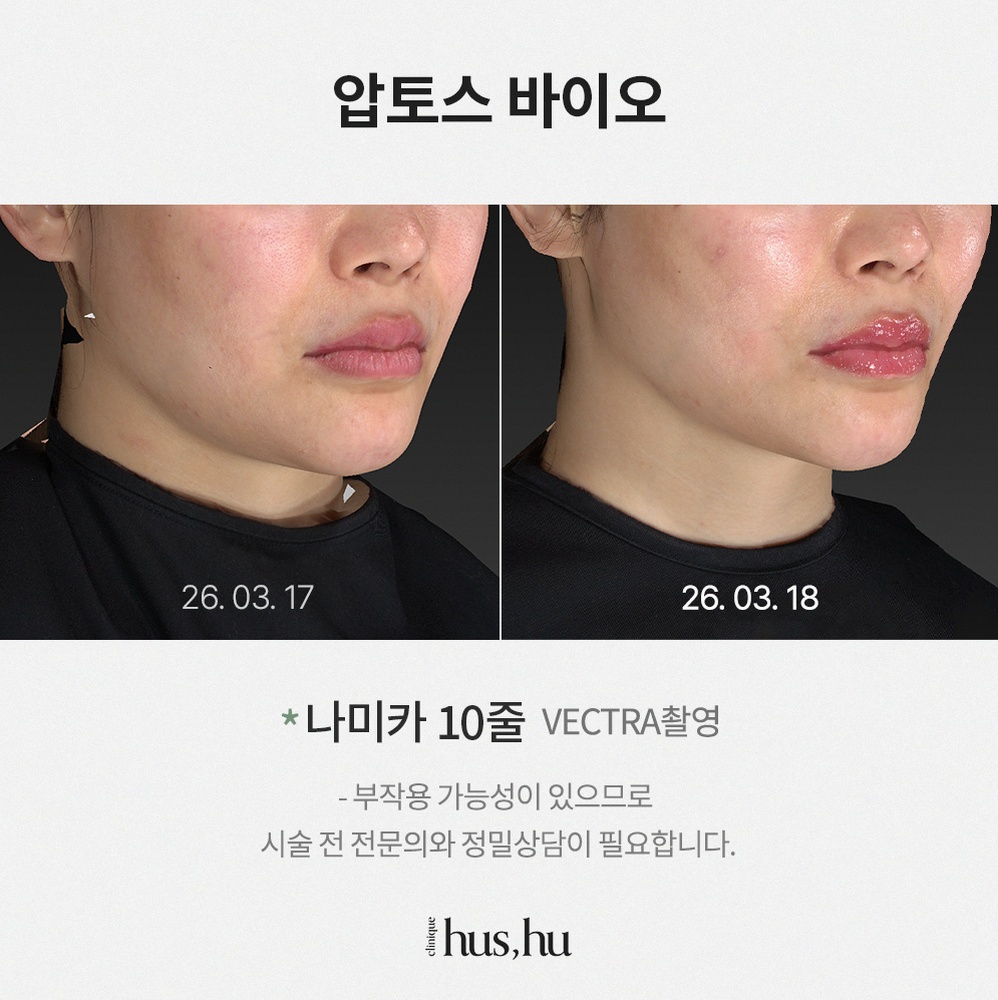
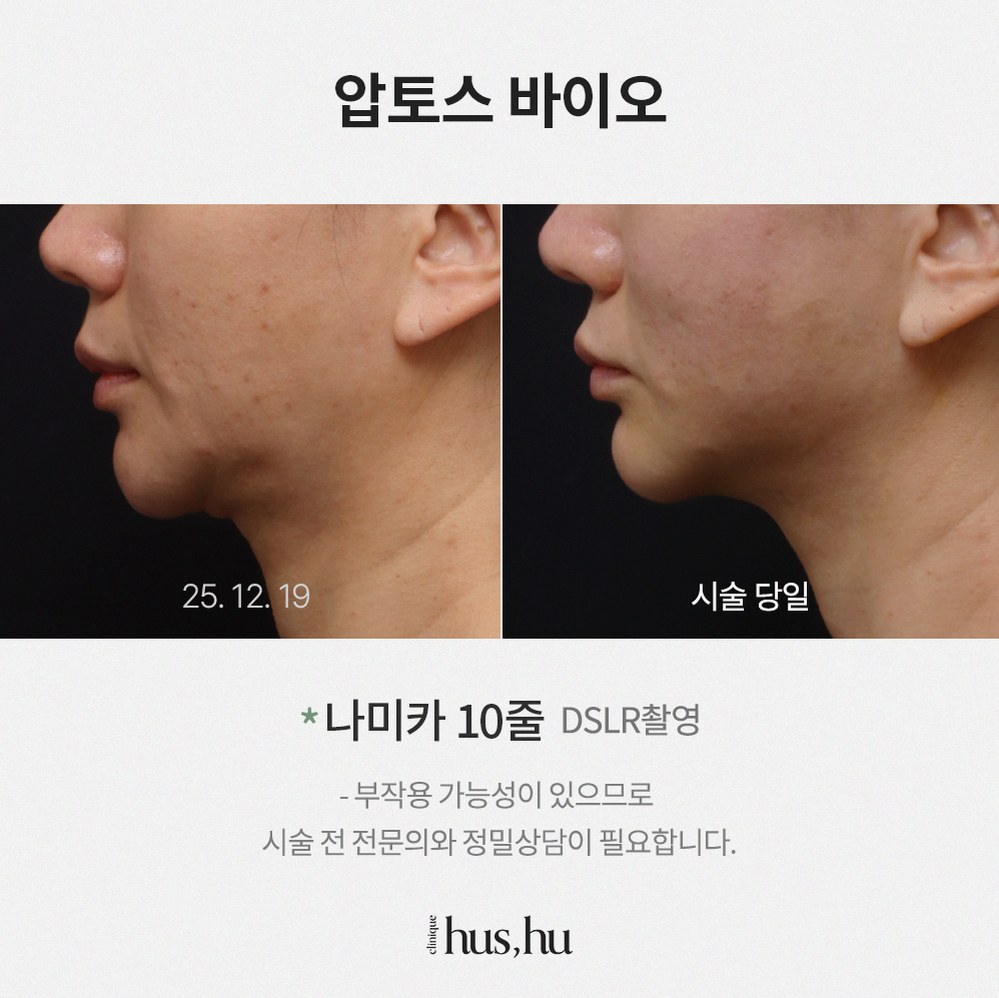
After the procedure, you can expect swelling, mild bruising, and a tight or pulling sensation along the thread paths. These usually improve over several days to a couple of weeks.
The lifting effect is visible immediately, but the final, more natural look develops over time as collagen forms around the threads. Many patients return to light daily activities within a few days, but you may be advised to avoid heavy exercise, exaggerated facial movements, or pressure on the face for a short period.
Online consultation and pre‑visit preparation
For international patients, good preparation helps you understand both the medical plan and the cost before you travel.
When you contact a clinic, prepare the following information:
Your age and main concerns, such as sagging jawline, deep nasolabial folds, marionette lines, or neck laxity.
Clear photos in good lighting from the front, 45‑degree angles, and sides, with a relaxed facial expression.
Any previous procedures, such as PDO threads, fillers, or energy‑based treatments, and when they were done.
Any medical conditions, medications, or allergies that might affect healing.
You can also prepare a list of questions about pricing, such as how many Aptos threads are likely to be used, which models are planned, what is included in the quote, and how long you should stay in Korea for follow‑up.
Expected Korea visit timeline for Aptos threads
For many overseas patients, a short visit is sufficient for Aptos thread lifting.
Day 1: In‑person consultation and planning. Some patients have the procedure on the same day if both sides agree and pre‑procedure instructions are followed.
Day 2–3: Rest and initial recovery. You may experience swelling and tightness. A brief check‑up may be scheduled, especially if you had a more extensive lift.
Day 4–7: Many patients feel comfortable going out with light makeup. If possible, a final check‑up before leaving Korea can be arranged to make sure healing is on track.
If you are combining Aptos with other treatments such as Thermage FLX, Ulthera Prime, or exosome injections, your clinic may suggest a slightly longer stay or a staged schedule.
Aftercare and follow‑up
Good aftercare is important for both safety and satisfaction.
You will receive instructions on how to sleep (often on your back with your head slightly elevated), how to cleanse your face gently, and what to avoid, such as strong facial massages, dental work that forces the mouth open widely, or strenuous exercise during the early healing period.
Some clinics schedule follow‑up visits to monitor symmetry, check for dimpling or palpable threads, and answer questions. Mild irregularities often soften as swelling goes down and tissues adapt to the new position.
Safety, risks, and why price should not be the only criterion
Aptos thread lifting is minimally invasive but still a medical procedure with potential risks.
Possible side effects include swelling, bruising, temporary asymmetry, palpable threads, skin dimpling, infection, or nerve irritation. Most are mild and temporary, but serious complications, while rare, can occur.
For this reason, it is important to choose a clinic where doctors are experienced with Aptos systems and facial anatomy, and where genuine Aptos products and proper sterilization are used. A clear explanation of what is included in the price, including how complications would be managed, is more important than saving a small amount on the initial fee.
Be cautious of unusually low prices that may indicate non‑genuine materials, limited training, or minimal aftercare. On the other hand, a high price should be supported by transparent details about doctor expertise, equipment, and follow‑up.
How to compare Aptos thread lift quotes between clinics
When comparing clinics in Seoul for Aptos thread lifting, a structured checklist can help you make a value‑based decision.
Doctor qualifications
Thread details
Request clear information about which Aptos models will be used, how many threads are planned for each area, and whether there is flexibility to adjust the plan on the day of treatment.
Combination treatments
If the clinic recommends combining Aptos with devices such as Thermage FLX, Ulthera Prime, Exion, or Emface, ask why they are necessary in your case, how they are sequenced, and how they affect both cost and expected longevity.
Duration of effect and follow‑up
Discuss the expected duration of effect in your situation, understanding that it varies by age, tissue quality, and lifestyle. Ask what follow‑up is included, whether there is a review visit before you leave Korea, and how the clinic handles concerns once you return home.
Equipment and diagnostics
Finally, consider what devices and diagnostic tools the clinic uses to plan and support your lifting result. Clinics with a broad range of lifting and skin devices can often tailor more precise plans, which may justify a higher price.
Suggested FAQ
How much does an Aptos thread lift usually cost in Seoul?
Prices vary widely, but Aptos thread lifting is generally more expensive than simple PDO threads. Localized lifting of one area will sit in a lower range, while full‑face or combined face and neck plans can be significantly higher. The main factors are the number and type of Aptos Namica threads, the areas treated, doctor expertise, and whether combination treatments such as Thermage FLX or Ulthera Prime are included. It is best to request a personalized quote after an online photo review.
Why is Aptos more expensive than general PDO thread lifting?
Aptos threads are engineered with more complex structures and barbs for stronger lifting and longer‑lasting support compared with many general PDO threads. The brand, material, and specialized training required for safe placement contribute to higher costs. In addition, Aptos procedures often involve more detailed vector planning and are performed by doctors with specific lifting experience, which is reflected in the fee.
How many Aptos threads are usually needed for jawline or midface lifting?
The number of threads depends on your anatomy and degree of sagging. A mild jawline or midface lift may use a relatively small number of threads per side, while more advanced laxity or combined midface and jawline lifting can require more. Only an in‑person assessment or detailed photo consultation can give a realistic estimate, so it is important to ask your doctor to specify the planned thread count in your quote.
Does paying more guarantee that Aptos thread lift results last longer?
Paying more does not automatically guarantee longer‑lasting results. Longevity depends on factors such as your age, skin quality, lifestyle, and how your tissues respond to the threads. However, higher prices can reflect the use of appropriate Aptos models, careful vector design, and combination treatments that may support better overall outcomes. Focus on doctor expertise, transparent planning, and realistic expectations rather than price alone.
Is it worth combining Aptos with Thermage FLX or Ulthera Prime?
For many patients, combining mechanical lifting with energy‑based tightening can be beneficial. Aptos threads reposition sagging tissue, while Thermage FLX or Ulthera Prime stimulate collagen and improve skin firmness. This combination usually increases the total cost, but it may provide a more complete anti‑aging effect, especially if skin laxity and texture are concerns. Your doctor can advise whether this approach is appropriate for your specific case.
What should I ask during consultation before deciding on an Aptos thread lift?
Ask which areas will be treated, how many Aptos threads will be used, and which Namica models are planned. Clarify what is included in the price, such as anesthesia, follow‑up visits, and management of complications or minor touch‑ups. Also ask about possible side effects, expected recovery time, how long you should stay in Korea, and what other treatments might be needed to support your result.
How can I tell if a clinic’s Aptos thread lift price is reasonable and safe?
A reasonable price should be consistent with the clinic’s location, doctor experience, and equipment level, and it should come with a clear breakdown of what is included. Be wary of quotes that are far below the general market range, as they may indicate non‑genuine materials or limited aftercare. Look for transparent communication, detailed planning, and a willingness to discuss risks and alternatives.
Soft call to action for online consultation
If you are considering an Aptos thread lift in Seoul and want to understand your likely cost and treatment plan, an online consultation is a practical first step. By sharing your photos and concerns in advance, you can receive a personalized assessment of whether Aptos Namica threads are suitable, how many threads might be needed, and whether combination treatments are recommended.
Clinics such as Clinique hus,hu in the Cheongdam area are accustomed to guiding overseas patients through this process, from initial online advice to scheduling and post‑procedure follow‑up. Wherever you choose to go, prioritize clear explanations, safety, and individualized planning over the lowest price, so you can make a confident and informed decision about your Aptos thread lift in Korea.
- 공유 링크 만들기
- X
- 이메일
- 기타 앱


댓글
댓글 쓰기