Emface duration and maintenance plan
- 공유 링크 만들기
- X
- 이메일
- 기타 앱
Direct answer: how long does Emface last?
If you are searching for Emface duration, clinics report widely varying timelines for how long visible results may last—often discussed in terms of months—so exact expectations differ by provider. The precise duration varies for each person and depends on age, skin and muscle condition, lifestyle, and adherence to any maintenance plan; ask your treating clinic for an individualized timeline.
Emface is not a permanent lifting solution. It is a non‑invasive technology that can support facial muscles and skin quality for a period of time. To keep the lifted and toned look, many patients schedule maintenance sessions, often once or twice a year, or at intervals recommended during consultation.
Overview of Emface treatment
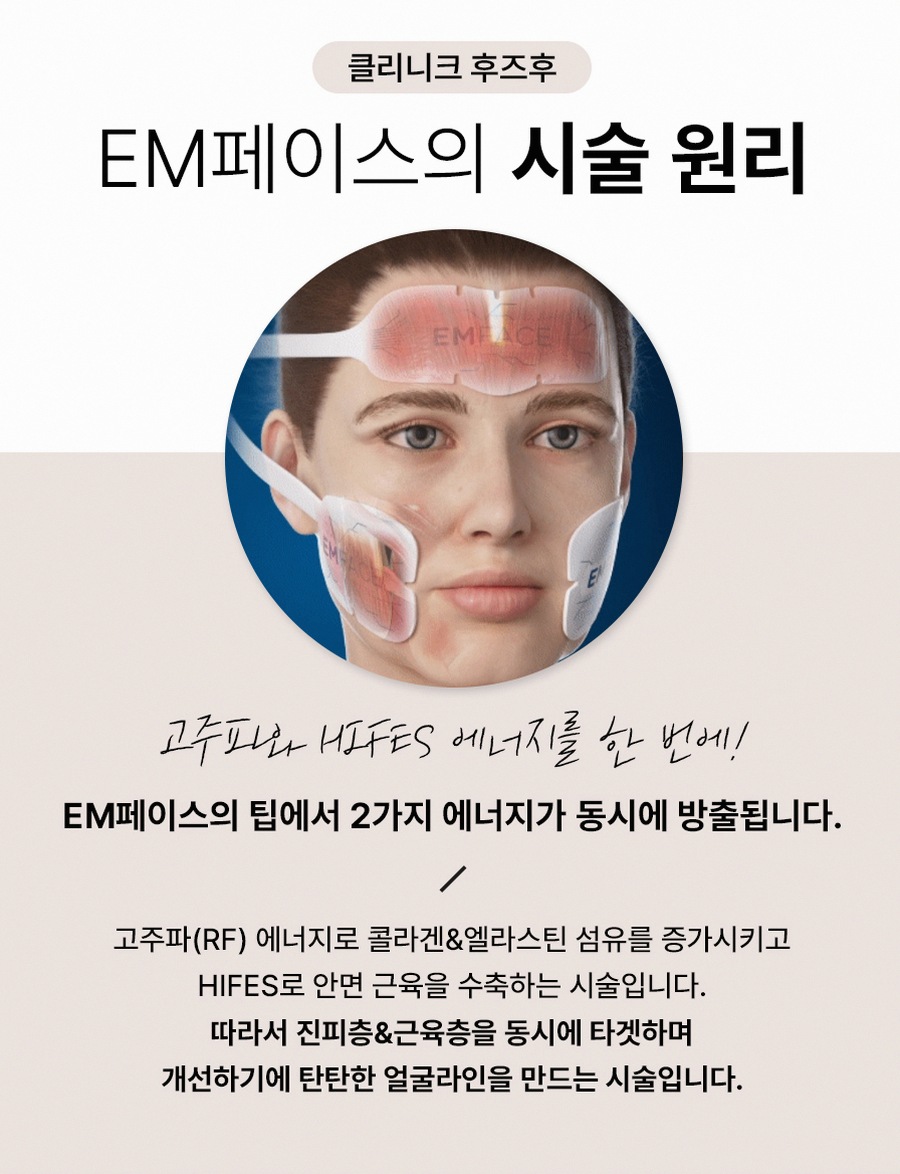
Emface is a non‑invasive facial lifting and muscle‑toning treatment.
The radiofrequency energy gently heats the superficial layers of the skin. This can support collagen and elastin remodeling, which are important for firmness and elasticity. At the same time, the HIFES‑type energy stimulates key facial muscles, especially those that support the cheeks, jawline, and forehead. This dual action aims to improve both the quality of the skin and the underlying muscular support.
Emface is performed using adhesive applicators placed on the forehead and cheeks or other target areas. There are no needles and no incisions. Most patients describe the feeling as strong muscle contractions with a warm sensation in the skin, but generally tolerable without anesthesia.
Typical course and session schedule
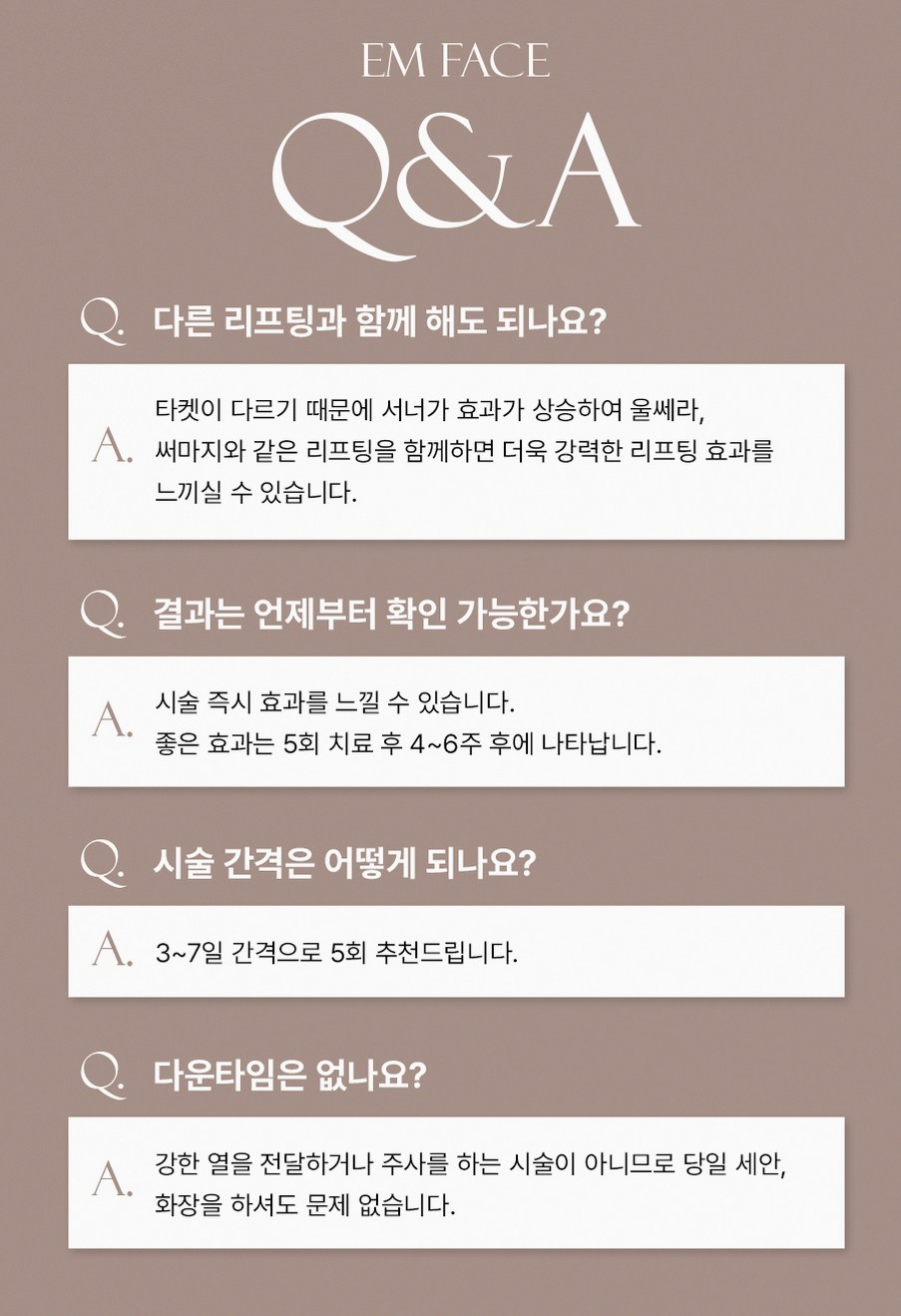
A standard Emface course is usually delivered as a series of sessions rather than a single visit. Many protocols involve multiple sessions spaced roughly a week apart, but the number of sessions, spacing, and energy settings vary between clinics and should be customized for your face, age, and goals. Confirm the recommended course and schedule during a personalized consultation with your treating clinic.

Because clinics may use slightly different protocols, it is important to confirm during consultation how many sessions are suggested for you, how long each session takes, and how they will monitor your progress.
Who may consider Emface
Emface may be suitable for adults who:
Have mild to moderate facial sagging rather than very advanced laxity.
Notice early jowls, softening of the jawline, or loss of cheek support.
Want subtle, natural‑looking lifting and toning without injections or surgery.
Prefer minimal downtime and a comfortable procedure.
Are interested in prevention and early anti‑aging, not only correction.
Emface can be considered by both women and men, and it can be used in different age groups. Younger patients may use it to maintain facial support and delay visible sagging, while older patients may use it to improve current laxity or to complement other treatments.
People who may need caution or an alternative plan include those with very severe sagging where surgery might be more appropriate, those with certain implanted electronic devices, uncontrolled medical conditions, or highly unrealistic expectations about a permanent lifting effect. A detailed consultation is essential before deciding.
How long Emface results typically last
After you complete a full Emface course, you may notice some immediate changes, but the main benefits usually develop over time.
Immediately after each session, many patients feel a mild tightness or lifting sensation, with possible slight redness or warmth that settles within minutes to hours. Over the following weeks, as collagen remodeling and muscle adaptation occur, the lifting and contouring effect tends to become more visible.
Most people reach a peak effect a few weeks after the final session. For some, especially younger patients with good skin quality and healthy lifestyles, the effect can feel closer to the upper end of that range. For others with more advanced aging or strong external aging factors, the visible changes may soften sooner.
It is important to remember that Emface does not stop aging. Gravity, volume loss, and changes in bone and soft tissue continue. If you do not repeat Emface or other supportive treatments, your face will gradually return toward your baseline appearance over time.
What influences Emface duration
Several groups of factors influence how long Emface results last.
Individual factors
Age: Younger skin usually has more collagen and better elasticity, which can help maintain results longer. Older skin may show improvement but may also need more frequent maintenance.
Baseline skin laxity: Mild laxity often responds better and holds results longer than very loose skin.

Muscle condition: If your facial muscles are relatively strong and responsive, muscle‑toning effects may be more pronounced.
Collagen status: Past sun damage, smoking, and lifestyle can reduce collagen quality, potentially shortening the visible duration.
Lifestyle: Smoking, frequent unprotected sun exposure, poor sleep, high stress, and large weight fluctuations can all accelerate aging and reduce how long results last.
Treatment plan factors
Number of sessions: Completing the full recommended course generally gives more stable and longer‑lasting results than stopping after one or two sessions.
Energy settings: Appropriately adjusted energy levels, tailored to your tolerance and tissue response, can influence both effectiveness and duration.
Treated areas: Focusing on key support zones such as cheeks, jawline, and forehead can improve the overall impression of lifting.
Combination with other treatments: Emface can be combined with other lifting or collagen‑stimulating procedures, which may help extend the visible duration.
Aftercare and maintenance
Sun protection: Consistent sunscreen use and UV avoidance protect collagen and help maintain firmness.
Skincare routine: Gentle cleansing, moisturizing, and the use of evidence‑based active ingredients (such as retinoids or antioxidants, if suitable for your skin) can support the skin’s structure.
Weight stability: Avoiding rapid weight loss or gain helps maintain facial volume and contour.
Healthy habits: Sufficient sleep, balanced nutrition, and stress management support overall tissue health.
Emface compared with other lifting options
Emface is one of several non‑surgical facial lifting options. Understanding how it differs from other treatments can help you choose a suitable plan.
Ultrasound lifting
Ultrasound lifting devices, such as Ultherapy‑type systems, deliver focused ultrasound energy to deeper layers, including the SMAS layer, which is the same layer targeted in some surgical facelifts. This can create a deeper tightening effect.
Compared with ultrasound lifting, Emface focuses more on stimulating facial muscles and tightening more superficial layers of the skin using radiofrequency. It may be particularly appealing if you want muscle toning and subtle lifting with a needle‑free, generally comfortable experience.
Radiofrequency lifting
Traditional radiofrequency lifting devices, such as Thermage‑type systems, mainly target the dermis to stimulate collagen remodeling and improve skin texture and firmness.
Emface also uses radiofrequency but combines it with HIFES‑type muscle stimulation. This dual approach aims to address both the skin and the muscular support underneath, which can create a slightly different quality of lift and facial expression.
Thread lifting
Thread lifting uses absorbable threads placed under the skin to mechanically lift tissues. It is more invasive than Emface, involves needles, and may have more noticeable downtime, such as swelling or bruising.
Emface does not physically pull the tissues. Instead, it works through energy‑based stimulation of muscles and collagen. Results are generally more subtle and natural‑looking, and the recovery is usually very quick. However, because it is non‑invasive, Emface usually requires repeated sessions and maintenance over time.
Timeline: from first session to fading of effect
Short‑term changes
Right after an Emface session, you may notice:
A light lifting or tightening sensation.
Mild redness or warmth in the treated areas.
Slight muscle fatigue or awareness of the treated muscles.
These short‑term effects usually resolve within a few hours and do not typically interfere with daily activities. Most people can return to work or social plans immediately.
Medium‑term changes
Over several weeks, especially after completing the full course, you may see:
Gradual improvement in cheek support and jawline definition.
Smoother forehead and a more refreshed expression.
Subtle lifting of the midface and reduced early jowling.
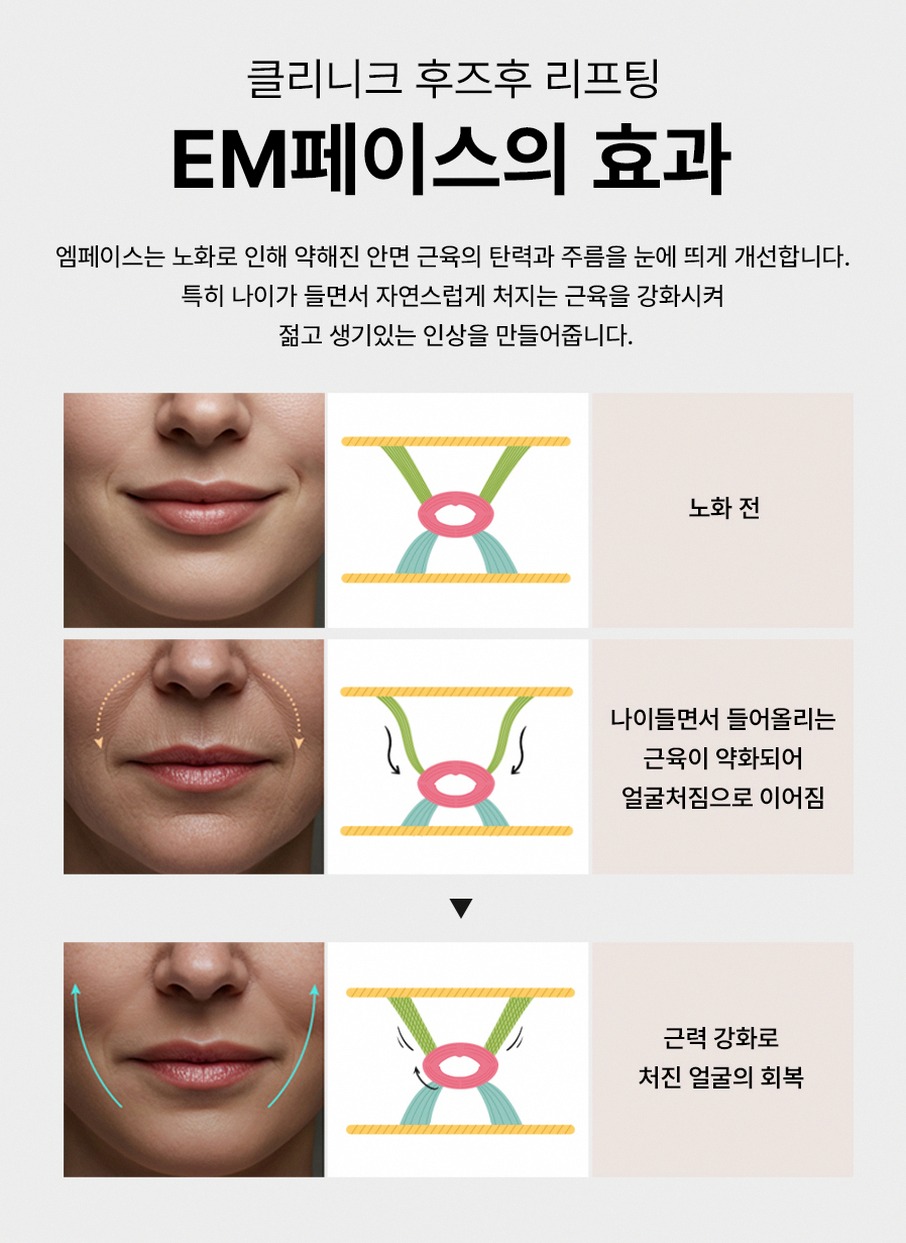
These changes are linked to both muscle adaptation and collagen remodeling. The face can appear more rested and youthful, often without an obvious “done” look.
Long‑term changes and fading
After the peak effect, which often appears a few weeks post‑course, the results typically stay relatively stable for several months. Over 6 to 12 months, the lifting and tightening gradually soften as natural aging continues.
Without maintenance sessions, the face will slowly move back toward its original state. Some patients prefer to repeat Emface once or twice a year to maintain a more consistent contour. Others may combine Emface with other treatments at specific intervals to support longer‑term anti‑aging goals.
How a specialized anti‑aging clinic in Cheongdam uses Emface
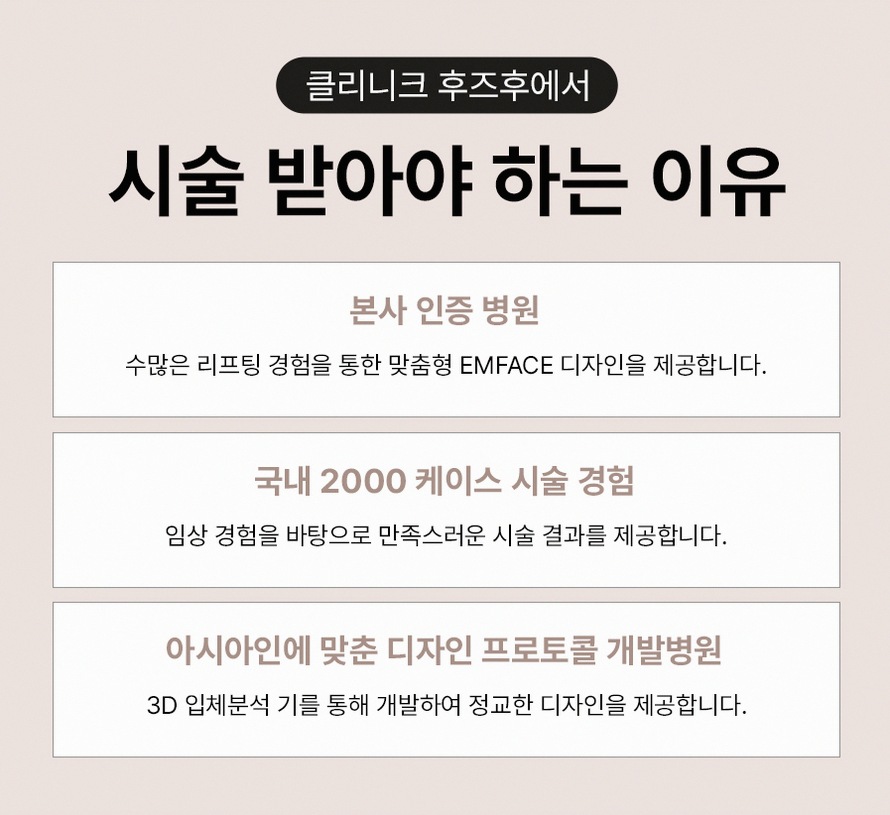
In Cheongdam, Gangnam, near Apgujeong Rodeo Station on the Suin–Bundang Line, some premium anti‑aging clinics integrate Emface into a broader, evidence‑minded system of care. Clinique hus,hu is an example of a clinic that emphasizes anti‑aging from both the device and cellular levels.
exosome procedures. Discuss potential risks, regulatory status, and the supporting evidence with your clinician before proceeding. Emface can be positioned within this ecosystem as a muscle‑focused lifting and toning tool.
Rather than relying on a single device, the clinic may use more than 20 types of lifting, laser, and body‑contouring systems. Diagnostic imaging, facial analysis, and detailed consultation are used to design a personalized plan. For example, a patient might receive Emface for muscle support, a radiofrequency or ultrasound device for deeper tightening, and exosome‑based treatments to improve skin quality and recovery.
By combining these approaches, the goal is not only to achieve visible lifting but also to support the underlying cell health that influences how long results last.
Combining Emface with other treatments to extend duration
For many patients, Emface is most effective as part of a multi‑step program rather than a stand‑alone solution. Possible combinations include:
Emface plus ultrasound lifting: Ultrasound for deeper SMAS tightening, Emface for muscle tone and superficial firmness.
Emface plus radiofrequency tightening: Thermage‑type treatments for collagen remodeling, Emface for dynamic muscle support.
Emface plus fillers or volumizing treatments: Structural volume restoration in areas of bone or fat loss, with Emface helping to support the overlying muscles and skin.
Emface plus exosome‑based skin repair: Cell‑derived products to support healing, texture, and glow, while Emface shapes and lifts.
The exact combination and timing should be tailored to your needs. In some cases, treatments are spaced out over weeks or months to allow the skin and tissues to respond gradually.
Online consultation and pre‑visit preparation for overseas patients
If you are planning to travel to Seoul for Emface, an online consultation is a practical first step. Before your video or messaging consultation, it helps to prepare:
Clear photos of your face from the front and both sides, taken in good lighting without filters.
A brief history of any previous facial treatments, such as laser, lifting devices, fillers, or surgery.
Information about your medical history, medications, and any implanted devices.
Your main concerns and priorities, such as jawline, cheeks, or forehead.
Your expected travel dates and how many days you can stay in Korea.
During the online consultation, you can discuss whether Emface is appropriate for your degree of laxity, how many sessions are recommended, and whether combining Emface with other treatments would be useful in your case. This is also the time to ask about expected Emface duration for someone with your age and lifestyle.
Experience‑based checklist before booking
When comparing clinics for Emface in Cheongdam or elsewhere, consider checking:
What devices and protocols they use for Emface and lifting.
Whether they offer diagnostic imaging or structured facial analysis.
How they plan the number of sessions and maintenance intervals.
What other treatments they can combine with Emface if needed.
What aftercare support they provide for overseas patients.
You may want to prepare questions such as:
How many Emface sessions do you usually recommend for someone my age and with my skin condition?
How long do your patients typically feel the results last, and what can I do to maintain them?
If I can only stay in Korea for a short time, what is the most realistic plan?
Can Emface be safely combined with other treatments I have already had?
Expected Korea visit timeline for Emface
For international patients, a typical Emface‑focused visit to Seoul might look like this:
Day 1: In‑person consultation and facial analysis. Discussion of your goals, medical history, and travel schedule. If suitable, first Emface session may be done on the same day.
Days 2–7: Depending on your plan, you might have additional Emface sessions or complementary treatments such as laser or exosome‑based care. Sessions are usually short, and you can enjoy sightseeing or rest between visits.
Following weeks: If your full Emface course cannot be completed during one trip, your doctor may suggest how to continue or how to schedule future visits. They may also recommend skincare and lifestyle habits to support results until your next session.
Because Emface courses often involve multiple weekly sessions, some patients choose to stay in Korea for several weeks, while others plan multiple shorter trips. Discuss your schedule honestly so the clinic can design a realistic plan.
Aftercare and maintaining your Emface results
Emface usually has minimal downtime, but good aftercare can help you maintain results longer.
Immediately after treatment, you can usually return to normal activities. Your clinic may advise you to avoid very hot saunas or intense exercise for a short period, depending on your skin response.
In the following weeks and months, focus on:
Daily sunscreen use and UV protection.
A gentle but consistent skincare routine.
Healthy sleep and stress management.
Stable weight and balanced nutrition.
Your doctor may also suggest follow‑up visits, either in person when you return to Korea or by online consultation, to evaluate how your results are progressing and when a maintenance session might be helpful.
Frequently asked questions about Emface duration
How many Emface sessions do I usually need in one course?
Most patients receive a series of Emface sessions, often once a week for several weeks. During consultation, your doctor will examine your skin and muscles and suggest a personalized protocol rather than a fixed number for everyone.
When do Emface results start to show, and when is the peak effect?
Some people feel a light lifting or tightening sensation immediately after the first session. However, the main visible improvements usually develop gradually over several weeks as collagen remodeling and muscle adaptation occur. The peak effect often appears a few weeks after the final session in your initial course, when both the skin and muscles have had time to respond.
On average, how long do Emface results last, and how often should I repeat it?
On average, Emface results commonly last around 6 to 12 months after a completed course. The exact duration depends on factors such as age, baseline laxity, lifestyle, and whether you combine Emface with other treatments. Many patients choose to repeat Emface once or twice a year as maintenance, but your ideal interval should be set with your doctor after observing how your face responds over time.
Can Emface be combined with other treatments to prolong the effect?
Yes, Emface is often combined with other treatments such as ultrasound lifting, radiofrequency tightening, fillers, or exosome‑based skin repair. Combining treatments can address different layers of the face, from deep support structures to skin texture, which may help maintain a more youthful appearance for longer. The specific combination and timing should be planned carefully to match your needs and travel schedule.
Is there downtime after Emface, and what are common side effects?
Emface is designed to be a no‑downtime or minimal‑downtime procedure. Most patients can return to daily activities immediately after each session. Common temporary effects may include mild redness, warmth, or a feeling of muscle fatigue in the treated areas, which usually resolve quickly. Serious side effects are uncommon but should be discussed in detail with your doctor before treatment.

Does repeating Emface too often cause problems, or is there an optimal interval?
Repeating Emface within a recommended protocol is generally considered safe, but doing it too frequently without medical guidance is not advised. There is usually an optimal interval that allows your muscles and skin to respond and recover. After your initial course, your doctor will observe your results and suggest a maintenance schedule, often in the range of once or twice a year, adjusted to your individual response.
Soft call to action for online consultation
If you are considering Emface in Cheongdam, Gangnam, and want a realistic plan for how long your results can last, an online consultation is a good starting point. By sharing your photos, medical history, and travel schedule, you can receive a tailored Emface course and maintenance strategy.
Clinique hus,hu welcomes overseas patients who are interested in device‑based lifting combined with cell‑level anti‑aging programs. Before you book your flight, you can discuss your expectations, possible treatment combinations, and a practical timeline so you can make the most of your stay in Seoul.
This article is for general information only and does not replace a face‑to‑face consultation with a qualified medical professional. Individual assessment and personalized medical advice are essential before any treatment decision.
- 공유 링크 만들기
- X
- 이메일
- 기타 앱


댓글
댓글 쓰기